
Spray Polyurethane Foam Roofing in Plantation, FL
Roof Systems: Spray Polyurethane Foam Roofing
A spray polyurethane foam roof depends on more than the foam beneath it; the protective coating and drainage surface must also remain intact. In Plantation, FL, a blister, exposed foam, or water stain calls for a check of both the surfacing and the material below it. We inspect coating wear, foam condition, drains, penetrations, and prior repair boundaries before recommending a patch or recoating. Plantation Midtown contains corporate offices, medical properties, retail, housing, and regional shopping-center uses, so access and tenant protection can affect where work begins. A roof inspection records the affected areas and separates immediate dry-in from a broader SPF renewal scope.
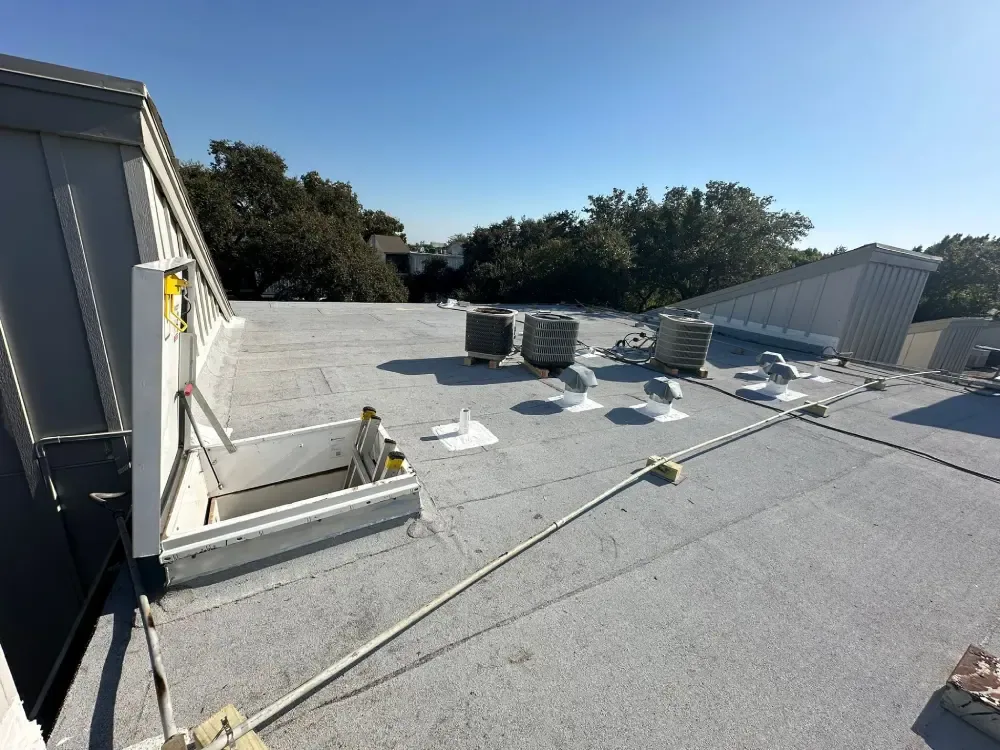
What protects the foam from exposure?
SPF forms a continuous insulating layer that is protected by a coating system. UV exposure, ponding, foot traffic, impact, and coating wear can leave the foam open to water or sunlight. We inspect the topcoat, repair patches, transitions, and exposed areas, then probe only where access and system guidance support it. Soft foam, cracks, blisters, and debonding call for different treatment. A coating pass should not cover wet material or conceal a substrate condition that still needs repair. We identify whether the protective surface has separated from foam, whether foam is soft or discolored, and whether the defect ends at a seam, penetration, or change in plane. Those observations matter because a coating touch-up cannot restore foam that has lost bond to the substrate. Where the material is firm, dry, and compatible, a narrower repair may preserve more of the existing assembly and reduce removal.
The repair plan identifies how much coating must be removed, what foam needs replacement, and how the restored surface will shed water. A roof coating restoration may be appropriate when the foam remains sound and can accept compatible preparation. If large areas are saturated or detached, replacement of the affected assembly may be more reliable. A silicone coating option and an acrylic coating system each have application limits; the existing foam, drainage, and product requirements guide selection.
How does water change the repair boundary?
Plantation's hot, humid weather and regular rain make substrate dryness and drainage central to SPF repair scheduling. For SPF, a drain obstruction or low spot can keep coating wet, accelerate surface wear, and complicate leak tracing. We inspect drains, scuppers, overflows, and transitions, then map where water collects and where the coating is open. Standing water does not prove the foam has failed, but it can make an exposed area more urgent and may affect product suitability.
Where moisture has reached the foam, the scope needs to remove or repair affected material before the protective coating is restored. A drainage check documents outlets and overflow routes. If ponding remains across a broad area, a ponding-water assessment can separate the surface symptom from the underlying slope or insulation condition. Plantation Gateway's State Road 7 district includes medical, office, hospital, retail, and dealership properties; the owner can identify which rooms or equipment below require added protection during inspection or repair.
What must be ready before new foam is applied?
Foam application requires a suitable, dry substrate and controlled job conditions. We remove deteriorated foam, clean the repair area, and confirm that the surrounding assembly can bond to the new material. Wind, rain, humidity, access, and nearby operations can affect when application proceeds. The work plan limits the open area and describes how it will be protected if the weather changes. We confirm roof access, material staging, and cleanup so overspray and debris do not enter occupied areas or outdoor air intakes. If the application surface is not dry, the crew pauses and the owner receives a revised schedule rather than a coating placed over unsuitable conditions. A permanent repair should not be called complete until the coating is installed to the system requirements and transitions are closed.
Curbs, pipes, equipment bases, and perimeter edges need careful integration because spray material can end at a different substrate or vertical detail. We identify penetrations and roof equipment before mobilization and coordinate authorized disconnects with the facility. Equipment curbs and supports need a separate inspection before the foam work reaches those interfaces. The substrate and insulation assessment can also clarify whether the foam is adhered and whether adjacent layers need repair. Plantation's storm season includes damaging winds, heavy rain, hail, and occasional tornadoes, so temporary protection has to match the opening size and forecast window.
When does an SPF roof need more than patching?
A small coating breach over firm, dry foam may be repairable with a compatible local detail. Recurring blisters, widespread exposed foam, saturated areas, coating separation, or poor drainage can shift the decision toward a broader restoration or replacement. We map the affected areas, record thickness and condition where measured, and identify any test needed before final quantities. The proposal distinguishes foam replacement from coating renewal so the owner can see what the price includes. It should also state surface preparation, required dry time, access equipment, protection for adjacent equipment and air intakes, and the area that can be completed before the crew must close for weather.
Code and assembly requirements still apply to a recover or new installation. Florida's 2023 Building Code took effect statewide on December 31, 2023, and current project requirements should be confirmed for the actual building. A recover evaluation checks whether the existing roof can remain below another layer; it does not assume SPF is a universal choice. A different low-slope membrane may have distinct seam and flashing details. Access, deck condition, insulation, transitions, and weather holds remain part of the estimate.
What belongs in the coating record?
Closeout should identify the foam removed or repaired, coating type and areas, surface preparation, thickness information when measured, drains and transitions addressed, and any condition left for future work. If the crew discovers wet foam beyond the estimate, the owner needs a marked area and approval before the scope expands. A condition report keeps photos tied to the roof map and helps maintenance staff schedule the next inspection.
Before scheduling, provide roof access instructions, leak locations, prior coating records, and any warranty or application documentation. We can respond after hours to protect an opening, then return for permanent work once the foam and substrate are suitable. The estimate states preparation, disposal, coating work, drainage corrections, and daily closeout limits. Those lines let the owner compare a local repair with a broader restoration without mixing urgent protection and capital work into one undefined amount. A property in Plantation Gateway can set access and air-intake restrictions before the work zone is selected.
Commercial Roofing Questions
Can new coating go over wet SPF?
No. Wet or deteriorated foam must be addressed before a compatible protective coating is applied. We inspect and define the removal boundary rather than covering a concealed problem.
How do you tell whether a blister is in the coating or foam?
We inspect the surface and test only where appropriate to determine whether the coating or underlying foam has separated. The repair scope records which layer needs correction.
Will coating correct ponding on an SPF roof?
A coating restores the protective surface; it does not by itself change roof slope. We inspect drainage and the affected area before recommending a separate water-management correction.
What weather limits spray-foam work?
Substrate dryness, wind, rain, humidity, and application requirements all affect the work window. The crew proceeds only when the conditions support the specified installation and closeout.
How should a property compare repair and recoating?
The comparison should show foam condition, coating wear, wet areas, drainage, preparation, and replacement quantities. We separate confirmed work from test findings that could change the scope.
Related Roofing Work
Inspect the foam and protective surface together
Tell us where water appeared, what room or operation is below it, and what coating records are available. We will map the affected SPF area, establish a safe repair boundary, and set the next approval.