
Commercial Roof Flashing Repair in Plantation, FL
Roof Damage Repair: Commercial Roof Flashing Repair
Rain reaching a wall, curb, skylight, or pipe penetration can turn a small flashing failure into an occupied-space problem. The first decision is how much roof to protect while the exact transition is checked. We identify the area below the report, find the corresponding roof detail, and look for lifted metal, split sealant, loose counterflashing, separated membrane, or a gap at the termination. The SR 7 Gateway zone brings healthcare, dealerships, professional offices, and retail into one commercial stretch; Midtown combines employment, housing, care, and shopping. These places bring varied access needs, but each building's flashing assembly must be inspected directly. We define a temporary dry-in if water is active and then price only the repair boundary supported by the observed condition. A Gateway roof inspection begins with that field decision, not a broad allowance for every penetration.
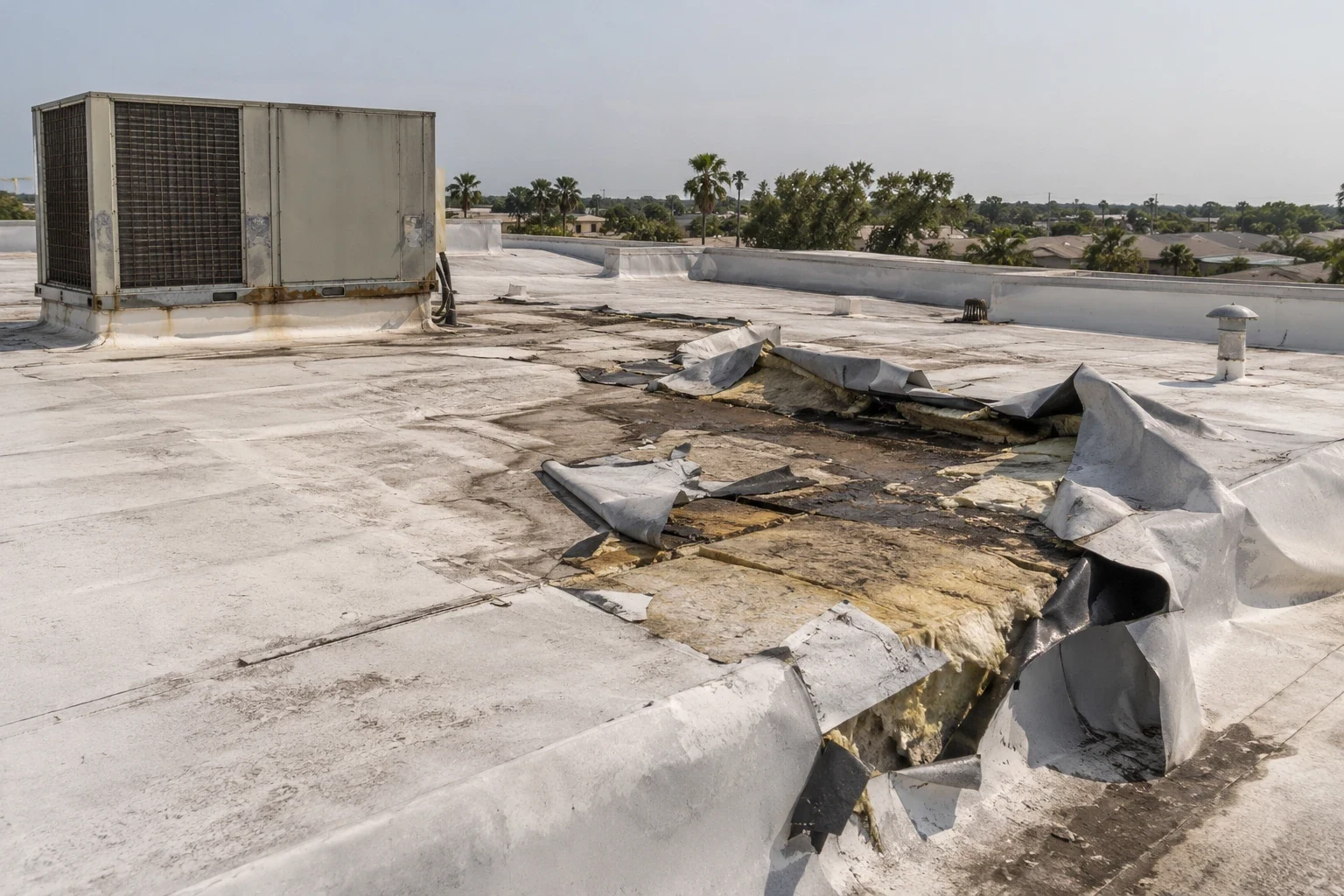
Which transition is letting water past?
Flashing turns the roof membrane up a wall or around a penetration so water stays outside the assembly. Failure can start at a corner, a lap, a fastener, a counterflashing edge, a pipe boot, or a curb where movement stresses the joint. We inspect the detail from the roof surface to the termination and compare the water report with adjacent seams, drains, and equipment. A loose cap is different from wet insulation; a bead of sealant does not establish the condition behind it. We identify the visible opening, material, and how far the detail can be followed before any removal is proposed.
Access matters because many curbs and wall lines sit near rooftop units, screens, or active service routes. The facility contact identifies shutdown restrictions, fall-protection points, and areas the crew cannot cross. A skylight flashing check addresses glazing and curb transitions, while equipment-curb work may need coordination with the mechanical trade. If the failure runs into a split seam, a seam repair review can define that adjacent condition separately. Photos and roof-zone labels let the owner see which junction is included and which remains outside the repair.
What can make the leak spread?
Plantation's humid climate and recurring heavy rain can repeatedly wet a flashing detail before a permanent repair window opens. The nearest long-term station in Fort Lauderdale averages 60.95 inches of rain each year. That rainfall makes drainage checks and a secure closure important during the inspection and repair window. Repeated wetting can make a small opening harder to track if water travels below the membrane or along a wall before appearing indoors. We check the substrate and nearby insulation where accessible, and call for a test only when it can resolve a question that changes the scope.
Wind can also lift exposed metal or stress a wall termination, particularly when a storm pushes rain against the detail. South Florida's severe-weather period peaks from May through August, and tropical systems are most active later in the year. A forecast may change when we work, but it cannot establish which flashing has failed. For active entry, we isolate the affected zone and set a temporary closure that can withstand expected conditions. A wind damage inspection can record a separate displaced component; a hurricane repair scope can address a broad event record without assuming that every detail failed at once.
What repair restores the flashing detail?
The correct repair depends on the roof type, the flashing material, how the detail is fastened, and whether the substrate remains sound. A loose edge may need mechanical securement and a compatible membrane tie-in. A split corner may require removing failed material and rebuilding the transition. An embedded termination can require a longer section to reach sound, dry surfaces. We do not price a cosmetic bead as a permanent repair when the underlying metal or membrane has separated. The scope states the opening size, replacement materials, attachment, seal or weld method, and temporary closure.
If moisture is found below the detail, testing can determine the affected boundary before insulation or deck quantities are final. A moisture survey may prioritize areas for confirmation, while an edge-metal review checks the perimeter beyond the localized flashing. For a standing seam system, the panel and curb need compatible movement accommodation; for a low-slope membrane, the transition must match the existing assembly. The estimate keeps confirmed work apart from concealed conditions that require owner authorization after opening.
On a metal coping, masonry parapet, or rooftop curb, the visible joint is only one part of the repair. We check how water sheds over the top, where the membrane turns up, and whether the termination remains secure. If a repair relies on a sealant bead, its placement and compatible substrate matter; the proposal should say what preparation is included and what movement could reopen the joint. This keeps the work tied to the interface that failed.
How do access and weather affect the repair cost?
A short flashing repair can still require staging, a lift, an escort, an equipment shutdown, or work outside occupied hours. Plantation Gateway's State Road 7 frontage runs from Sunrise Boulevard toward Peters Road and includes medical, professional, retail, and automotive uses. The local corridor helps plan arrival, but a property contact must approve the actual loading area, pedestrian route, and roof entry. Plantation Midtown's mixed-use district also contains offices, housing, and regional shopping, so tenant notice and service access can be part of the work sequence.
Before removal, we confirm where materials can sit and how much of the transition can be opened and closed in a single shift. Rain may shorten the window; the crew stops at the agreed dry-in line instead of leaving a loose edge exposed overnight. A phased access plan can separate roof work from busy entrances and sensitive rooms. If a storm interrupts installation, the owner receives the status of the opening, temporary protection, and next return decision. Those timing details belong in the repair allowance because they can change labor and equipment costs.
What should the repair record include?
A transition repair is only as useful as its perimeter and tie-in. We identify the wall, curb, or penetration detail, document the substrate that accepted the repair, and state which adjacent material was left in place. If movement continues at the joint or the base material is deteriorated, a surface seal alone may not resolve the failure. The closeout notes the inspection point and any follow-up needed so the manager can track the repaired interface rather than repeat a temporary seal.
Commercial Roofing Questions
Can a failed flashing joint be sealed without removing material?
Only if the material beneath is sound and the repair method is compatible with the assembly. We inspect the lap, termination, fasteners, and substrate first. If the metal or membrane has separated, the repair needs to reach a stable surface instead of covering a moving joint.
Why is water appearing far from the roof penetration?
Water can move along a deck, insulation, or wall before it becomes visible indoors. We compare the reported room with roof details above and around it, then identify any test that could confirm the path before expanding the repair area.
Will flashing repair require shutting down rooftop equipment?
Some details can be reached without a shutdown, while others need the mechanical trade to make the area safe. We identify the curb or pipe, confirm equipment status with the property contact, and include any required coordination in the scope.
What if rain arrives while the detail is open?
The crew stops at the planned boundary, secures exposed material, and reports the roof zone and remaining protection. We resume when the surface and forecast support the selected repair method, with any added work approved before the opening grows.
What changes a flashing repair estimate?
The length of failed metal or membrane, roof height, access equipment, substrate condition, removal, tie-in work, and tenant or equipment restrictions can all affect cost. We identify the fixed repair and list concealed conditions separately for approval.
Related Roofing Work
Trace the entry to the flashing transition
Tell us where water appeared, what sits below the detail, who can approve roof access, and whether the leak is active. We will inspect the curb, wall, or penetration, set temporary protection if needed, and return a repair allowance with any test or approval still required.