Commercial Roofing for Property Management Companies in Plantation, FL
Industries We Serve: Property Management Companies
A leak at one managed property creates an immediate protection decision and a separate budget decision. Plantation, FL property managers may oversee offices, medical buildings, retail, housing, and warehouse space, each with different access rules and operating hours. We first identify the occupied area below, trace the entry above, and set a temporary dry-in boundary that can be closed safely. Plantation Midtown combines corporate offices, medical facilities, retail, housing, and regional shopping, while the State Road 7 Gateway corridor mixes professional and medical uses with dealerships and a hospital. A roof inspection records the actual assembly and condition, then sets the next approval instead of treating every asset as the same roof.
Which building needs the first response?
Start with active water, exposed interior equipment, occupied hours, and the next forecast window. A leak over a tenant suite, medical room, electrical space, or loading area needs a clear response lead before a crew opens the roof. We document where water appeared, what sits below the likely entry, and whether temporary protection can hold until a permanent repair is authorized. The manager can then separate an urgent call from a planned condition review without losing the details that drive cost.
For a portfolio, compare each report by roof section and consequence, not by a single property label. A small opening above a server or patient area may deserve earlier attention than a larger stain over an unused service bay. Our emergency roof response can secure an active opening, while a leak investigation traces the water path before the repair boundary is set. I-595 crosses Plantation Midtown, and the commercial district's varied occupancy means access windows can differ from one address to the next. The first call should identify who can approve entry, interior safeguards, and after-hours work.
How can a manager keep the repair scope clear?
A written scope should distinguish visible damage, likely concealed conditions, temporary protection, and permanent work. We identify the roof section, membrane or panel, drain or flashing involved, insulation findings, and the point where an added condition returns for approval. If a test cut would change the quantity or repair method, that decision belongs in the estimate before removal begins. A portfolio manager can route the request with the property, roof zone, reported symptom, and an approval limit rather than forwarding a general request to several stakeholders.
On a flat roof, water can travel from a seam, curb, or drain before appearing inside. We compare the ceiling report with slopes, penetrations, edge transitions, and previous repair locations. A photo-backed condition report can show the confirmed area and outstanding question, while a drain and scupper review separates outlet work from membrane work. Along Plantation Gateway, offices, retail, medical services, dealerships, and hospital uses make staging and occupied hours part of each property manager's roofing plan. We inspect each building and set scope for its actual assembly, access, and operating hours.
What should tenants know before work starts?
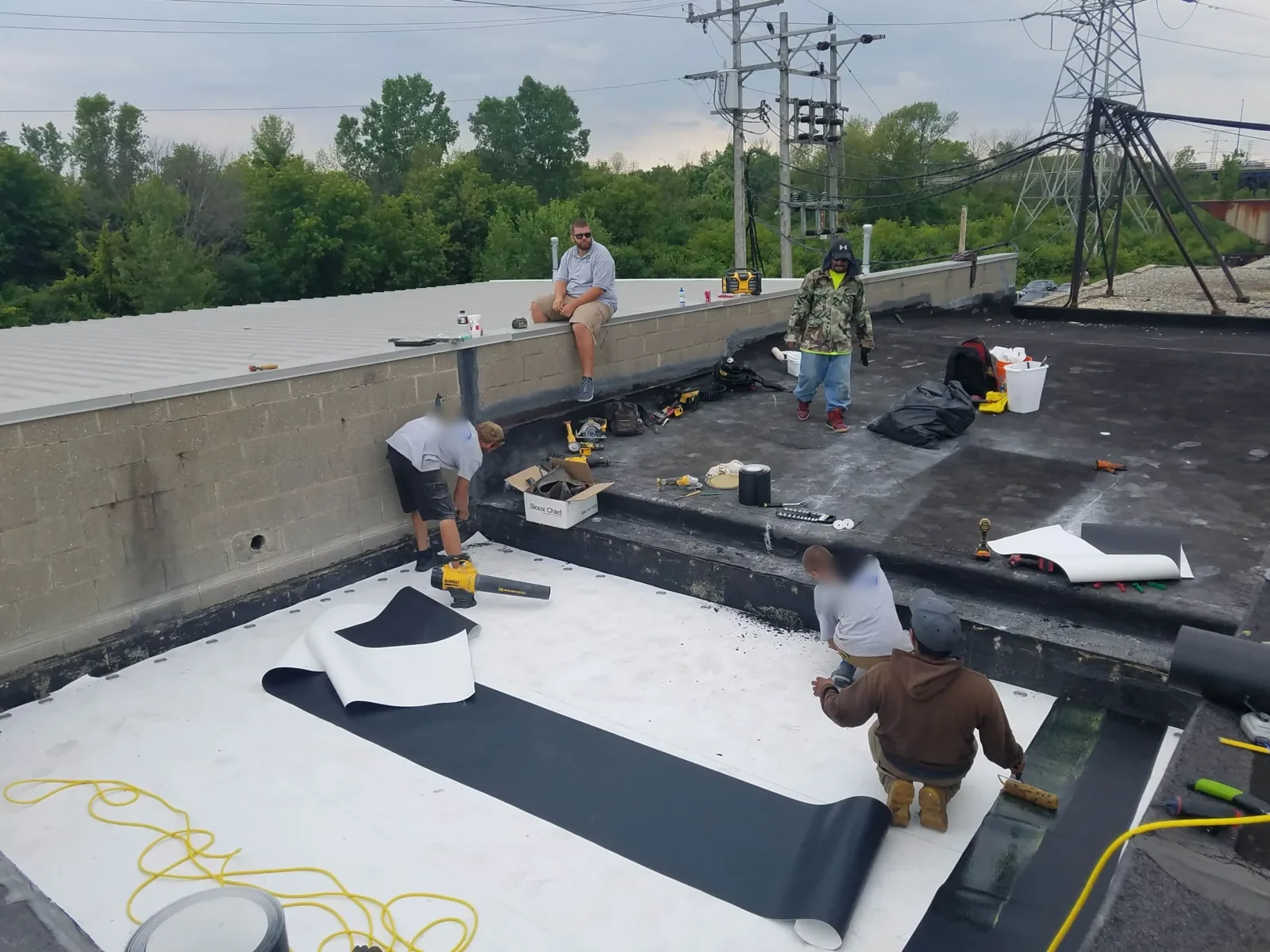
Notice timing depends on the work area and the property rules. Before mobilizing, confirm roof access, loading paths, fire routes, shared entrances, tenant hours, and any room that needs interior protection. The manager can identify the contact who distributes notices, but the work plan should also state what the crew will close each day and how a weather hold changes the schedule. If a roof section cannot be secured before rain, we stop at the agreed dry-in limit and report what remains exposed.
Occupied offices, clinics, retail spaces, and mixed-use buildings do not share one disruption profile. Plantation Midtown's commercial mix includes corporate and Class A offices alongside medical facilities and retail, so one building may require a quieter work window while another can accept daytime staging. Phased reroofing can divide a large scope into closable roof sections. For a medical property, a healthcare roof plan adds coordination for patient privacy and access controls. Tenant protection is part of the work quantity and schedule, not a general promise that occupants will notice nothing.
When should separate roofs be compared together?
Portfolio review is useful when several buildings share recurring leak calls, similar assemblies, or capital decisions due in the same budget cycle. It does not mean every property should receive the same repair. We group findings by roof zone, material, moisture condition, drainage, edge security, and operating consequence, then identify which roofs need a prompt visit and which can wait for scheduled review. The report should separate confirmed defects from assumptions so management can defend the next funding request. Record the date, roof section, interior impact, temporary measure, and person who authorized each change. That history helps distinguish a recurring defect from a new event when a property changes hands or budgets are reset.
South Florida's long humid season brings substantial rainfall, frequent thunderstorms, and a summer peak in severe weather. That pattern affects drain maintenance, temporary cover planning, and how much roof can safely be opened in one shift. A maintenance program can track drains, seams, penetrations, and perimeter details across properties, while a retail and restaurant portfolio review can coordinate operating needs across several locations. Nearby Davie has a 1,104-acre redevelopment area containing business districts and industrial land, and its programs support commercial property improvements. The roof record keeps each property's measured scope, repair allowance, and next approval separate.
What belongs in the next approval request?
Send the property address, roof drawing if available, leak location, interior impact, access rules, prior repairs, and the name of the person who can approve emergency protection. We return a defined roof area, findings, work limits, access needs, and any concealed-condition allowance. If the recommendation is replacement rather than repair, we explain which observed conditions make a larger project worth comparing. That gives asset management and ownership a decision with a stated boundary and a return visit plan.
Closeout should identify the repaired section, materials, seam or flashing details, drain work, temporary measures removed, approved changes, and items left for maintenance. The manager can retain the report with the building record and compare future leak calls against the same roof map. For properties in Plantation Midtown, we schedule the inspection around the site's access rules and weather window. For an open leak, call with what is wet, what sits below it, and who can authorize access. We will set a first response and the next approval.
Commercial Roofing Questions
Can you report several properties in one visit?
Yes, when access and authorization are arranged for each asset. We keep findings separated by building and roof zone so one property's repair allowance does not blur another's condition.
How do you help us prioritize an active leak?
Start with the space below, active water, equipment exposure, and the next safe roof window. We identify temporary protection first, then report the permanent scope and any approval needed to open further.
What if the visible ceiling stain is far from the roof defect?
Water can move along a deck or insulation before it appears indoors. We compare the interior location with drains, seams, curbs, and previous repairs, then document the likely path and what remains uncertain.
Can repair work be planned around tenant hours?
The property contact sets access and notice rules. We can sequence roof sections, deliveries, and daily dry-in around those limits, with a weather hold and return plan stated before work begins.
What makes a useful portfolio roof record?
Keep a roof map, dated photos, material and flashing records, drain findings, repair limits, approvals, and maintenance items. Separate records by property so future calls can be compared against the correct section.
Related Roofing Work
Set the first roof decision for your property
Tell us which building is affected, what space sits below the leak, what access rules apply, and who can authorize work. We will inspect the roof, define interim protection, and return a repair or capital scope with the next approval identified.