Wind Damage Roof Repair in Plantation, FL
Roof Damage Repair: Wind Damage Roof Repair
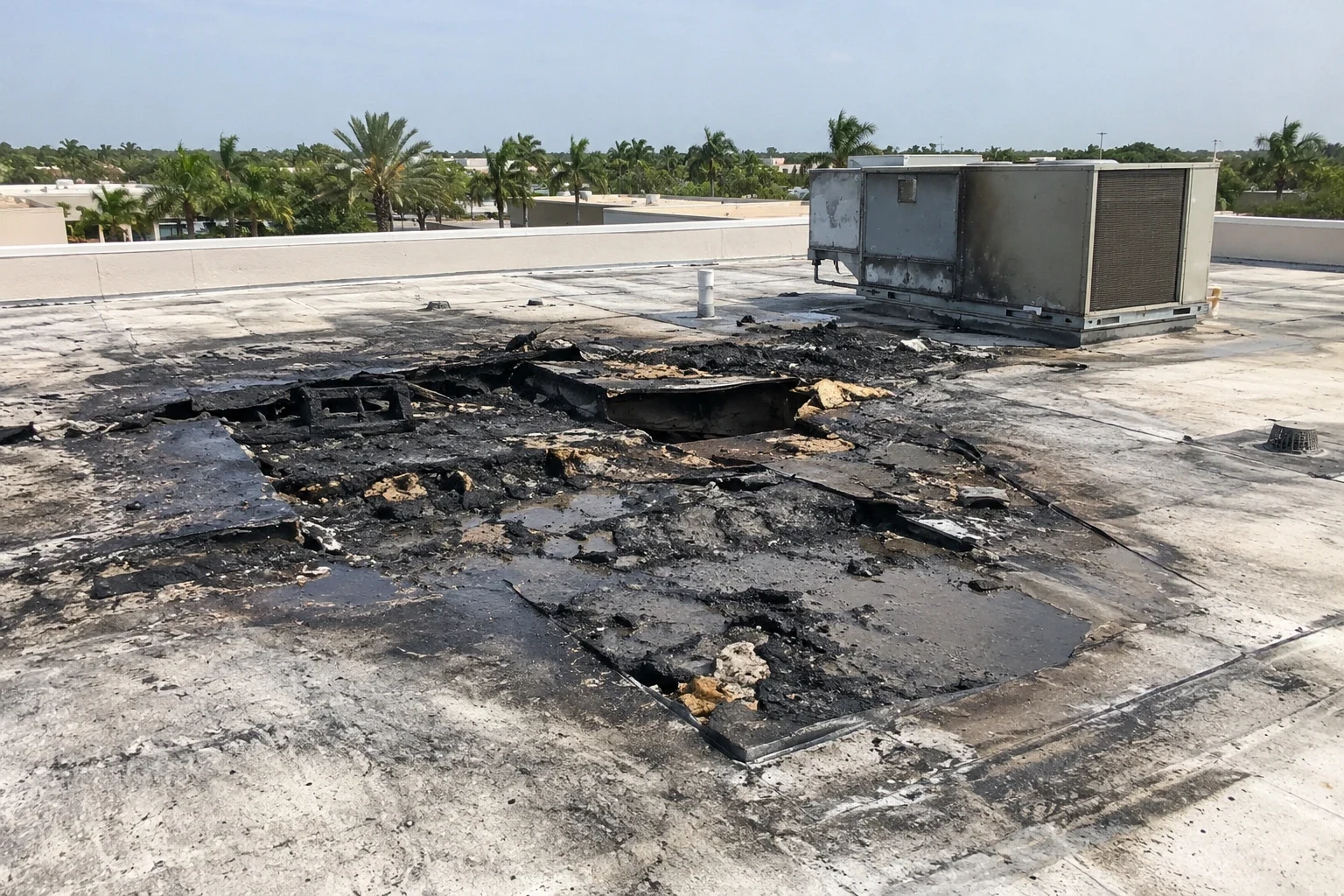
After strong wind, the first decision is whether the roof has an opening that needs immediate protection or visible damage that can wait for a safe inspection. We ask what room is affected, whether water is still entering, and who can authorize a temporary dry-in. Then we check the roof edge, flashings, seams, penetrations, and loose components that may move again in a second gust. In Plantation, the city's Gateway district extends along State Road 7 and includes retail, medical and professional offices, dealerships, and a hospital; Midtown brings offices, medical buildings, housing, and shopping into one mixed-use district. Those settings make interior protection and access timing part of the response, but the building's observed condition determines the repair. A Gateway property receives a roof-zone record that separates urgent closure from the permanent allowance. If water entry is active, a temporary roof response can secure the exposed area while the scope is confirmed.
Which roof detail moved or opened?
Wind can lift a perimeter detail, pull a flashing transition, shift a metal panel, displace a cap, or drive debris into a membrane. We inspect from safe access points and identify the exact roof section before walking near loose material. A lifted edge does not automatically mean the entire field has failed. The repair boundary follows what is visibly detached, split, punctured, or no longer fastened, with a split-seam check nearby. If water has entered, we trace from the interior mark to the roof rather than assuming the stain sits directly beneath the opening.
The first visit records existing patches, loose fasteners, edge metal, coping, drains, and equipment curbs that may affect the repair. Photos show the detail and its surrounding area, while notes separate present damage from wear that predates the wind event. A commercial roof inspection can map the condition beyond the emergency zone. When perimeter components have moved, an edge and coping review can define the metal, attachment, and membrane tie-in that need repair. We identify a test opening only when the visible condition cannot answer whether insulation or deck material is wet.
How much protection is needed before the next gust?
South Florida's severe-weather period peaks between May and August, with damaging thunderstorm winds among the regional hazards. Tropical cyclones are most active from August into October and can bring longer periods of wind and rain. Those seasonal patterns support a quick roof check, but a regional outlook does not establish that a particular roof has failed. The crew secures only the affected area that can be reached safely, and the property contact confirms which interior space needs protection first. If wind remains too strong for safe access, we stabilize what can be addressed from inside and return when roof work is safe.
A temporary cover must have a defined limit, attachment plan, and check point. We agree who will monitor the area, how the manager will receive an update, and what triggers a return visit. In Midtown, office, medical, retail, and residential uses can bring different operating hours, so the building contact sets access and notification rules. A Midtown roof area still needs its own inspection; district land use is context, not evidence about its assembly. For damage that follows a major tropical event, a hurricane damage assessment can document the broader condition, while this wind scope remains tied to the actual component that moved.
What changes the repair allowance?
Cost depends on how much edge, flashing, membrane, or panel material must be removed to reach sound attachment. A localized repair may fit when the substrate is firm and surrounding seams remain secure. If repeated movement, wet insulation, a damaged deck, or widespread loose fasteners appear, testing and a larger section may be necessary. The proposal names the roof zone, material, removal limit, temporary closure, access equipment, and disposal. Any hidden condition that could change the quantity becomes a separate approval point rather than an assumed extra.
Metal, membrane, and built-up systems do not use the same repair detail. We confirm the existing assembly and follow a compatible fastening, flashing, or seam method. A standing-seam metal review considers panel movement and clips; a TPO seam review checks welds and compatible membrane. Wind also affects how quickly exposed work must close, so the daily stop line should be small enough to secure before conditions change. The owner sees which part is temporary, which work restores the assembly, and whether a test is needed before pricing a wider repair.
How can the crew protect active operations?
Often, when the roof zone and interior area can be separated from daily operations. We confirm tenant entrances, patient or customer routes, loading activity, sensitive equipment, and any space below the affected detail. The property manager approves the access route and interior boundary. The crew stages materials away from clear paths, posts barriers where needed, and gives the contact a time for the next update. If a lift or debris container must occupy parking or a delivery lane, that use is confirmed before mobilization.
Plantation Gateway includes about 400 businesses across retail, professional and medical offices, auto sales, and hospital uses. A medical setting may need one access window while a storefront needs another; the district profile does not decide the schedule for a specific property. We coordinate with the site representative and keep the work limited to the authorized roof section. A commercial office repair may require tenant notice, while a hospital roof scope may need continuity planning for active clinical space. If the wind reopens a temporary closure, the owner receives the location and condition before another section is opened.
What should be in the wind-damage record?
For a roof with edge movement, the repair record should name the perimeter section, attachment condition, and how the restored edge was checked. If a panel remains loose or a termination sits under temporary protection, list it as outstanding and assign a return check after weather allows. The property contact should know which part is ready for routine access and which part remains restricted. That detail helps distinguish completed closure from a temporary safeguard when later rain tests the work.
Commercial Roofing Questions
How do we keep a wind repair out of patient and tenant routes?
First protect people and the interior area below, then let us confirm whether the edge remains loose or has opened the roof. We define the reachable zone, install temporary protection when conditions allow, and state what permanent fastening or flashing repair is supported. If high wind makes access unsafe, roof work waits for a safe interval.
Does loose edge metal mean the whole roof needs replacement?
No. We check the adjacent membrane, fasteners, seams, and substrate to see whether damage stays within one perimeter segment. A broader proposal needs evidence such as repeated detachment, wet layers, or failure across multiple zones, not a single loose piece by itself.
Can you protect the building before a complete estimate is ready?
Yes, when the site can be reached safely and the owner authorizes temporary work. We identify the exact area to cover, the limit of that protection, and the inspection needed to price a permanent repair. The closeout keeps interim protection separate from completed restoration.
How should we document wind damage for a claim?
Keep the event date supplied by the owner, interior report, roof-zone photos, visible conditions, temporary measures, and repair authorization together. We can organize those observations, but a regional wind report or contractor record does not decide whether a policy covers the loss.
What information helps arrange a return visit?
Share the affected room, current water status, roof access contact, building operating hours, and any lift or delivery restrictions. We use those details to set a safe route, identify the next roof section, and confirm whether temporary protection needs another check.
Related Roofing Work
Secure the wind-opened area before pricing the full scope
Tell us where water appeared, which space sits below the affected roof, who can authorize access, and whether the opening is still active. We will check the edge, seam, or flashing, define a temporary dry-in limit, and return a permanent repair allowance with the next approval.