Commercial Roof Recover in Plantation, FL
Commercial Roofing Services: Commercial Roof Recover
An overlay can save removal work only when the roof below it is dry, stable, attached, and suitable to remain. For an owner in Plantation, FL, that first question affects project cost and how much material the crew must open during the wet season. We inspect the existing assembly, map repairs and drainage, and identify a test location where concealed layers could change the decision. The recommendation separates a possible recover from any condition that needs removal, rather than pricing a new layer over an untested assumption.
In Plantation Midtown, medical and corporate tenants operate alongside retail, housing, and a regional shopping center. That mix can limit roof staging and room access during an occupied shift. Along Plantation Gateway, hospital and dealership properties have their own delivery and access windows. The property contact defines those limits before the option review. A pre-overlay inspection maps observed zones. In Plantation Gateway, the property contact confirms the delivery route and work window before materials are staged.
Which conditions decide whether a recover can stay in scope?
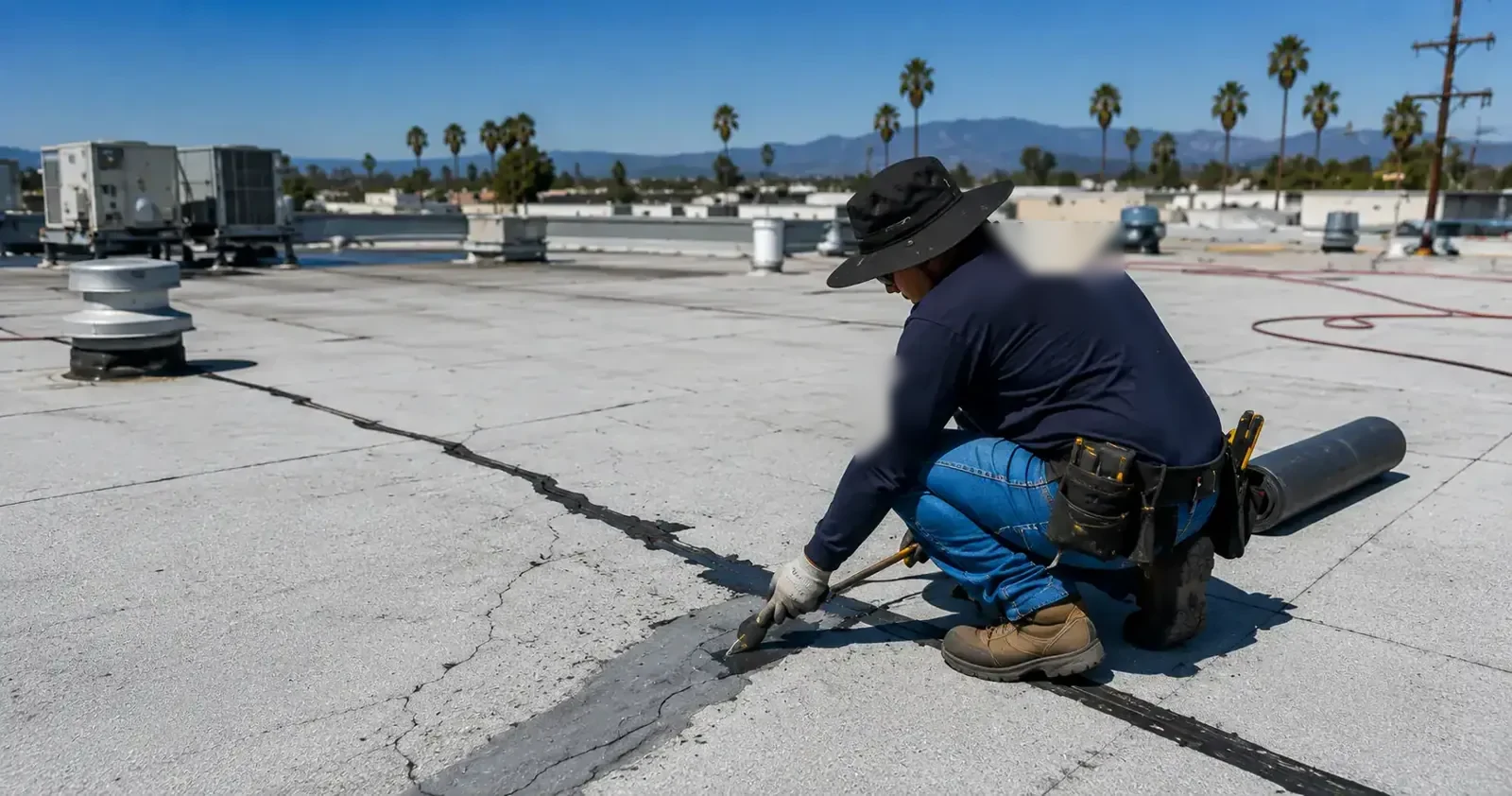
The existing layers need review for moisture, adhesion, attachment, compatibility, and their ability to support a new system. We map splits, open seams, blisters, patches, and movement at curbs or walls. Where a hidden layer could change the decision, a test opening shows the assembly at that point; neighboring zones remain separate until checked. The report distinguishes a thermal indication from material confirmed by a core.
Plantation’s wet season concentrates South Florida rain into several months, so we check drain height, overflow clearance, and flashing height before adding a layer. A drain and scupper review identifies corrections that belong in the overlay plan. An infrared and core-cut survey can focus testing where results may change the quantity. If tests find wet material or unstable attachment, removal should be compared before installation is approved.
We also check whether the proposed cover board, insulation, and attachment can bridge the existing surface without hiding a failed transition. Loose perimeter material, crushed insulation, or trapped moisture may need a different boundary than the field membrane. The report identifies which detail is confirmed, which needs a test, and which item requires design review before the overlay assembly is selected.
What changes the cost of leaving the old roof in place?
Recover pricing depends on preparation, surface repairs, insulation, attachment, perimeter work, curb height, drain modifications, and access. We measure the area that can be prepared and list exclusions separately. Loose material, unresolved moisture, or incompatible coatings can expand work or end the recover option. The estimate states whether approval covers testing, preparation, or installation.
A new membrane needs a compatible substrate and secure edge detail. We review walls, equipment supports, roof hatches, joints, finished height, and whether existing flashing can reach the new surface. A TPO recover assembly must fit the project conditions; the product label cannot settle substrate suitability. Davie's Road corridor planning considers stormwater, parking, transit, and street improvements. For a Davie Road commercial property, the owner confirms lift placement, material route, debris handling, and loading access for the actual site.
When is removal the lower-risk choice?
Removal may be the clearer scope when tests find wet insulation, weak attachment, several failed layers, or a deck condition that needs direct review. It exposes more of the assembly and lets the team correct insulation, drainage, and transitions together. Recover retains old material below the new roof, reducing tear-off but leaving concealed conditions. We compare those tradeoffs with test results and show what could change after opening.
A replacement comparison uses the same roof-zone map and lists tear-off, deck assumptions, disposal, insulation, drains, and dry-in limits. A bounded repair scope can address an isolated seam or flashing issue while a broader review is scheduled. For a recover, the building team must resolve the existing layer count, finished height, and assembly compatibility against the project's adopted code requirements before work authorization. The design professional and local reviewer settle provisions specific to the alteration.
How does the wet-season window affect an overlay?
Recover work still opens sections for preparation, repair, and tie-ins, so rain can interrupt installation. We set the area the crew can close in one shift, temporary protection, inspection point, and person who can approve a change. A short weather hold can move the return visit; a broad opening increases the surface relying on interim protection.
Plantation Gateway includes medical and professional offices, retail, dealerships, and a hospital, each with its own access limits. The contact identifies occupied hours, equipment that cannot stop, and a delivery route for materials. We check current weather and system installation requirements before covering the existing roof, then record any protection left in place and the next approval needed to continue.
When a facility has delivery or patient-service windows, the sequence identifies where materials can be staged and which entry remains open. We confirm who can release roof access and who receives notice if the crew stops for weather. That decision matters when a temporary tie-in remains overnight, because the return visit must restore the planned section before another phase opens.
What should the owner approve before the crew covers the roof?
Before installation, the file should show tests, preparation, repairs, layer assumptions, attachment, drainage, edges, equipment interfaces, occupied hours, and excluded zones. If an opening exposed an unexpected assembly, the owner approves the revised quantity before it is covered. A photo-supported condition record keeps pre-cover evidence with each roof zone.
Closeout lists materials installed, drain and overflow clearance, flashing height, temporary boundaries, weather holds, and return visits. The owner should know which old layers remain and where additional testing may be needed. Send the roof plan, water-entry location, space below, access contact, and work window. We will inspect the proposed section and return a recover-versus-removal scope split with the next approval marked.
Commercial Roofing Questions
How do you confirm that an existing roof can support a recover?
We map visible conditions, review the layers and attachment where they can be confirmed, inspect drainage and perimeter height, and test concealed material when that result could change the option. The report identifies what the test showed and which zones remain untested. The design team then confirms compatibility and applicable project requirements before installation is approved.
Will a recover correct ponding water?
Only when the scope includes a designed drainage correction that changes the water path. Adding membrane by itself does not remove a low area or correct a blocked outlet. We check slope, drain and overflow elevations, then identify whether a taper, cricket, outlet correction, or a broader replacement detail is needed.
What happens if testing finds wet insulation?
The location and extent of the confirmed wet material are recorded, and the owner receives a removal or repair quantity for that boundary. If nearby sections remain uncertain, we identify additional testing as a separate approval. The recover estimate changes only after the added evidence supports a revised scope.
Can an overlay be completed in phases while a business stays open?
The facility contact identifies occupied hours, entries, equipment, and delivery routes that must remain available. We divide the work into roof sections with a dry-in point each shift, then state the weather hold and return visit. The phasing plan depends on roof geometry, installation conditions, and how each section ties into the existing surface.
What should be compared in a recover and tear-off proposal?
Use the same roof map and list preparation, repairs, insulation, drains, edges, equipment transitions, access, disposal, and temporary protection for each option. We also show the test assumptions and condition that would change the quantity. That lets the owner compare a lower initial opening with the risk and future access cost of keeping the old layers.
Related Roofing Work
Compare recover with removal
Send the roof plan, reported water location, space below, access contact, and work window. We will document the existing roof section, identify testing needs, and return the next approval for a recover or removal scope.