Warehouse Roofing in Plantation, FL
Property Types We Roof: Warehouse Roofing
A warehouse roof decision starts with what sits below the leak: stored inventory, a shipping lane, electrical service, or a dock that cannot stay closed. In Plantation, FL, heat and frequent rain make the repair boundary and dry-in plan part of the operating schedule. We inspect membrane or metal panels, drainage, penetrations, perimeter details, and prior repairs, then separate immediate protection from renewal work. Pompano Beach reports a substantial industrial and warehouse market, while Pembroke Pines includes warehouse and industrial properties. Warehouse and distribution activity gives the owner reason to plan around loading and stock exposure. A hands-on roof inspection maps the affected section, checks seams, edges, drains, and penetrations, then identifies the next approval and any interior protection needed during repairs.
Which operations need protection first?
Start with the receiving and storage plan. Mark the interior zone, inventory exposure, racking, forklift travel, and any electrical or control equipment below the suspected entry point. We trace upward from the water mark and record whether it aligns with a roof seam, drain, curb, or wall transition. If water is moving along a deck or insulation layer, the stain may not be directly below the opening. A temporary dry-in should protect the active area while the permanent scope identifies what must be removed.
Dock schedules affect staging and lift access. We coordinate delivery timing, roof hatch routes, and areas that need to remain open while materials move. A phased warehouse plan can assign roof sections to shifts and show where temporary protection ends. At the Bergeron Park industrial area in Pembroke Pines, warehouse and distribution development is part of the broader local industrial cluster. A property team can use that local context to plan vendor access without assuming another building has the same roof, hours, or loading pattern. A distribution-center roof plan may need a different phasing strategy when sortation and outbound dispatch cannot pause. A cold-storage roof review must also consider temperature-controlled rooms and vapor-control details below the deck.
What should be checked above the storage area?
On a low-slope membrane, we inspect seams, punctures, flashings, insulation transitions, drains, and perimeter attachment. On metal, we look at panel laps, fasteners, washers, ridge and eave conditions, and penetrations. Repeated service routes can wear a membrane or loosen a detail, but the repair still needs to reach sound material. We record whether the surrounding assembly is dry and securely attached before limiting work to one opening.
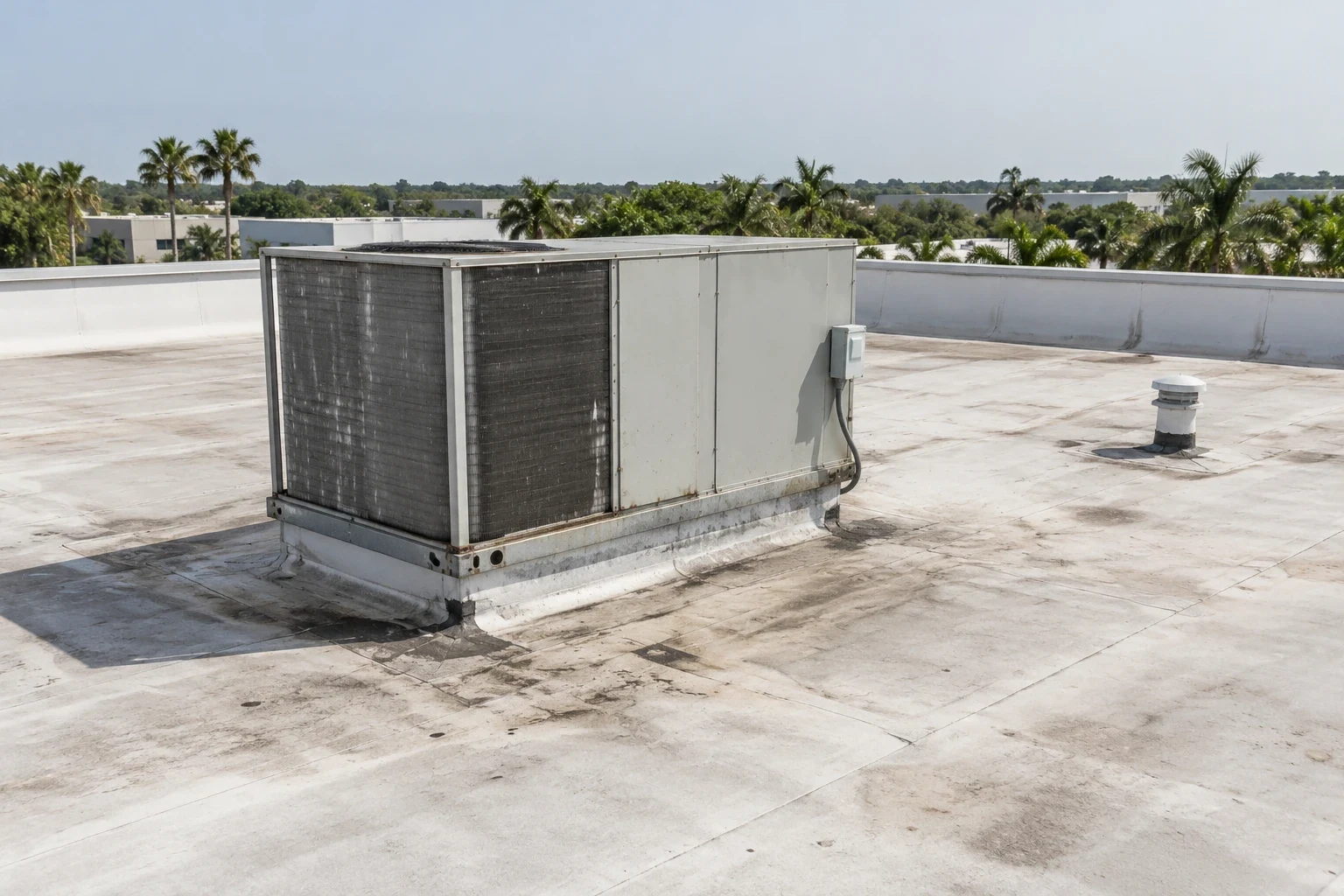
Rooftop units, vents, and support frames can interrupt the roof surface. The warehouse maintenance lead should identify which equipment can be shut down or moved, and which trade owns the reset. The equipment base and penetrations must be measured and assigned to a trade before material is ordered. Where damage is confined to a sound assembly, a targeted repair may protect the affected section. If the same seam or penetration has been repaired repeatedly, we record that history and compare a broader option.
How can drainage protect stock and shipping?
Fort Lauderdale climate normals reflect a warm, humid climate with substantial rainfall. During the rainy season, an obstructed drain or slow overflow can keep water on a roof while a warehouse continues loading below. We inspect strainers, drain bowls, scuppers, overflow paths, and nearby seams, then identify what can be corrected without opening the assembly. If water remains after outlets are clear, slope or insulation may need further investigation.
We do not price a drain repair from a ceiling stain alone. The record should show where water collects, which outlet is affected, whether the overflow can function, and what rooms or stored goods sit below. A drain and scupper assessment can separate the plumbing-side work from membrane repair. Pompano Beach's industrial market includes distribution and manufacturing sectors; a warehouse owner still needs an individual drainage review because dock levels, roof slopes, and outlet layouts vary by building.
When does a patch become a larger project?
A local repair is reasonable when the membrane or panel remains serviceable, the substrate is dry around the defect, and edge or flashing conditions are secure. Widespread wet insulation, repeated seam openings, loose perimeter attachment, or corrosion across panels can change the recommendation. A test opening may identify the layers and moisture extent before quantities are final. We show which areas are confirmed and what concealed condition could change the cost. The proposal can separate membrane or panel work from insulation, deck repair, drain replacement, edge-metal changes, equipment coordination, and after-hours access. That gives an owner a clear base scope and a separate approval point if removal exposes a condition that could not be seen during the first inspection.
A recover should be considered only after checking existing layers, attachment, drainage, deck condition, and project requirements. A recover evaluation compares the existing assembly with a potential new layer; replacement may be more appropriate where material is wet or unstable. Florida's eighth-edition code became effective statewide on December 31, 2023; select the provisions and product approvals that fit the warehouse and proposed work. A roof condition report can preserve the findings for capital planning and future maintenance.
What should the warehouse receive at closeout?
The work plan should identify the roof zone, removal and repair assumptions, daily dry-in line, drainage items, access route, and any operation that must pause. If removal exposes wet insulation or a different deck condition, we mark the added area and request the next authorization before continuing. That gives the property manager a defined decision instead of an open-ended change after the roof is exposed.
Closeout should record the repaired area, material and attachment, seam or flashing detail, drain condition, approved changes, and items that still need attention. Send the leak location, dock schedule, roof access rules, drawings, and previous repair records before the inspection. Our emergency response can protect an opening outside normal operating hours; permanent work follows when the substrate and weather window allow. The owner leaves with the remaining exposure and return decision identified. The closeout also ties the repaired area to the dock or storage zone and records which route can reopen after the roof is secured. We record the approved closure point and the person responsible for reopening the affected dock or storage zone. We also record whether stored goods can return to the protected zone, whether dock staging may resume, and which maintenance item should be checked before the next heavy rain period.
Commercial Roofing Questions
Can warehouse operations continue during a roof repair?
Warehouse work can proceed with a defined roof zone, safe staging, and protection for inventory and travel lanes. The building contact identifies restrictions, and we set a daily closeout boundary before opening the roof. We confirm the approved section and access route before material moves overhead.
What if the leak appears near a loading dock?
We protect the dock and trace the water path above it. The inspection checks nearby seams, drains, curbs, and wall transitions before the repair limit is set.
Should a warehouse roof be recovered or replaced?
Existing layers, wet insulation, attachment, drainage, and edge condition determine whether a recover can be considered. We document those items and separate test openings from confirmed work.
How do you handle a storm during tear-off?
The crew stops at the planned dry-in limit, secures exposed material, and records the roof zone that remains. The owner receives the return and approval decision before removal resumes.
What affects warehouse roof repair cost?
Access, roof height, removal, insulation, drainage, equipment coordination, and the area that must be protected all affect scope. Concealed conditions are listed separately for approval.
Related Roofing Work
Protect the affected warehouse zone
Tell us where water appeared, what inventory or operation is below it, and when the dock can be accessed. We will inspect the roof, set a dry-in boundary, and price the next authorized step.