KEE Roofing in Plantation, FL
Roof Systems: KEE Roofing
A KEE roof can reach the repair-versus-renewal decision with more than a product label at stake. A seam may be sound while a curb flashing or drain transition admits water, or a visible patch may sit over wet insulation that changes the scope. In Plantation, FL, humid weather and frequent summer storms make the daily dry-in boundary part of the budget. We identify the installed membrane, inspect welds and transitions, and map what can remain before recommending a repair or larger project. Plantation Gateway includes medical and professional offices, dealerships, retail, and hospital uses along State Road 7, where access windows and protected rooms can affect the sequence. A roof inspection turns those site conditions into a defined scope.
What is different about KEE?
KEE is a PVC membrane alloy that combines PVC with a ketone ethylene ester component. It is still a single-ply system with heat-welded seams, but the specific sheet, reinforcement, accessories, and installation requirements depend on the product specification. We verify what is present before selecting a patch or accessory. A generic PVC detail may not be compatible with every KEE assembly, and a repair should not begin until the membrane and available material are matched. We look for a product marking, an old submittal, roof plans, and material records before specifying the repair. If the record does not settle the question, a small test area can show how the existing surface responds to preparation and welding. That check avoids extending a patch onto a sheet that cannot hold the intended detail.
Owners may compare KEE with other membrane types when planning a major renewal. PVC roofing and TPO roofing share the heat-welded seam concept, but chemistry, accessories, repair methods, and specified uses differ. We compare the actual system documents with the roof condition instead of picking a membrane from an assumed advantage. Plantation Midtown's district includes office, medical, retail, housing, and shopping-center uses; the operational exposure and maintenance access at the actual building should guide that comparison.
Which roof details decide whether a repair will hold?
Welds at field laps, corners, penetrations, and perimeter conditions need examination because each can be affected by dirt, age, movement, or prior work. We probe accessible seams, check whether a weld is continuous, and look at flashing transitions where the field sheet changes direction. A repair should extend onto sound, prepared material, not cover a loose edge and leave the water path untouched. Where older patches overlap or the exact membrane is uncertain, a small test and product identification can prevent incompatible work.
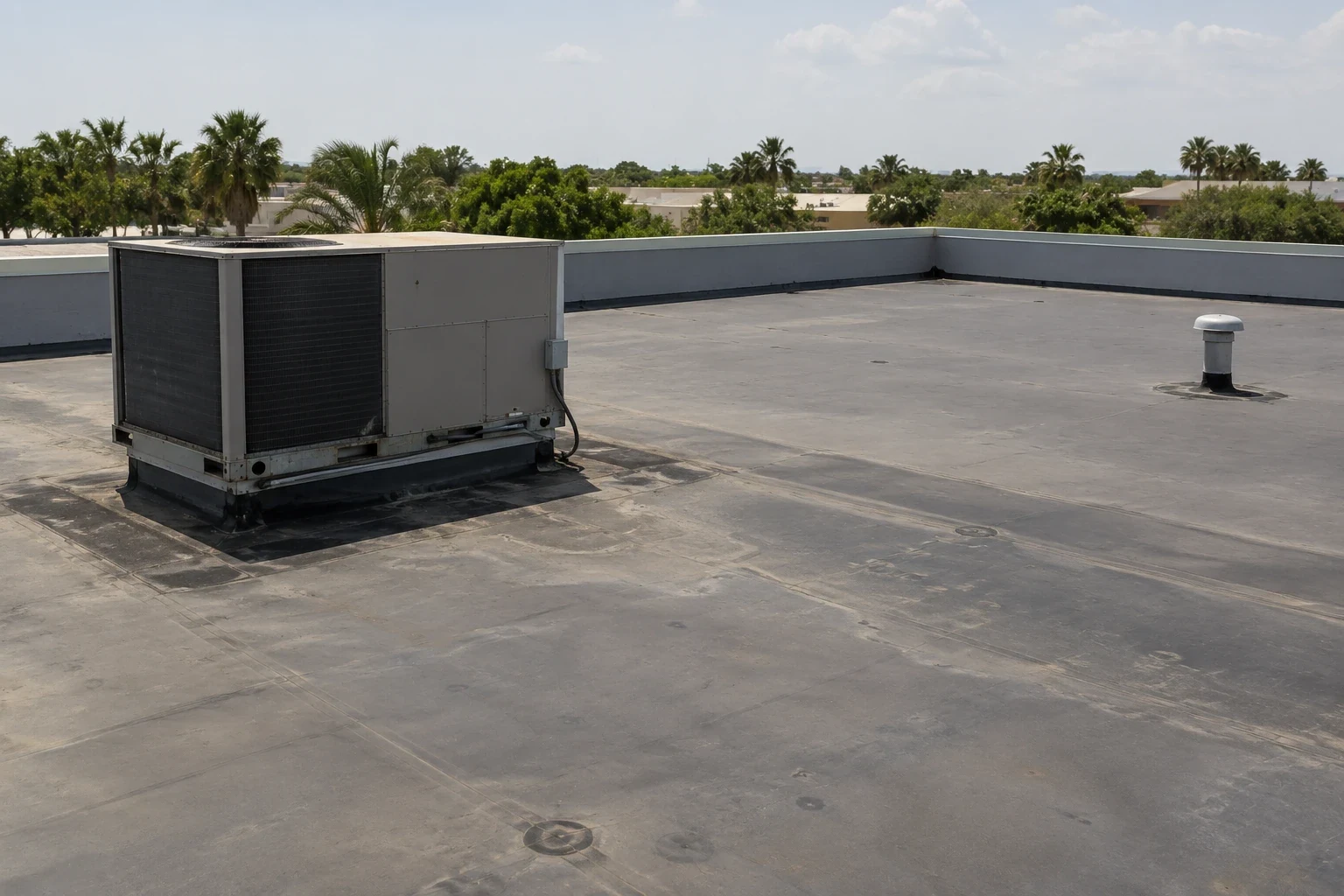
Curbs, pipe supports, and rooftop service routes add movement and foot traffic. We record which equipment affects the scope and who can authorize disconnects or lifts. The membrane detail may require coordination with another trade, but the roof closeout remains assigned to the specified roofing scope. A curb and support review can identify the interface, while a drain and overflow check covers the areas where water should leave the roof. When equipment or standing water is present, we inspect the nearby seam, drain interface, and insulation before including broader repair. The report ties each finding to a roof zone and identifies whether more testing is needed before pricing adjacent areas.
How do Plantation storms change the work window?
Fort Lauderdale climate normals show a warm, humid setting with substantial rainfall, while South Florida's rainy-season hazards include damaging wind, lightning, flooding, hail, and occasional tornadoes. Heat and afternoon showers affect how much roof can be opened and closed in one shift. We stage materials, confirm access, and define a daily boundary that can be secured before a weather hold. If the forecast moves, work pauses at that boundary and the owner receives a clear status on what is protected and what requires a return visit.
Drainage deserves a separate line item when outlets or overflows are involved. We clear and document accessible conditions, inspect the membrane around drain bowls, and record whether a slope or insulation issue appears to contribute. A ponding-water review can set a test boundary where the cause remains unclear. Davie's 1,104-acre redevelopment area includes business districts and industrial land, where each property's access and occupied-hour requirements shape the work window.
When should the scope expand beyond one weld?
A localized repair can make sense when the KEE sheet is identified, adjacent material is compatible and sound, insulation is dry, and attachment remains secure. If similar seam separation appears in several areas, water has reached the substrate, or edge details are loose, the proposal should compare broader work. A recover is not a default answer: the existing layers, moisture, drainage, attachment, perimeter, and code requirements all affect whether another assembly can be installed. We state which items are confirmed and what would be learned from a test opening. The estimate can separate membrane work from deck repairs, insulation replacement, edge metal, drain corrections, and access equipment. That makes the owner's decision specific: approve a known repair, authorize investigation of hidden conditions, or price a defined replacement area. Changes outside that limit return for approval before production continues.
A replacement estimate should account for removal, deck preparation, insulation, attachment, flashings, edge work, drains, penetrations, and disposal. Florida's 2023 Building Code took effect statewide on December 31, 2023, and the project must be reviewed under applicable current requirements. An assembly and recover evaluation can separate an eligible overlay from a roof that needs removal. Where tenants or clinical operations continue, a phased work sequence sets daily access and interior protection limits.
What belongs in the owner’s closeout file?
Closeout should connect each repaired location with the installed KEE system, seam or flashing detail, material used, inspection result, photographs allowed by property policy, and any condition left for later work. If the crew finds wet insulation or a different membrane beneath a patch, that discovery belongs in a change request before additional area is opened. Keeping the authorization trail with the roof map gives the next manager a defensible record of what was repaired and what was not.
Before mobilization, provide the interior leak location, roof access procedures, system records, prior repair history, and the person authorized to approve added scope. We can respond after hours to protect an opening, then schedule permanent work when the roof and weather window allow. A condition report can organize the observed areas for future budgeting. The work closes with a next decision: accept the bounded repair, investigate a concealed condition, or compare renewal options for the affected roof section.
Commercial Roofing Questions
Can a KEE membrane use any PVC repair patch?
No. We identify the installed product and confirm compatible sheet, accessory, and weld procedure before repairing it. The specific detail controls the material choice.
What if the exact KEE product is not listed in the roof records?
We inspect markings, available samples, and existing details, then use a controlled test or product documentation when needed. The repair scope stays limited until compatibility is established.
Does KEE eliminate seam maintenance?
No membrane removes the need to inspect seams, flashings, drains, and roof access areas. We record condition and address repair needs before small openings expose more insulation.
Can the roof work continue during an afternoon storm?
Work stops when the remaining dry-in window is not adequate. The crew protects the approved open zone and the owner receives the status and return decision before work resumes.
How do you price a recover against replacement?
The comparison starts with existing layers, attachment, moisture, drainage, edges, and applicable requirements. We identify what is known and price test openings or concealed-condition allowances separately.
Related Roofing Work
Confirm the KEE assembly before authorizing repair
Send the roof record, interior leak location, access requirements, and repair history. We will identify the membrane and affected details, protect active exposure, and outline the next approval.