
Built-Up Roofing in Plantation, FL
Roof Systems: Built-Up Roofing
A built-up roof can hide a wider wet area beneath a small blister, split, or interior stain. Before choosing a patch, the Plantation, FL owner needs to know how many layers are present, whether the insulation is dry, and where water can leave the roof. We inspect the surface, seams, flashings, drains, and any prior repair, then mark the area that can be opened and protected within the available weather window. Plantation Midtown includes offices, medical buildings, retail, housing, and a regional shopping-center cluster, so the cost of interior interruption depends on the property and its tenants. Our inspection documents the layer condition before the proposal separates a local repair from a larger renewal.
What does the existing roof reveal?
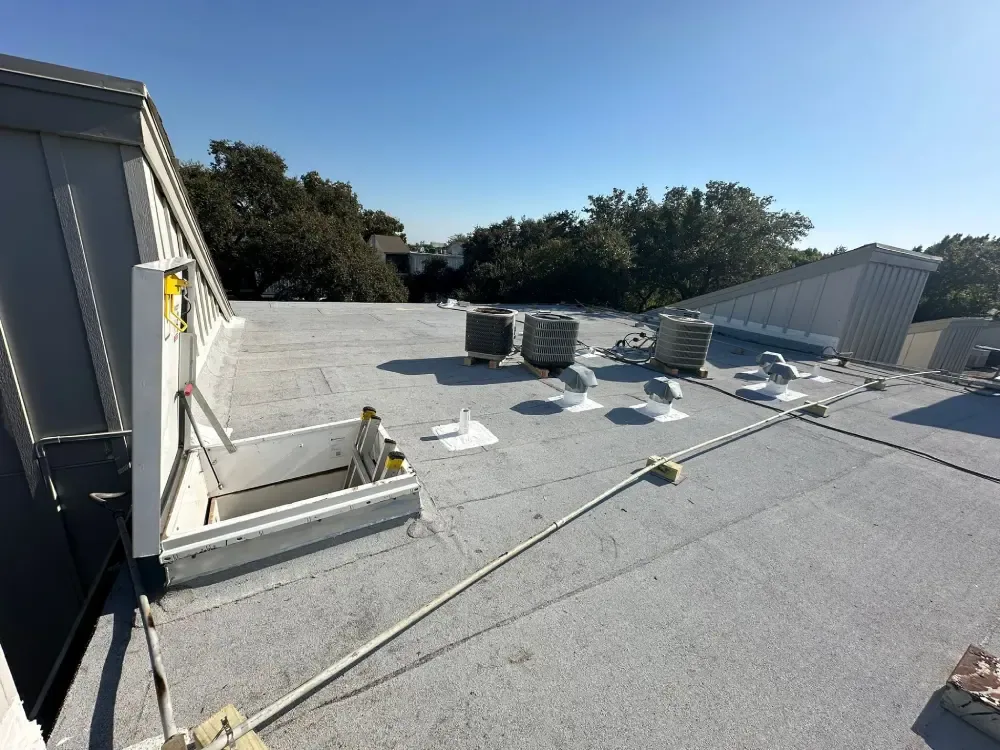
Built-up roofing uses alternating plies of reinforcing material and bitumen, often finished with aggregate or a cap sheet. Those layers can conceal the exact extent of moisture until a test opening shows the substrate. We look for alligatoring, blisters, exposed reinforcement, open laps, loose flashing, and patches that bridge older repairs. A surface coating can change what is visible, so records and a safe opening may be needed before the scope is fixed. When a test cut is authorized, we mark the location, photograph each layer, check insulation and deck condition, and close the opening with a compatible repair. The cut should answer a decision, such as whether the surface is wet, whether the deck needs work, or whether a recover can remain in consideration. If the result does not change the scope, further openings may not be needed.
The number and condition of existing layers matter to both attachment and removal. We record whether the deck feels stable, whether insulation is wet, and if prior work added material over older assemblies. An overlay review checks whether a recover can be considered; it does not assume a new layer is suitable. Where the roof is too wet, poorly attached, or too uneven, removal and replacement may be the safer route to a defined assembly. A modified-bitumen system comparison can help explain a different asphalt-based option without treating it as identical to BUR.
How do you find the water path?
Water can travel along a ply, under a cap sheet, or across insulation before reaching a ceiling. We start with the reported interior location, then check drains, low areas, penetrations, wall transitions, and the nearest repair history. If several roof zones show staining, we map them separately rather than assume one entry point. A test cut can show the layer stack and moisture condition where noninvasive inspection cannot settle the repair boundary.
Localized openings need a compatible tie-in to the existing roof and a closeout that withstands the next rain. A flashing repair assessment can isolate an open wall or curb detail. We may also inspect a roof drain or overflow if the low area has held water; a drainage check records what is clear and what needs separate correction. The written repair identifies the plies or cap material to remove, the substrate repair, and how the work closes at the edges.
What changes the installation schedule?
Plantation's heat and humidity place demands on the roof, while Fort Lauderdale climate normals show substantial rainfall across the year. During the rainy season, each opening needs a limit that can be secured before a storm. The work plan states how much roof can be stripped, what temporary protection is staged, and the condition required before new plies are installed. A damp deck or insulation cannot be covered simply to preserve production; it needs to be dried, replaced, or otherwise addressed in the approved scope.
Hot-applied work also requires fire prevention, controlled material handling, and access coordination. Occupied rooms, exhaust intakes, equipment, and deliveries can affect where the crew stages and which section moves first. Plantation Gateway's State Road 7 district includes medical, office, hospital, dealership, and retail uses, so the owner should define the building's operating limits before scheduling. A phased reroof plan can coordinate work hours, protected interiors, and daily closeout without promising uninterrupted operations.
When is a recover less practical than replacement?
Recover is considered only after checking existing layers, moisture, attachment, drainage, deck condition, and the total assembly height. A roof with widespread saturation, weak bonding, repeated leaks, or unstable edges may need removal to restore a reliable base. We list what is confirmed and which test opening could change the estimate. The owner can see whether the allowance covers a defined test area, replacement insulation, or possible deck work, and which event requires written approval before the crew continues. The owner can then compare known work with a concealed-condition allowance instead of authorizing an undefined removal.
Replacement scope includes tear-off, deck repairs, insulation, plies, flashings, edge metal, drains, debris handling, and the time required to secure each section. Florida's eighth-edition 2023 Building Code took effect statewide at the end of 2023; applicable requirements depend on the project and building. A single-ply membrane comparison may be useful where a different assembly is under review, but the existing deck, slope, access, and system specification determine feasibility. We price changes to the assembly separately from the immediate leak repair.
What record supports the next roof decision?
Closeout should show which roof zones were opened, the plies and substrate found, the repairs completed, and any area left for future work. Photos and a marked plan can help property staff compare a later leak with this repair. If a test opening changed the quantity or layer count, the record should show the approval that authorized the change. A roof condition file gives future budget reviews a factual starting point rather than a memory of the last emergency.
Send the ceiling location, access rules, previous repair history, and roof plan before scheduling. We can respond at any hour to protect an active opening, then set the permanent repair or replacement scope when the surface and substrate can be inspected safely. The estimate identifies removal depth, dry-in limits, disposal, and the next authorization point. That clarity helps an owner choose whether to stabilize one area now or coordinate a larger project across a planned maintenance window. The record can also identify which drains were checked, where temporary protection ended, and which remaining defect needs attention before another storm period and whether the next visit is routine or weather-driven.
Commercial Roofing Questions
Can a BUR roof be repaired without removing all the layers?
Yes, when the damage is localized and the surrounding layers and substrate can accept a compatible repair. We inspect the boundaries and identify whether a test opening is needed.
Why might you recommend a test cut?
A small opening can reveal layer count, insulation condition, and deck moisture that the surface cannot show. We place it where the result will change the repair or replacement decision.
Does a gravel surface need to be removed before repair?
The selected detail determines preparation, and aggregate may need to be moved or cleared from the repair area. We state the preparation and restoration work in the scope.
What if rain interrupts tear-off?
The crew stops at the planned dry-in boundary, protects exposed material, and records what remains. The owner receives the status and return decision before the next section is opened.
What affects the cost of built-up replacement?
Layer count, wet insulation, deck repairs, edge and flashing work, access, debris handling, and weather holds all affect the scope. We separate visible work from conditions that require opening.
Related Roofing Work
Map the layers before authorizing a BUR repair
Share the interior leak location, roof records, and access requirements. We will inspect the assembly, set a test or repair boundary, and return the next decision with removal and dry-in assumptions.