
Commercial Roof Seam Failure Repair in Plantation, FL
Roof Damage Repair: Commercial Roof Seam Failure Repair
A narrow split along a roof lap can admit water long before the surrounding field looks worn. The first decision is whether the seam can be secured in place or must be opened to reach sound material. We identify the reported leak area, inspect the lap and nearby transitions, and decide what portion can be closed before weather changes. Fort Lauderdale's climate record averages 60.95 inches of annual rain, with 37.49 inches in the rainy season, so a reliable stopping point matters during repair. The city's Gateway commercial corridor runs along State Road 7 from Sunrise Boulevard to Peters Road, while Plantation Midtown includes offices, medical facilities, housing, and retail. Local activity shapes access; the roof assembly determines the seam detail. A Midtown seam inspection ties the water report to a named roof section before repair quantities are approved.
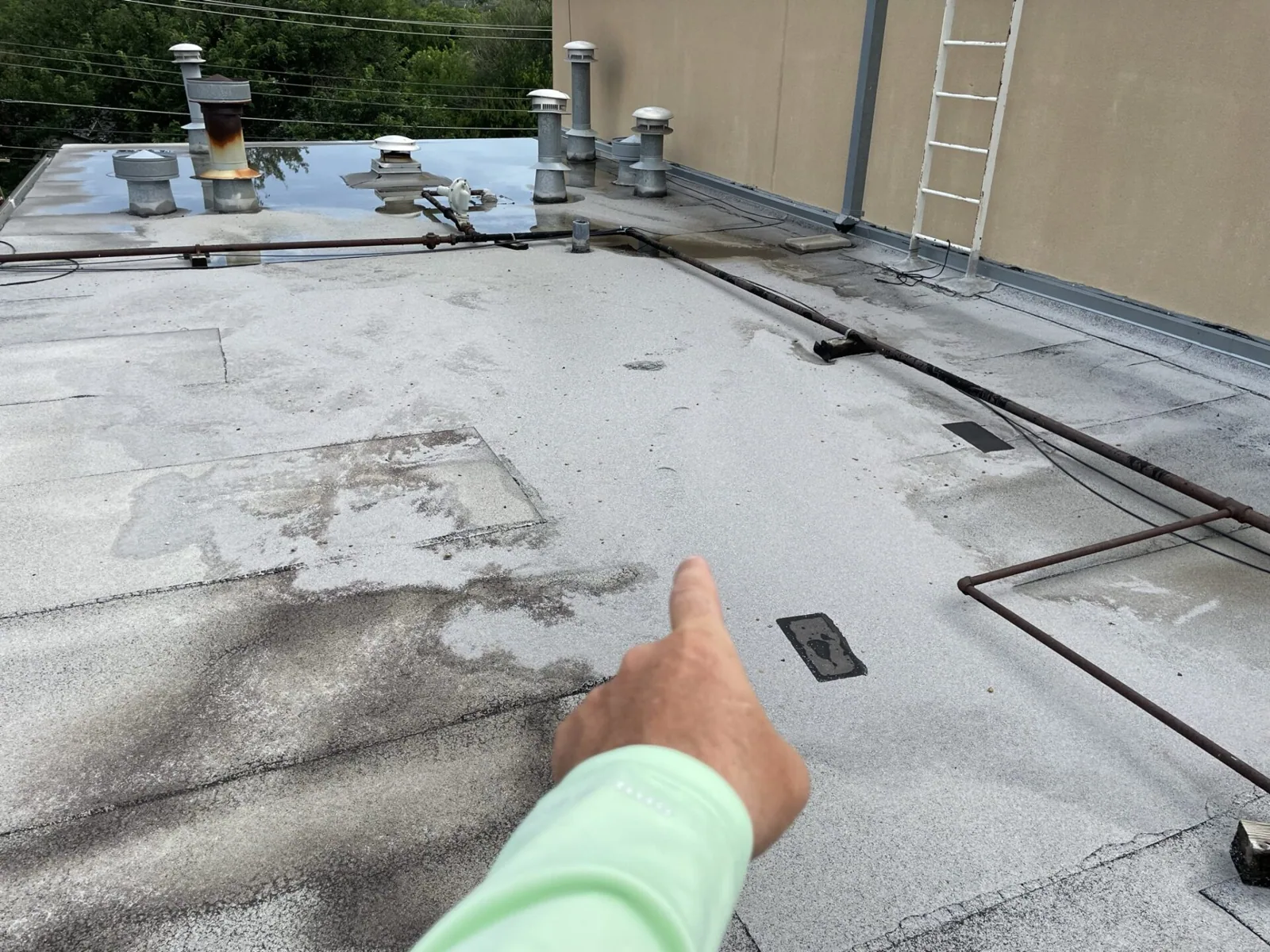
What caused the seam to separate?
On a single-ply membrane, a lap may open when a weld is inconsistent, the sheet moves, a prior patch fails, or the surface no longer accepts a compatible repair. Built-up and modified bitumen roofs can develop splits at laps or transitions for different reasons. We identify the material, seam direction, fasteners or welds where visible, and whether the separation is isolated or continues under a repair. A probe, peel check, or test opening can answer specific questions, but we request approval before disturbing more roof than needed.
The inspection also checks edge terminations, penetrations, drains, and nearby equipment where movement could load the seam. The interior leak mark can help prioritize a zone, but water may travel below the membrane before appearing in a room. A roof condition inspection records the surrounding details; a moisture survey may help map areas for confirmation if the method fits the assembly. If a puncture or cut is adjacent, a membrane puncture review can keep that separate from the split lap. We mark what is confirmed and what is only suspected.
How do moisture and heat affect the seam repair?
A seam repair needs a prepared, dry surface and a method compatible with the existing roof. Plantation's warm, humid climate and recurring showers can shorten the time available for cleaning, drying, welding, and secure closeout. Fort Lauderdale rainfall patterns make seam and drain checks useful; moisture testing identifies conditions beneath the inspected seam. We inspect the surface, consider moisture testing where it changes the decision, and set the opening limit to what the crew can protect. If a shower arrives early, the crew stops at the planned boundary and reports the next return condition.
South Florida's severe-weather peak falls from May through August, while tropical cyclones are most active from August into October. Strong gusts and wind-driven rain can test a temporary repair before permanent work is completed. We do not leave a split exposed for convenience; the daily work plan includes an interim closure and who checks it. A wind-damage check can document a separate displaced edge or panel, and a hurricane roof review can map conditions after a wider event. The repair remains limited to the seam that inspection supports.
When is a local seam repair enough?
A localized repair may be appropriate when the surrounding membrane is attached, dry, and compatible with the repair method. We remove failed material only to sound edges, prepare the surface, and restore the lap or cover strip with the system's appropriate detail. A short repair should not stop at the visible crack if probing shows separation beyond it. If several seams have opened across one roof section, or wet insulation extends under adjacent sheets, testing and broader replacement may be more economical than repeating isolated patches.
The estimate names the seam length, materials, surface preparation, tie-ins, access equipment, temporary dry-in, and disposal. It also states how concealed moisture or a weak substrate would change the quantity. An existing TPO seam needs compatible welding; a modified-bitumen lap follows a different repair process. The owner sees which method applies after the roof type is confirmed, not from a label supplied without inspection. If a recover is being considered, layer count, attachment, drainage, and wet areas must be resolved before another membrane covers the seam.
How can the work stay inside a safe roof zone?
Plantation Gateway combines retail, medical and professional offices, dealerships, and hospital uses, while Midtown has offices, housing, medical buildings, and shopping. Neither area's land-use description establishes a particular property's access rules. The manager confirms tenant routes, roof hatch restrictions, equipment shutdowns, loading hours, and any space below the seam that needs protection. We stage tools near the authorized work area and keep the daily boundary small enough to close securely. A temporary opening above an occupied room or an active electrical area requires a named contact and a clear interior safeguard.
Work can often be phased by roof section, depending on the assembly and weather. We identify what is removed, what remains covered, and the exact handoff if another shift is required. A phased building plan can set those boundaries; emergency protection can address active entry before the permanent seam scope is priced. Access or a weather hold may change the schedule, so the owner receives an update on completed work, the protected area, and the next approval before production continues.
Before closing a seam, the crew removes contaminants as required by the system and checks that the adjoining sheet is properly supported. A weld or bonded lap should not bridge trapped debris, moisture, or a loose underlying layer. The method and quality check vary by membrane, so the scope names the system and uses a compatible procedure. If the existing sheet is too degraded to accept a durable tie-in, that changes the repair boundary and should be discussed before extending the work.
What proves the seam was restored?
For a separated lap, the work record should identify the seam type, length addressed, preparation method, and check performed after the repair. If the membrane is brittle or the adjoining sheet has lost attachment, a narrow patch may not be a durable tie-in. We state any limit where material condition prevented a full evaluation and identify the next test or replacement decision. That gives maintenance staff a repeatable location and method for checking the seam after the next rainfall.
Commercial Roofing Questions
Can a split seam be welded or patched the same day?
Sometimes, if the roof type is confirmed, the surrounding membrane is compatible and dry, and weather leaves enough time to close the area. We inspect the lap and define a stop point before removing material. If the substrate or adjacent sheet is unsound, the repair boundary may need to extend farther.
How can we tell whether moisture spread under the seam?
A ceiling mark does not show the full wet boundary. We inspect nearby roof zones and may recommend a survey or test opening when the result could change removal quantities. The proposal identifies the area to check and the approval needed before opening it.
Does a repeat seam leak mean replacement is required?
Not by itself. We compare repair history, attachment, material condition, and moisture around the lap. A broader option makes sense when failures recur across connected areas or hidden damage changes the economics of another isolated repair.
What should be protected during a seam repair?
The owner identifies the room, inventory, equipment, or tenant area below the seam. We set the interior boundary, stage materials safely, and agree how the roof will be secured if weather interrupts the shift.
What records do you provide after the work?
The closeout lists the roof zone and seam length, materials and method, photos, concealed conditions exposed, and any work left outside scope. That record lets the manager compare the repaired lap with a later inspection or rain report.
Related Roofing Work
Find the end of the split before opening more roof
Tell us where water appeared, what lies below the seam, who can authorize access, and whether the leak is active. We will inspect the lap and adjacent assembly, set a secure temporary limit, and return the repair method and any test decision for approval.