
Commercial Roof Membrane Puncture Repair in Plantation, FL
Roof Damage Repair: Commercial Roof Membrane Puncture Repair
A fresh mark in the membrane may be a puncture, a cut, or surface wear that has not yet opened the roof. The first decision is whether water is entering now and what space below needs protection. We identify the reported room, inspect the roof zone, and check for nearby service paths, equipment, drains, and earlier patches. Plantation Midtown contains offices, medical facilities, housing, retail, and a regional shopping cluster, so equipment access and occupied hours can differ from one building to another. The property contact confirms equipment access and occupied-hour limits before work is scheduled. We confirm the membrane and substrate before choosing a repair detail, then set a temporary dry-in boundary if rain is expected. A Midtown roof call should close with the observed puncture location, what remains uncertain, and who can approve the permanent patch.
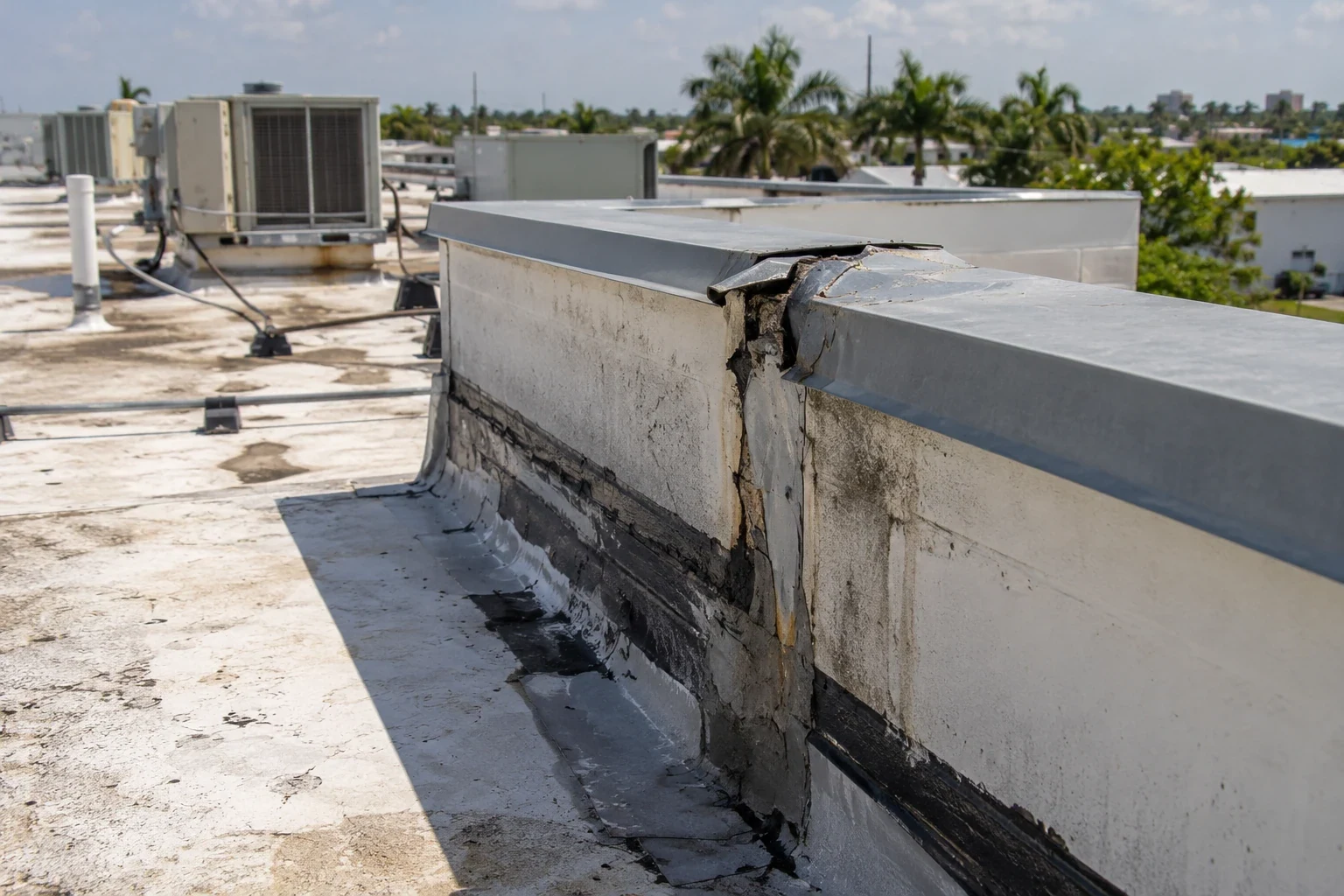
What made the membrane opening?
Foot traffic around rooftop units, dropped tools, sharp debris, fasteners, or maintenance activity can damage a membrane, but the mark needs to be examined before cause is assigned. We look for a cut edge, puncture shape, displaced cover, exposed reinforcement, or separation at a seam. Then we inspect nearby protection mats, walk pads, curbs, pipe supports, and routes used to reach equipment. If the roof has several layers or a prior patch, we record the surrounding material and identify where a test would clarify the boundary.
Water may travel below the surface before it appears indoors. The manager's report helps prioritize the zone, while roof photos and a moisture check can establish whether the repair stays local. We propose a test opening when its result could change removal or replacement quantities. A roof inspection can map the field, and a ponding-water review can identify whether retained water is reaching a nearby puncture. When the damage runs into an open lap, a seam failure check keeps that condition distinct from the puncture itself.
How much of the roof needs temporary protection?
For active water entry, we protect the area that can be reached safely and mark the limits of the interim cover. The interior plan identifies the room, equipment, inventory, or tenant route below the puncture and who can authorize access. If conditions are too wet or windy for a roof visit, the team communicates what can be secured from inside and schedules roof work for a safe interval. Temporary coverage controls immediate exposure. Before closing the permanent repair, we inspect the insulation, deck, and adjacent seams.
Plantation's warm, humid climate and frequent rain make a secure stop point important even for a small opening. An emergency roof response can address a current opening. If a storm or wind event may have introduced debris or lifted material, a wind damage review can document those separate findings.
What does a durable puncture repair require?
The repair begins with a compatible patch method for the confirmed membrane. We clean and prepare the surface, remove unsound material to a stable edge, and make the patch large enough to seal beyond the damaged area. The exact detail depends on membrane type, reinforcement, age, surface condition, and manufacturer requirements available for that system. A patch placed over dirt, moisture, a wrinkle, or a moving seam can fail even when it looks closed on the day of installation. The proposal states preparation, patch material, termination, fastening or welding, and what the crew will test before closeout.
If insulation is wet or the puncture sits over a damaged deck, a surface patch may not resolve the full condition. We identify the suspected area, request approval for testing or a limited opening, and separate confirmed quantities from concealed work. A TPO repair uses a compatible weld detail; EPDM membrane work follows its own seam and flashing requirements. We do not treat dissimilar systems as interchangeable. If multiple patches cluster across a service route, the owner can compare targeted repair with a larger section after condition and moisture are mapped.
Some openings come from maintenance traffic, dropped tools, windblown debris, or contact with sharp equipment edges. The inspection records the surrounding walk path and any exposed fastener or sharp termination that could cause another cut. A patch without addressing the repeated contact can leave the same maintenance problem in place. We describe the roof condition and recommend a practical route or guard only when the site layout supports it, with any added walkway shown as separate work for approval.
How should rooftop traffic change after repair?
A repeat puncture may point to the route or work practice above the membrane, not only the repair material. The owner identifies which trade accesses units, which tools or materials cross the roof, and where a walkway or protection pad may be appropriate. We can record observed paths and recommend that traffic be kept to designated routes. Any equipment shutdown, access badge, or maintenance escort is confirmed with the building contact before work begins.
Plantation Gateway's State Road 7 corridor includes retail, professional and medical offices, auto dealerships, and hospital uses. A medical building can have equipment or access conditions unlike a shop, so the site contact defines them. Plantation Midtown also includes housing and offices alongside shopping; tenant notices and delivery paths may affect where a lift or debris container can sit. We coordinate the work zone with property staff rather than assume neighboring schedules. A phased work plan can define access, noise periods, and interior boundaries if repair expands beyond one roof section. The owner receives the next approval before additional areas are opened.
What should the puncture record preserve?
A puncture closeout should identify the roof zone, the opening's observed shape, the repair material, and how the patch perimeter was checked. If a service path crosses the same area, the owner can consider a marked route or protective walkway after the repair is complete. Any wet insulation or deck condition not exposed remains outside the confirmed repair quantity. Recording that boundary lets facilities staff compare a later leak to the original patch without assuming it is the same opening.
A repair is ready for closeout only after the patch perimeter is secure and the surrounding sheet remains bonded or welded. We check corners, laps, and transitions for fishmouths or skipped welds, then photograph the finished detail with its roof-zone reference. If a test opening exposed damaged insulation, the record separates that replacement from the membrane patch so the asset file retains the full repair boundary.
Commercial Roofing Questions
Can we patch a puncture without replacing the roof section?
Yes, when the surrounding membrane is sound, dry, attached, and compatible with the repair material. We inspect adjacent seams and test the area as needed, then define the patch boundary. Wet insulation, deck damage, or repeated openings could change that decision.
Does a small hole always explain the ceiling leak?
Not by itself. Water can move under the membrane before reaching the interior, and another seam or penetration may be involved. We compare the reported location with roof conditions and state what is confirmed before expanding the work.
How do you prevent another puncture from foot traffic?
We identify the service path and discuss designated access or protection where appropriate. The building's maintenance team controls who reaches the roof, so the closeout can name the route and any protection item that needs follow-through.
Should damaged insulation be included in the patch price?
Only when its condition and extent are confirmed. If moisture below the puncture could alter removal quantities, we propose a test or limited opening and obtain approval before adding concealed work to the repair.
What should we send before the repair visit?
Share the room or equipment below, when water appeared, roof access instructions, membrane records if available, and any recent rooftop work. We use those details to locate the field area and set the right temporary protection plan.
Related Roofing Work
Confirm the puncture before expanding the repair area
Tell us where water appeared, which room or equipment sits below the mark, who can authorize access, and what rooftop work happened recently. We will inspect the membrane, define any temporary cover, and return a compatible patch scope with unresolved testing listed separately.