
Modified Bitumen Roofing in Plantation, FL
Roof Systems: Modified Bitumen Roofing
A modified-bitumen roof can hold a small surface defect for a time, then admit water at a lap or flashing after repeated heat and rain. The Plantation, FL owner needs to know whether the affected section is dry and stable enough for a local repair or whether moisture has moved beyond it. We inspect the cap sheet, seams, base flashing, drains, and transitions before selecting a repair method. Plantation Midtown's commercial mix includes corporate office, healthcare, retail, housing, and shopping-center properties; each roof project has its own access and occupancy limits. A roof inspection defines the opening limit and lets the proposal separate interim protection from permanent repair.
What should the roof assembly tell you?
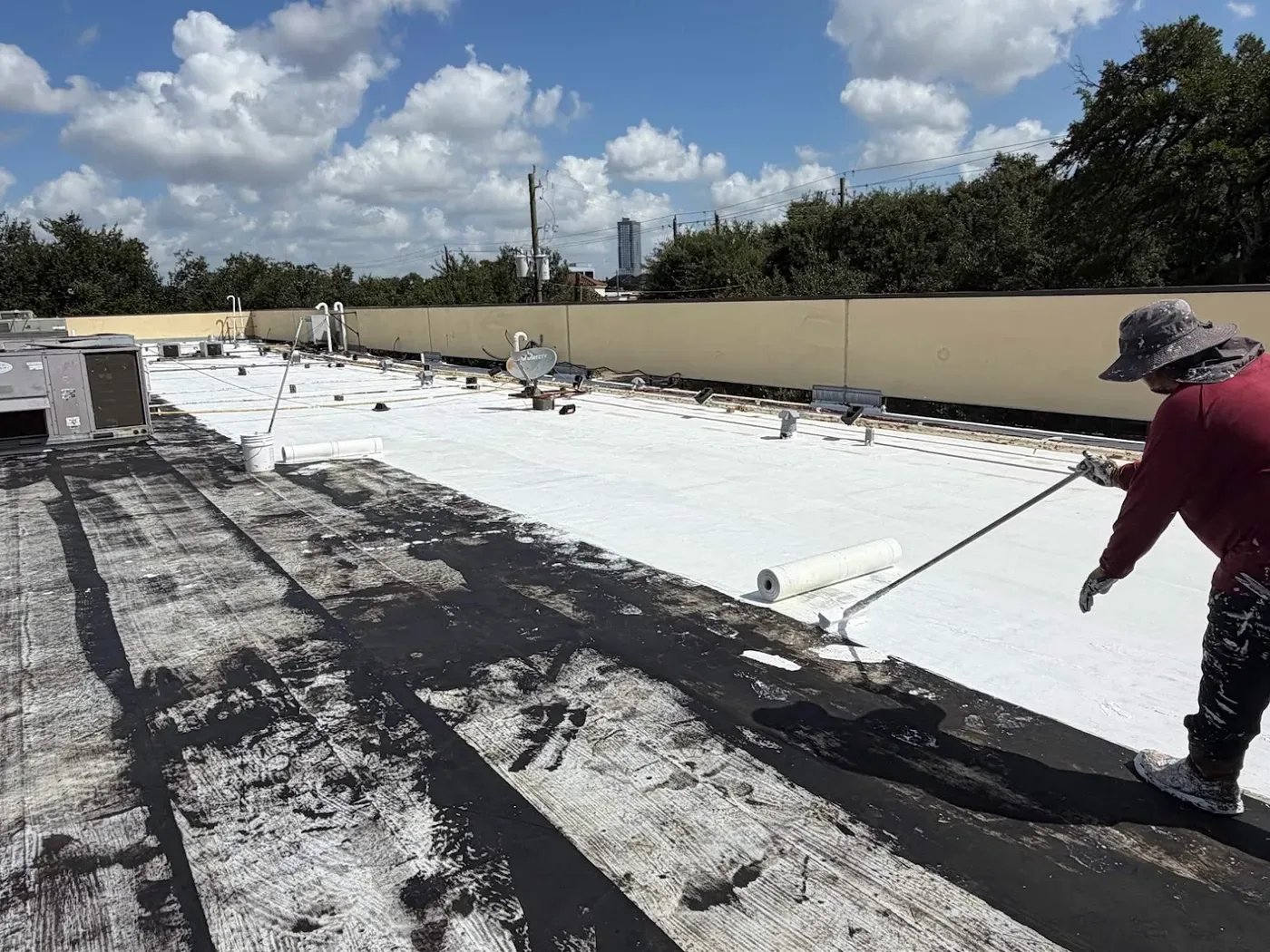
Modified bitumen uses asphalt-based sheets modified with polymers, typically installed in one or more plies over an appropriate substrate. The system may include a mineral-surfaced cap sheet, a smooth surface, or a coating depending on the assembly. SBS and APP modifiers have different material behavior, and the product specification determines whether the sheet is applied with heat, adhesive, or another approved method. We verify the project documents and existing conditions before describing an installation method. On an occupied property, the method selection also affects fire controls, odor management, equipment staging, and the time required to close each roof section. We identify the layers where records or safe inspection allow, then check whether the surface is split, blistered, open at a lap, or separated at a transition. Moisture testing helps determine how far water has traveled beneath the sheet.
Repair method follows the installed assembly and the condition around the defect. Heat-applied work requires fire controls and a safe, authorized work zone; cold-applied details require compatible materials and suitable surface conditions. Repair method follows the installed assembly, its condition, and compatible material requirements. A seam-failure review can document where a lap has separated, while a substrate assessment addresses what lies below the membrane. Davie's redevelopment area includes business districts and industrial land, where different operating schedules may shape an approved repair window.
Which details most often expand the scope?
Laps, corners, curbs, pipes, wall transitions, and drain bowls deserve attention because each interrupts the surface and creates a place where water may travel. We check lap direction, adhesion, end joints, and the condition of the sheet around prior repairs. At a parapet or curb, the vertical flashing must terminate in a way that remains secure as the building moves and weather reaches the edge. A patch that covers only the visible split may leave a loose termination behind.
Equipment, exhausts, and repeated service visits can affect the roof around their supports. The roofing scope should identify which trade disconnects or resets equipment and who approves access to the area below. A curb review can establish that interface, and perimeter inspection can describe edge metal and coping conditions. Plantation Gateway follows State Road 7 through medical, office, dealership, hospital, and retail uses; the building's actual access rules determine how close the crew can stage to those transitions.
How does the rainy season affect application?
Fort Lauderdale's warm, humid climate and South Florida's rainy season concentrate drainage demand. A modified-bitumen repair or replacement needs a dry substrate and enough time to complete the specified layer and close the work. We schedule the opening by roof section, stage temporary protection, and set a weather hold before the crew removes material. If the substrate is damp, the new work cannot simply cover it and be treated as complete.
Drain function is part of that sequence. We inspect strainers, drain bowls, overflow paths, and nearby seams, then record whether the outlet is clear or needs a separate correction. A drainage review can separate water-management work from membrane repair. Where multiple areas retain water, a ponding-water scope identifies the affected section and whether a test opening is needed. Hollywood's business district connects healthcare, rail, airport, and roadway activity, while the Sunrise/Sawgrass area has office, mixed-use, and light-industrial zoning; both are reminders that project staging must fit the actual property operation, not just the roof surface.
When should the owner compare renewal options?
A local repair may be appropriate when the membrane is bonded, the substrate is dry, and surrounding laps and flashings remain serviceable. Repeated splits, widespread blisters, wet insulation, weak adhesion, or edge failures can justify comparing replacement. A recover should be considered only after confirming the existing layers, attachment, drainage, moisture, and applicable project requirements. We show what is confirmed and which concealed condition could change the quantity after removal. The estimate separates removal, deck repairs, insulation, new plies, flashings, edge work, drainage, access equipment, and disposal so the owner can approve a clear boundary before production starts.
Replacement cost depends on removal depth, substrate repairs, insulation, new plies, flashings, edge metal, access, and disposal. Florida's eighth-edition Building Code took effect on December 31, 2023; the project team confirms which edition and provisions apply to the proposed work. The estimate identifies where that review affects material or attachment choices. An overlay evaluation helps determine whether a recover is feasible; a built-up assembly comparison and an EPDM system review can clarify how different materials change the scope. Where a property remains open, a phased schedule ties tenant protection and daily closeout to the work sequence.
What should be recorded after the work?
The closeout should identify roof areas repaired or replaced, ply and cap-sheet details, lap and flashing work, substrate findings, approved changes, and any maintenance condition that remains. If removal exposes a different layer count or wet insulation, the contractor should document the discovery and obtain the required approval before expanding. That record helps the owner distinguish a local repair from a complete renewal when budgets or warranty questions arise later.
Send the interior leak location, access rules, prior repair records, and any roof drawings before the inspection. Our emergency crew can protect an active opening at any hour, then schedule permanent work when the substrate and weather permit. The proposal should name the roof section, removal assumptions, dry-in boundary, and next authorization. It should also identify who can approve concealed-condition work and how a return visit will be scheduled if rain interrupts the sequence. A condition report can carry those findings into the next maintenance cycle and help the property team compare future scope against the work completed.
Commercial Roofing Questions
Can a split cap sheet be repaired by itself?
Sometimes, if the base layers are dry and sound and the repair can tie into compatible material. We inspect the lap and substrate before limiting the work to the visible split.
Does a blister always require cutting out the roof?
No. A blister needs evaluation for moisture, adhesion, and location before the repair boundary is set. We document what is found and price opening only where it answers a scope question.
Can hot-applied work proceed next to an operating building?
The method, fire controls, access, and building restrictions determine whether that work can proceed. We coordinate the approved zone and protect occupied areas before opening the assembly.
What changes the timing for modified-bitumen replacement?
Rain, substrate moisture, removal depth, edge details, and daily dry-in capacity all affect the schedule. The work plan identifies its weather hold and the sections that can close each shift.
What should be included in a modified-bitumen proposal?
The proposal should define removal, new plies, flashings, drainage, edge details, disposal, and concealed-condition allowances. That gives the owner a clear authorization boundary before work begins.
Related Roofing Work
Set the modified-bitumen repair boundary
Share where water appeared, the roof access rules, and any past repair documentation. We will inspect the layers and transitions, establish temporary protection, and price the next authorized step.