TPO Roofing in Plantation, FL
Roof Systems: TPO Roofing
A TPO roof decision in Plantation, FL often starts after a hot, wet week exposes a seam, drain, or curb detail that no longer closes out cleanly. The first call is whether to protect an occupied space and make a bounded repair, or open enough roof to learn whether wet insulation extends past the visible mark. We inspect the membrane, attachment, edge conditions, and drainage as one assembly, then separate immediate protection from the permanent scope. Plantation Midtown combines offices, medical facilities, retail, and housing, so a leak can carry a different interruption cost from one roof section to the next. Our hands-on roof inspection records that boundary before removal is priced.
What does a sound TPO seam need?
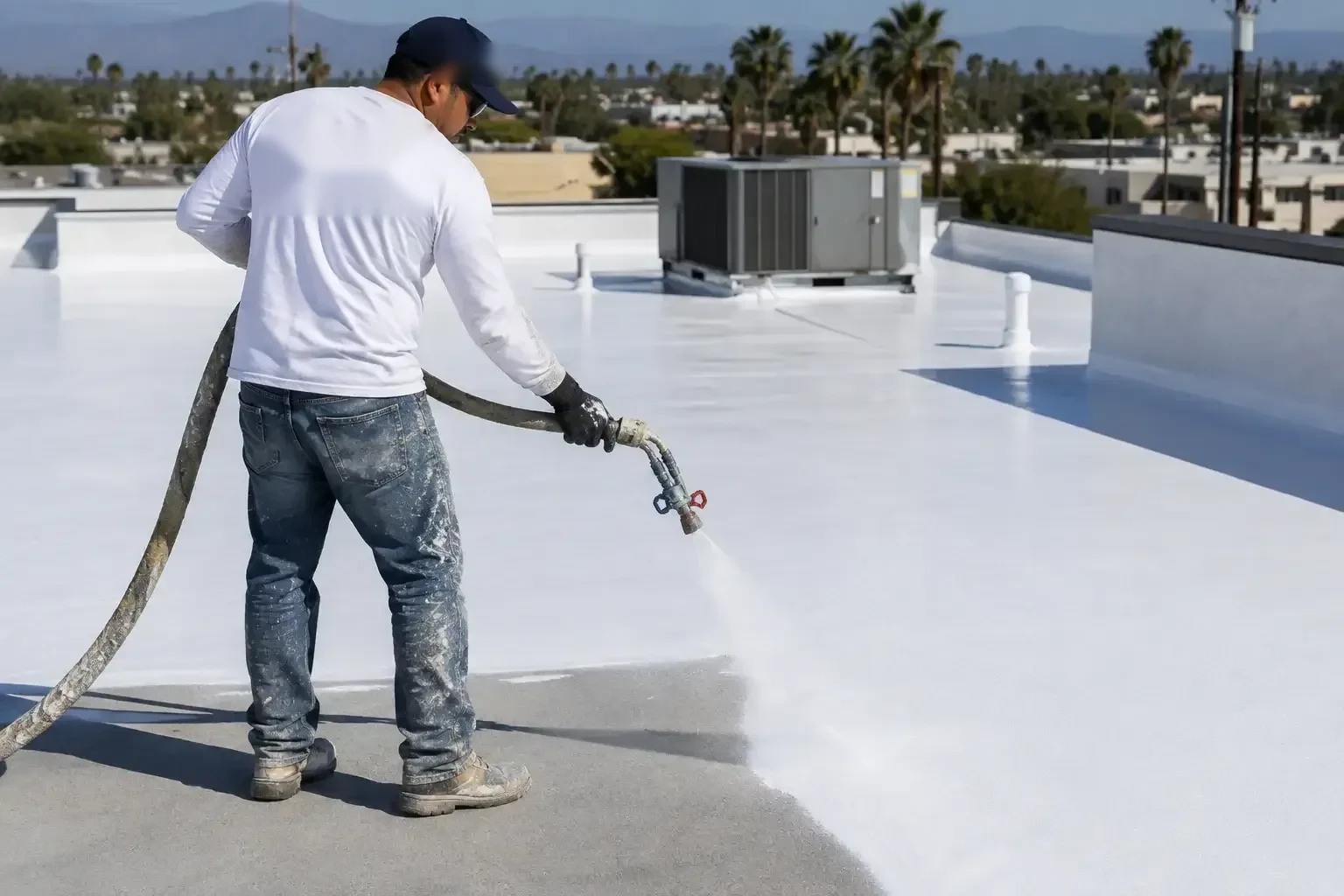
Heat-welded seams depend on clean, compatible material and a controlled welding pass. Age, dirt, prior patches, movement, or an inconsistent weld can leave a channel that admits water even when the field sheet looks intact. We probe accessible seams, inspect corners and terminations, and compare suspect areas with the roof plan. A repair must reach sound membrane and use a compatible detail; adding a small patch over a weak weld can move the entry point without changing the risk.
Field-sheet wear also needs context. Scuffing around service paths, open laps, punctures, and brittle flashings call for different repairs. A local repair can remain limited when the surrounding membrane and insulation are dry and secure. If multiple seams, repairs, or wet areas appear across a connected section, we map their limits and price a broader option rather than treating each symptom as unrelated. That decision controls how much membrane is opened and whether operations need a longer weather hold.
How do heat and rain change the plan?
South Florida combines sustained heat with a long rainy season, so TPO work must account for both surface exposure and the hours available to close a roof. The Fort Lauderdale climate station records a warm, humid setting and substantial annual rain; those conditions make afternoon storms and drainage capacity practical scheduling factors. We stage material and define a daily dry-in line before cutting. The owner sees which section can be opened, how it will be protected, and what decision is needed if rain arrives earlier than expected. Before work starts, we also confirm whether existing rooftop equipment can stay online, where temporary power or staging is permitted, and which access path must remain clear for building staff. Those details keep the roof sequence tied to the property's operating plan rather than a membrane-only calendar.
Water that remains after a storm can point to a blocked outlet, a low area, or a change in insulation, and the membrane alone cannot answer which one. We check drain bowls, overflow paths, and nearby seams before proposing a correction. A drain and scupper review can separate a drainage issue from a membrane failure, while a ponding-water repair scope addresses the roof area affected. Plantation Gateway follows State Road 7 through medical, office, dealership, and retail uses, where keeping entrances and occupied rooms dry can shape access timing.
Which scope fits the existing assembly?
A repair is usually the narrower choice when the membrane defect is localized, the surrounding sheet remains weldable, and moisture has not spread into the insulation. A recover may be considered only after the assembly, attachment, drainage, and code requirements support another layer. Moisture checks and a review of existing layers can change both the selected method and the quantity to remove. Product choice matters too: PVC membrane and KEE roofing have their own material and seam considerations, so the existing assembly and exposure should guide a comparison instead of color alone. Replacement becomes more practical when wet materials, recurring seam failures, poor attachment, or incompatible prior repairs affect enough area that isolated work no longer controls the exposure. We document what supports each option and identify concealed conditions that could change quantity after opening.
That comparison should also account for perimeter details, penetrations, rooftop equipment, and transitions to older roof sections. The recover-versus-replacement review explains the assembly checks before an overlay is selected. If equipment supports or curbs interrupt the field, a curb and support inspection helps define trade coordination and flashing work. Florida's current statewide building code took effect at the end of 2023; project-specific requirements and applicable wind criteria still need to be confirmed for the building and scope.
How can the work stay controlled?
On an occupied property, the roof plan should show where materials move, which entrances remain clear, and what hours create the least disruption. We divide the work into roof sections with a defined start, temporary protection, and closeout point. On a property in Plantation Midtown, a phased work plan can coordinate tenant notices and interior safeguards with the daily dry-in boundary. If a storm warning interrupts work, the crew protects the open area and the owner knows which zone needs the next approval before production resumes.
Closeout should preserve more than a product name. We record the repaired or replaced section, membrane and attachment details, drain and edge work, approved changes, and any remaining condition that needs attention. A roof condition report gives property staff a usable record for maintenance and future budgeting. Davie's redevelopment area includes business districts and industrial land, while Lauderdale Lakes has an industrial park and commercial redevelopment district. Those different property settings make access rules and maintenance records important at each building.
What information moves the estimate forward?
Share the leak location below, roof access instructions, recent repair history, and any drawings or warranty paperwork available. We can then identify the first inspection area, distinguish temporary protection from permanent work, and state whether a test opening or moisture survey is useful. The estimate should name the roof sections, quantities, removal assumptions, edge and penetration details, disposal, and the weather condition that could delay an open-roof phase. If hidden wet insulation changes the scope, we document the added area and wait for the next work authorization before proceeding beyond the agreed boundary.
Plantation's storm season brings thunderstorm winds, flooding, hail, and occasional tornadoes, with tropical systems adding longer periods of wind and rain. After a storm, inspect edge security, drain function, and temporary dry-in before deciding whether a TPO section needs repair or broader renewal. An emergency response can address an authorized opening, then return the owner to a clear repair or renewal decision when access is safe.
Commercial Roofing Questions
Can a leaking TPO seam be repaired without replacing the whole field?
Yes, when the surrounding sheet is sound, compatible, and dry enough for a durable weld. We check nearby laps and insulation before limiting the repair to one seam.
What makes a TPO recover unsuitable?
Wet insulation, weak attachment, drainage problems, or unresolved edge conditions can make another layer the wrong scope. We document those findings before pricing an overlay.
How do you keep rain out during a TPO replacement?
Each shift needs a planned open area and a tested closeout boundary. We stage removal around the forecast and stop opening roof when the remaining safe dry-in window is too short.
Does a white TPO membrane solve indoor heat problems?
A reflective surface can reduce solar absorption, but insulation, air leakage, equipment, and controls also affect indoor load. We review the whole roof scope before promising an energy result.
What should the closeout package include?
The file should identify the system, repaired zones, seam and flashing details, approved changes, inspection records, and any remaining maintenance item. That gives the next roof decision a firm starting point.
Related Roofing Work
Set the TPO scope before the next weather window
Tell us where water appeared, what space sits below it, and who can authorize roof access. We will inspect the assembly, set a protection boundary, and return the next repair or replacement decision.