Commercial Roof Inspection in Plantation, FL
Commercial Roofing Services: Commercial Roof Inspection
Plantation’s wet-season inspections need a closure plan before any test opening is made. At a commercial property in Plantation, FL, we walk the accessible roof, record conditions by zone, and separate active defects from items needing monitoring or testing. Each finding connects to a repair, maintenance step, or approval. If a leak or storm prompted the visit, we first identify what needs protection now and what can wait for a measured scope.
Plantation Midtown's offices, medical buildings, retail, and housing have different access needs than the auto, hospital, and professional uses in Plantation Gateway. We confirm occupied hours and critical equipment before setting the route. A Gateway property inspection documents the specific building. For an active leak, a water-entry review can proceed with the broader inspection. The owner receives findings in roof-zone order, making it easier to assign a repair decision to the person responsible for each area.
What should the roof walk cover?
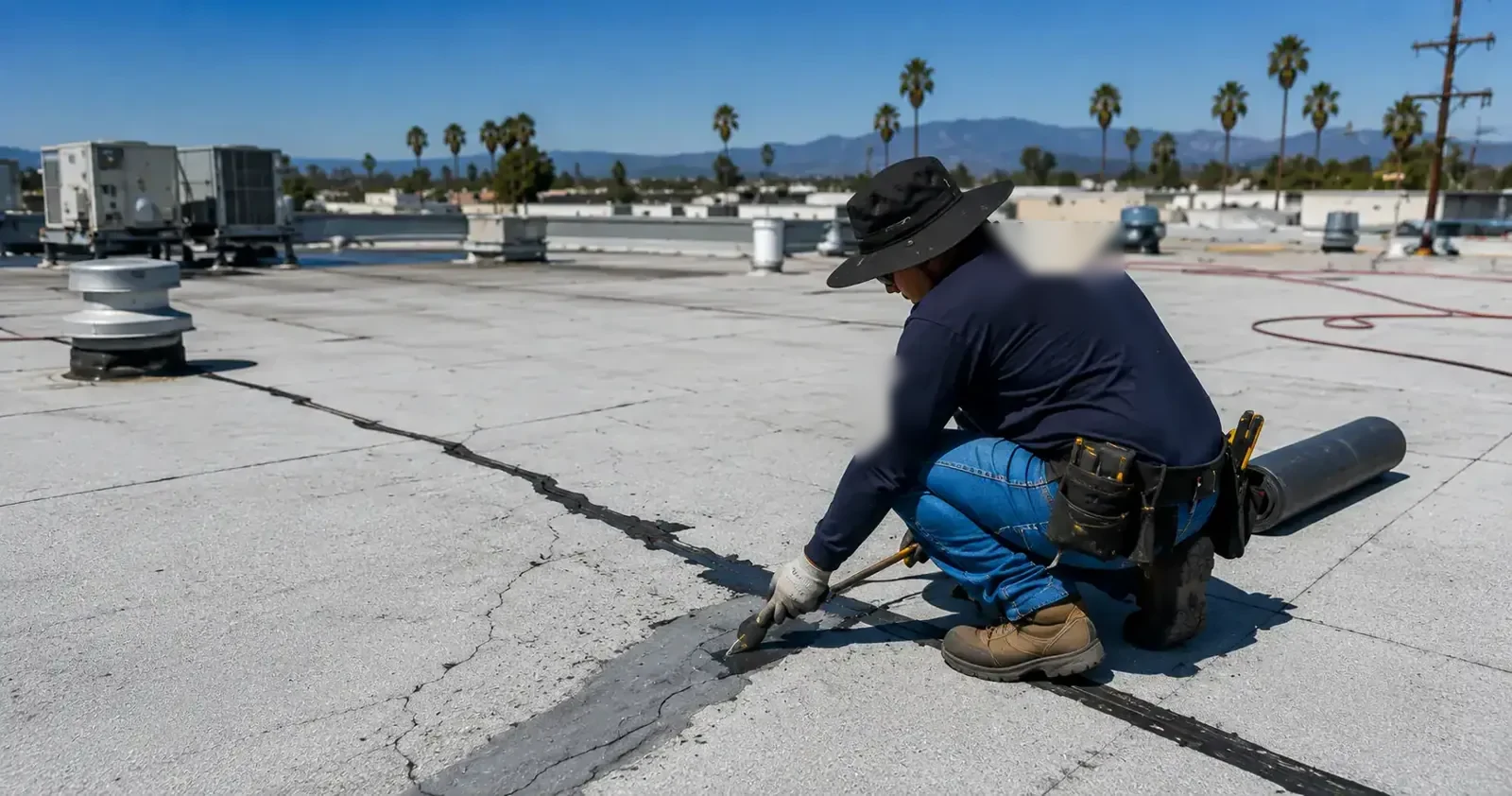
The route begins at safe access and follows roof zones, drainage paths, perimeters, and equipment transitions. We check seams, flashing terminations, curbs, penetrations, edge metal, drains, scuppers, and visible damage. Photos map to a roof zone with a record of the condition. An area that cannot be reached safely is marked uninspected, not clear.
South Florida's heat, humidity, and rainfall make drainage and closure details important. We record debris at outlets, standing water, open laps, loose flashing, and deterioration. An outlet issue may need a drain and scupper repair; a failed seam may need membrane work. The report separates visible symptoms from causes requiring testing.
For difficult access or a broad roof, imaging can support the field walk. A drone roof survey captures context but does not replace hands-on review of reachable seams and flashing. An infrared moisture survey can narrow areas for closer investigation. We explain method limits and obtain authorization for any opening or core cut.
Which findings require action first?
Priority follows consequence and evidence. An opening above an occupied room, loose edge detail, or blocked outlet before heavy rain may need immediate protection. A surface split without observed water may need a repair, not emergency dispatch. The report labels each item protect, repair, monitor, or test, and states what would raise its priority.
Plantation's rainy season brings frequent storms, and regional severe weather can include damaging winds, flooding, hail, and occasional tornadoes. After a reported event, we document conditions visible on this property, while keeping weather context separate from proof of damage. The manager receives a callout for any room needing protection before the next storm.
Timing affects price. A small repair may fit one mobilization; drying, testing, or a return visit adds access and protection assumptions. The report records occupied hours and roof restrictions. A defined repair scope can use the inspection photos and zone labels.
When is repair not the right comparison?
Repeated failures, confirmed wet insulation, deteriorated substrate, or attachment concerns may make another isolated patch a poor choice. We identify the evidence for a larger evaluation and what testing could clarify. An overlay feasibility review considers the assembly and code conditions; a replacement inspection defines tear-off and new-system assumptions. The owner sees the basis for comparing options.
Florida's 2023 Building Code took effect statewide on December 31, 2023. The design professional and local reviewer determine requirements for the specific work. Our inspection records visible conditions and known system details, while identifying information needed for engineering or code coordination.
Infrared readings or authorized test cuts may help distinguish a local repair from broader replacement. The report states areas surveyed, signals observed, and limits from surface, temperature, or access. If the owner approves a test, we photograph the cut, record the assembly layers, and close it with a compatible detail.
How does inspection work around tenants?
A roof walk can affect people below. We ask about clinics, offices, deliveries, equipment, and restricted rooms, then set the inspection route and time window. Plantation Midtown's office, medical, residential, and retail uses can have tight schedules. Gateway includes hospital, dealership, and professional uses with separate access needs. The property contact confirms roof entry, escort, and tool staging.
Findings help the owner decide whether to close a room, approve repair, or budget a larger project. We identify affected areas below, urgency, and information needed before work. The retail or office manager can coordinate tenant notice with the roof window. If a roof access hatch is near an occupied suite or controlled area, we record the route and any escort requirement so a follow-up crew can use the same approved path.
Heat and humidity affect safe rooftop time. Lightning or high winds can stop a walk, and weather may delay an interior moisture check. We document completed and deferred zones, then schedule a return if the missing view could change scope. Each finding stays tied to a roof-zone label.
What should the inspection report include?
A useful report includes a dated roof map, zone photos, observed condition, priority, next step, and any access or weather limit. It separates confirmed quantities from allowances and names who can approve testing or repair. The owner can see what was inspected, what was inaccessible, and which finding creates the next decision. A photo-supported condition report carries that record into maintenance planning. A summary at the front can group urgent items, planned repairs, and deferred checks without obscuring the detailed photo record. Each recommendation names the condition to recheck and the person who should receive the result.
We record repair history supplied by the property team and system information visible in records, and identify details that require confirmation before a bid. For a storm claim, photos can preserve observed condition without predicting coverage.
To schedule an inspection, share the roof access contact, areas of concern, any active leak, and the space or operation below. We will identify immediate protection needs and return prioritized repair, test, or replacement decisions. The next approval ties to a roof zone and specific condition.
Commercial Roofing Questions
What will the inspection report tell me to do first?
Each finding receives a priority tied to evidence and consequence. We identify active exposure, items that need repair, conditions to monitor, and any test that would change scope. The report also states whether an occupied space needs protection before the next weather window.
Can an inspection confirm whether insulation is wet?
A visual walk can identify signs that warrant testing, but moisture below a membrane may require infrared review or an authorized core cut. We explain the survey limits, proposed test area, and how the result would affect the repair boundary before asking for approval.
Do you inspect the roof after a Plantation storm?
Yes. We document visible conditions on the property after safe access is available. Regional wind, hail, or flood conditions provide timing context, but the report ties any damage finding to what is actually observed on this roof.
Can tenants remain inside during the roof walk?
Usually the inspection stays on the roof, but access, noise, equipment, and any interior moisture check can affect occupied areas. The property contact identifies restricted rooms and operating hours, and we plan the route and any notice around those limits.
How do you decide between repair and replacement?
We compare the number and spread of defects, confirmed moisture, substrate condition, attachment, and repair history. A larger option is recommended only when the inspection or approved testing supports it. The report keeps immediate repairs separate from an overlay or replacement evaluation.
Related Roofing Work
Request a decision-ready roof inspection
Send the roof access contact, active leak areas, what spaces sit below them, and who can approve testing. We will return roof-zone findings and a clear next approval.