
Commercial Roof Insurance Claim Assistance in Plantation, FL
Commercial Roofing Services: Commercial Roof Insurance Claim Assistance
A roof claim file is useful when each photo, repair, and quantity can be tied to a place on the building and a date. For a commercial property in Plantation, FL, we document observed roof conditions, temporary protection, test results, and completed work, then organize them for the owner's discussion with the carrier. The record separates what we inspected from what remains concealed or untested. We do not decide coverage; we give the property team a clear factual account of the roofing work and the next approval.
Plantation Midtown includes office, medical, retail, and housing uses; Plantation Gateway includes hospitals, dealerships, professional offices, and shopping along State Road 7. An event can affect operations differently across those property types, so the file identifies the affected roof zone and space below. A Gateway property claim review documents the actual building conditions, while an inspection report establishes the field record.
What belongs in the first condition record?
Start with the date, property contact, reported event, affected rooms, and roof access conditions. We label photographs by roof zone and record the direction of each view, visible damage, prior repairs, drainage conditions, and any section not reached safely. A ceiling mark is recorded as an interior observation, not proof of an opening above it. If the water path is unclear, we state what inspection or test would reduce uncertainty.
Broward's storm record matters to the claim timeline: severe convective conditions are most common in late spring and summer, while tropical cyclones peak later in the year. That seasonal pattern helps set inspection timing; our report records the roof condition, while the insurer determines claim cause and coverage. A storm damage assessment documents property-specific findings and keeps temporary work distinct from permanent repair.
If a roof opening needs immediate protection, the file records the temporary dry-in boundary, materials used, and remaining exposure. We identify who authorized that work and whether a return visit is needed. The first-hour response can reduce immediate water entry while the permanent repair and any carrier review proceed separately. The owner receives photos and an itemized record of what was completed.
How do you separate observed damage from cause?
A roof may show wind-related displacement, impact marks, open seams, punctures, or older deterioration. We describe what is visible and identify conditions that could have more than one explanation. A regional hail report or wind measurement is context, not a diagnosis of the property. The file labels any cause assessment as supported, uncertain, or requiring additional information, with no prediction about whether an insurer will accept it.
We compare the affected section with nearby materials and available maintenance records supplied by the owner. Photos show the same detail from useful distances, with a roof-zone reference and scale where appropriate. If testing or a core cut could identify wet insulation or assembly layers, we describe the proposed location and obtain approval. A moisture survey may help focus that work, but thermal patterns do not prove the cause or extent without verification.
Plantation Gateway's medical and hospital properties may need tenant protection and equipment coordination while an inspection is underway. Midtown's offices and retail uses can require different notice and access times. The report lists those operating constraints because they affect repair timing and temporary protection. A hospital roof repair record is still specific to the roof and work actually performed at the insured property.
How should the repair estimate be documented?
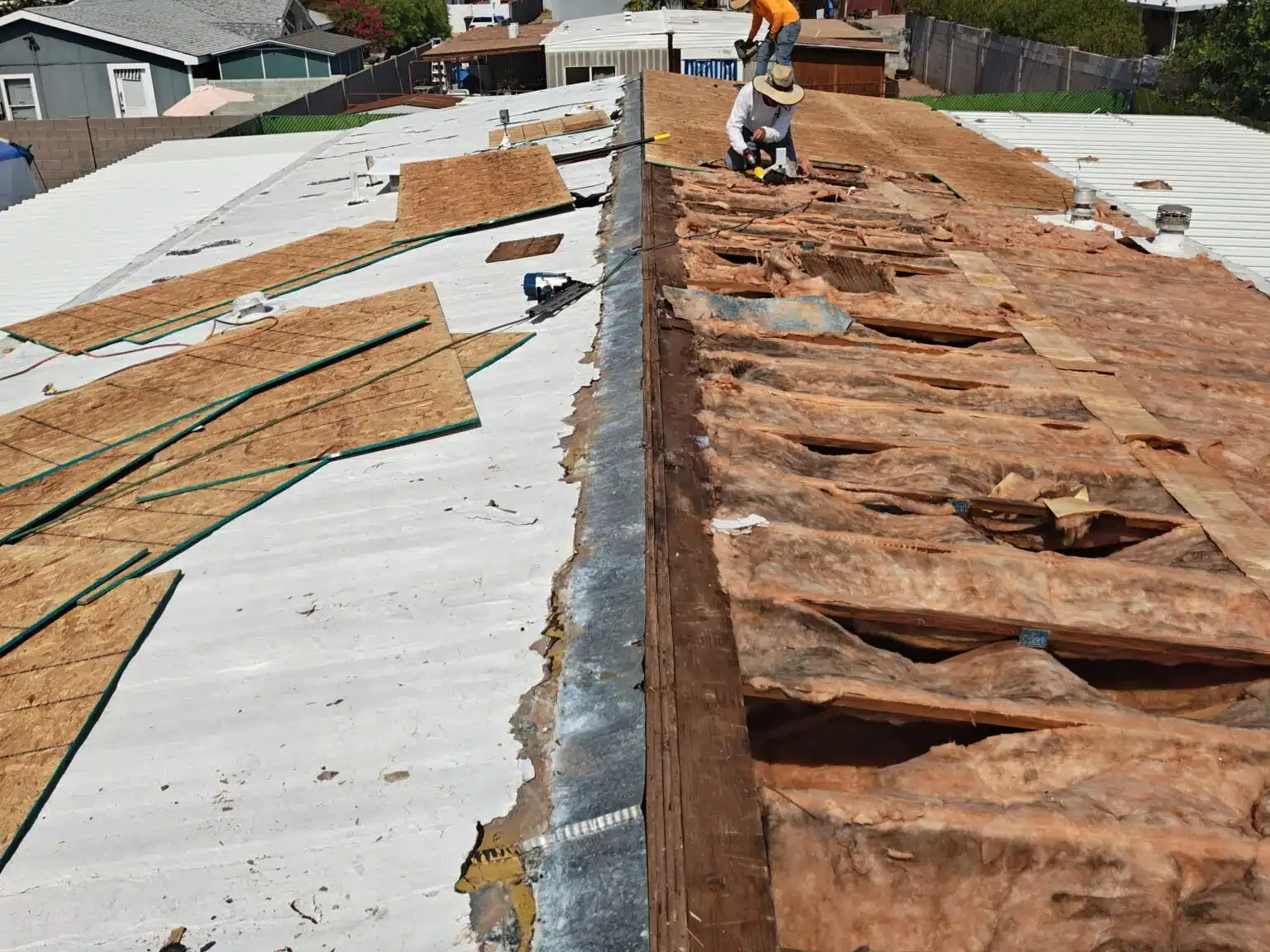
The estimate identifies each roof zone, defect, material, preparation, tie-in, measured quantity, and access assumption. We separate emergency stabilization from permanent work and record any allowance for concealed conditions. If removal exposes wet insulation, damaged deck, or a wider failed detail, the crew stops at the authorized line, photographs the condition, and submits a revised scope for approval before additional work.
For a seam or flashing failure, the scope states where sound material begins and how the patch ties into the existing system. Drain or edge work receives its own detail instead of being buried in a general repair line. A defined roof repair can be compared with a recover evaluation or replacement estimate when the inspection finds broader conditions. The file records each option separately so the owner can share the correct document for the claim discussion.
Heat, humidity, and rain affect when roof material can be opened, prepared, and closed. We record weather holds and return visits, with photos of temporary protection at each handoff. For a claim repair that changes an existing roof detail, the property team's design professional can determine whether the proposed work needs additional building review. We describe the roof boundary and material in the estimate, then keep that technical determination separate from carrier documentation.
What can the roofer coordinate with the carrier?
We can provide inspection findings, photographs, repair descriptions, test results, and invoices for roofing work performed. The owner or its authorized representative controls claim submissions, policy questions, deadlines, and settlement discussions. We can attend a roof inspection with the property contact when scheduled, clarify the roof detail in our scope, and identify any difference between inspected conditions and the requested work.
For a carrier visit, we agree on safe roof access, available records, the person who can authorize opening a section, and the space below that needs protection. If weather or active operations limit access, the file records what could not be inspected and proposes a return window. We do not expand work during a visit without approval. A photo-supported condition report can preserve the same zone labels across inspection, estimate, and closeout.
When repair is authorized, the work record lists material, preparation, completed area, excluded conditions, and any test or return visit. If a quantity changes, the owner receives photos and the basis for the revision before work continues. That lets the property team keep carrier documentation aligned with the actual roof work without implying a coverage decision.
What should the final claim file preserve?
Keep the initial inspection, dated photos, temporary protection authorization, test results, estimate versions, work approvals, invoices, and closeout images together. The final record shows what changed, what was repaired, which zones were excluded, and what remains a maintenance item. A routine maintenance can track follow-up checks without mixing future upkeep into a storm repair authorization.
The file should also retain the owner's event timeline and any communication provided by its carrier. Those records are outside the roofing scope, but they can help the property team reconcile the roof findings with its claim process. Our closeout stays focused on observed conditions and work performed, with each unresolved item assigned a next action or test.
To request claim documentation, share the event date, roof plan, reported rooms, prior repair records, access contact, and any carrier inspection timing. We will document the roof, organize the repair scope, and return a photo-supported record of completed work and open conditions. The owner retains control of claim decisions and receives a clear roofing approval path.
Commercial Roofing Questions
Can you tell us whether insurance will cover the roof damage?
No. Coverage depends on the policy and the carrier's review. We document visible roof conditions, tests, repair work, and quantities so the owner has a factual record for that process.
Can you meet the adjuster on the roof?
We can attend a scheduled inspection with the property contact when access is safe and authorized. We explain the roofing details and scope we prepared, while the owner or its representative handles policy and settlement questions.
What if the roof opening shows more damage during repair?
The crew photographs the newly exposed condition, protects the area, and pauses at the approved boundary. We submit a revised quantity and work description for authorization before expanding removal or repair.
Do you need the policy before inspecting the roof?
No. We can document the roof condition and prepare a repair scope from the property access and reported event details. The owner can share policy information with its carrier or authorized claim representative.
Can your photos distinguish storm damage from prior wear?
They can record visible conditions, repair history provided by the owner, and details that may support one explanation or require more testing. We do not assign a cause when the evidence remains uncertain, and the report states what remains unconfirmed.
Related Roofing Work
Build a roof-specific claim record
Send the event date, affected rooms, roof access contact, repair history, and carrier inspection timing. We will document observed conditions and organize the next roofing approval.