
PVC Roofing in Plantation, FL
Roof Systems: PVC Roofing
A PVC roof often comes under review after grease, rooftop traffic, or a recurring leak has left a question about more than one seam. In Plantation, FL, the owner still has to decide how much roof to open before the rainy-season schedule narrows the dry-in window. We identify the membrane type, inspect welds and flashings, trace water to the roof area above the interior mark, then divide temporary protection from permanent repair. Plantation Gateway includes medical, professional, dealership, and retail uses along State Road 7, so delivery paths and occupied hours can affect the work sequence as much as the membrane choice. A hands-on inspection starts that scope with visible conditions rather than assumptions.
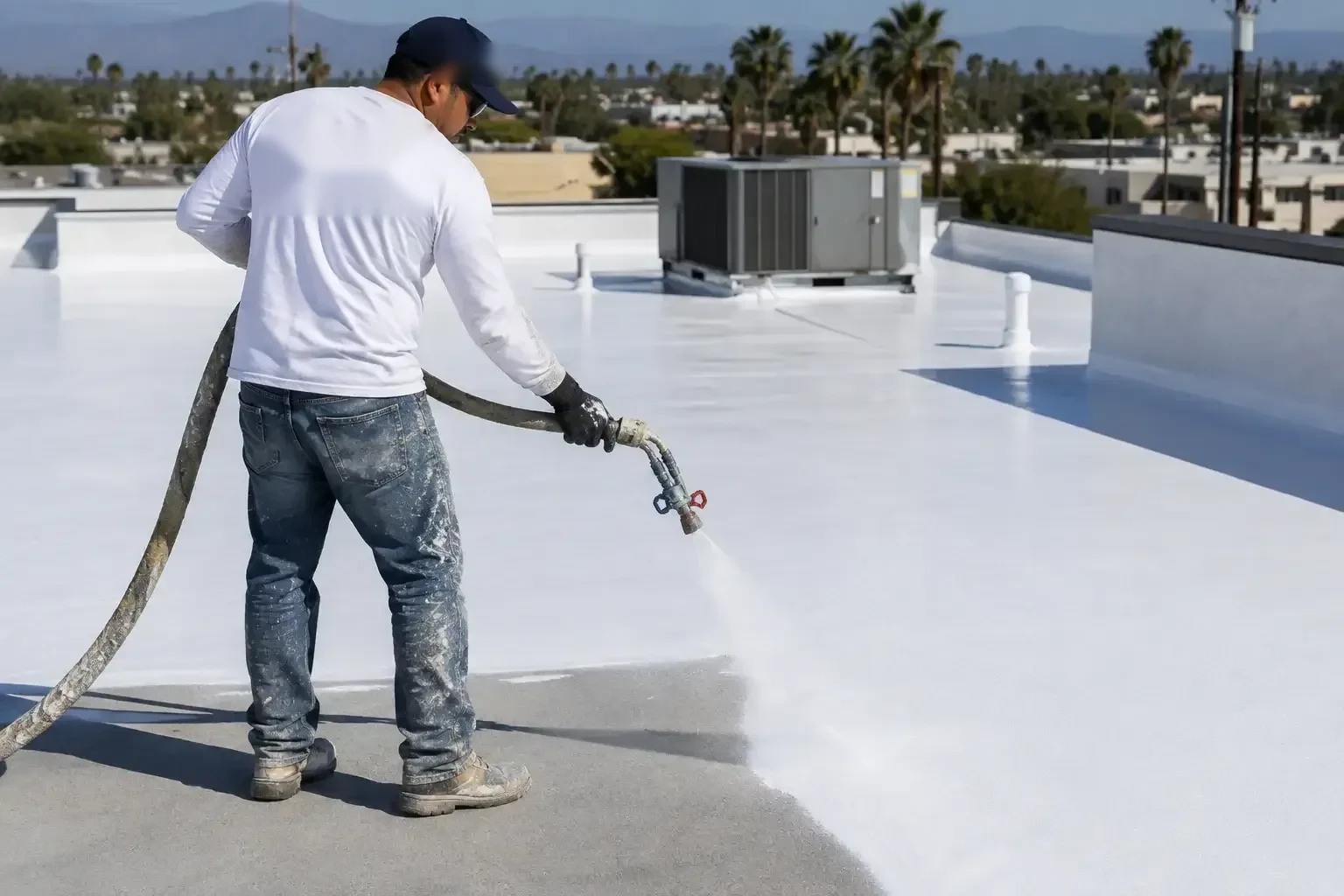
What does PVC contribute to the assembly?
PVC is a heat-welded single-ply membrane used on low-slope roofs. Its material properties can suit buildings where grease or some chemical exposure is part of rooftop or exhaust operations, but the specific assembly and exposure still need review. We identify the sheet, reinforcement, attachment, seams, and flashing transitions before recommending a detail. Membrane selection alone does not correct a failed drain, loose edge, wet insulation, or movement at a curb. Those conditions remain part of the written scope. A weld repair also depends on a clean work surface, compatible sheet, suitable ambient conditions, and enough room to use the welder consistently. We remove contamination without thinning the membrane, prepare the seam as required by the system, and test the finished bond after it cools. Where moisture or old adhesive prevents a reliable weld, we stop and price the needed preparation or broader replacement detail rather than hiding the limitation beneath another strip.
Where an owner is comparing systems, we explain differences in membrane chemistry, weld behavior, accessory requirements, and repair compatibility without declaring one product right for every property. TPO membrane and KEE systems may enter that comparison, but the existing roof, operating exposure, specifications, and budget determine what deserves a closer look. A cover-board review can also clarify substrate protection and attachment before the system is selected.
Where do PVC roofs need close inspection?
Field seams, corners, penetrations, drains, and perimeter terminations are common points to examine because each changes the membrane's path or connection. A weld must be continuous, properly fused, and free of contamination or separation. We probe accessible seams and inspect repairs for compatible materials. At a penetration, a field sheet may be sound while the flashing boot, seal, or supporting curb detail has failed. The repair boundary should include the transition that admits water, not only the easiest flat area to reach.
Roof equipment can create concentrated foot traffic and interruptions in membrane continuity. If pipes, supports, or units sit close to a leak, we document how their bases meet the roof and what trade must move or disconnect equipment. Equipment trades and the building contact need to agree who moves or resets each supported unit before membrane work begins. For a local opening with sound adjacent material, a repair plan can limit removal; widespread seam weakness or saturated insulation may point to a larger scope.
How should water movement shape the repair?
South Florida's warm, humid climate brings substantial rainfall, with a concentrated rainy season that raises drainage demand. We look for debris, blocked strainers, slow outlets, overflow paths, and low areas, then compare those conditions with seam and insulation findings. Ponding can keep a suspect area wet and complicate a repair window, but standing water by itself does not identify the failure below. The work plan needs to correct a confirmed drainage defect without promising that a membrane patch will change roof slope.
Plantation Midtown includes offices, medical properties, retail, housing, and a regional shopping-center cluster, giving property teams different occupancy and access constraints across the district. We plan staging and tenant protection around the building that is actually being repaired, not a generic roof diagram. The entrance, loading pattern, and occupied hours can change which side of the roof is practical to open first. A drain and scupper assessment records outlet condition, while a ponding-water scope can describe the area, suspected cause, and next test if moisture remains uncertain. Davie's redevelopment area combines business districts with industrial land, where drainage work may need to be sequenced with ongoing site operations.
When is a repair no longer enough?
A focused PVC repair is reasonable when the membrane remains weldable, insulation is dry around the defect, attachment is secure, and the surrounding flashing can be restored. A recover or replacement discussion becomes necessary when wet materials extend beyond one opening, multiple seams are failing, the perimeter has loosened, or prior repairs do not match the installed membrane. We identify what is known, what requires a test opening, and what allowance may change the quantity after removal. That separation makes the cost decision visible before the roof is opened.
Replacement planning should include edge metal, penetrations, curbs, drain bowls, and transitions to other roof sections. Florida's 2023 code edition took effect statewide on December 31, 2023; the applicable project criteria should be checked for the building rather than assumed from a membrane brochure. A comparative assembly review evaluates the existing roof before a second layer is considered. If the property remains occupied, a phased work plan can set daily closeout and interior-protection limits.
What should the owner receive at closeout?
The closeout file should identify the installed membrane, repaired roof zones, seam and flashing work, approved substitutions, inspection or test records, and any open maintenance item. If removal exposed wet insulation or a different substrate, the report should show what changed and which approval authorized the added work. Those details help the next manager avoid treating an old patch as proof that the whole roof was renewed. A condition report can keep roof maps and photos tied to the actual repair boundary.
Before scheduling, share where water appeared, what space sits below it, access limits, equipment constraints, and any existing warranty or specification. Our crew can respond at any hour when a roof opening needs interim protection, then return for a permanent repair once the area is safe to access. The proposal separates emergency dry-in from the lasting scope and states which decision belongs to the owner next. That is especially useful during hurricane season, when weather can interrupt an open-roof phase and make a return visit part of the budget.
Commercial Roofing Questions
Is PVC a good choice where rooftop exhaust carries grease?
PVC can perform well in some grease-exposure conditions, but the exhaust path, membrane specification, and flashing details need to be reviewed together. We confirm the exposure before selecting repair materials.
Can a PVC seam be welded after a prior repair?
A test area can show whether the existing sheet is clean and compatible enough for a sound weld. We inspect the old patch and surrounding membrane before choosing the repair boundary.
Does standing water mean the PVC membrane has failed?
Standing water shows a drainage or slope condition, not by itself a membrane breach. We inspect seams, outlets, and insulation to locate the cause before pricing corrective work.
How do you keep a replacement dry during summer storms?
The daily work area is limited to what can be protected and closed within the forecast window. If the weather hold changes, we stop opening roof and protect the approved boundary.
What information should accompany a PVC repair request?
Send the leak location, interior impact, roof access instructions, prior repair record, and any system specification. That gives us a starting point for inspection and a clear authorization path.
Related Roofing Work
Define the PVC repair boundary
Tell us where water entered, what operation sits below the roof, and who can authorize access. We will inspect the membrane and drainage, separate immediate protection from permanent work, and identify the next decision.