EPDM Roofing in Plantation, FL
Roof Systems: EPDM Roofing
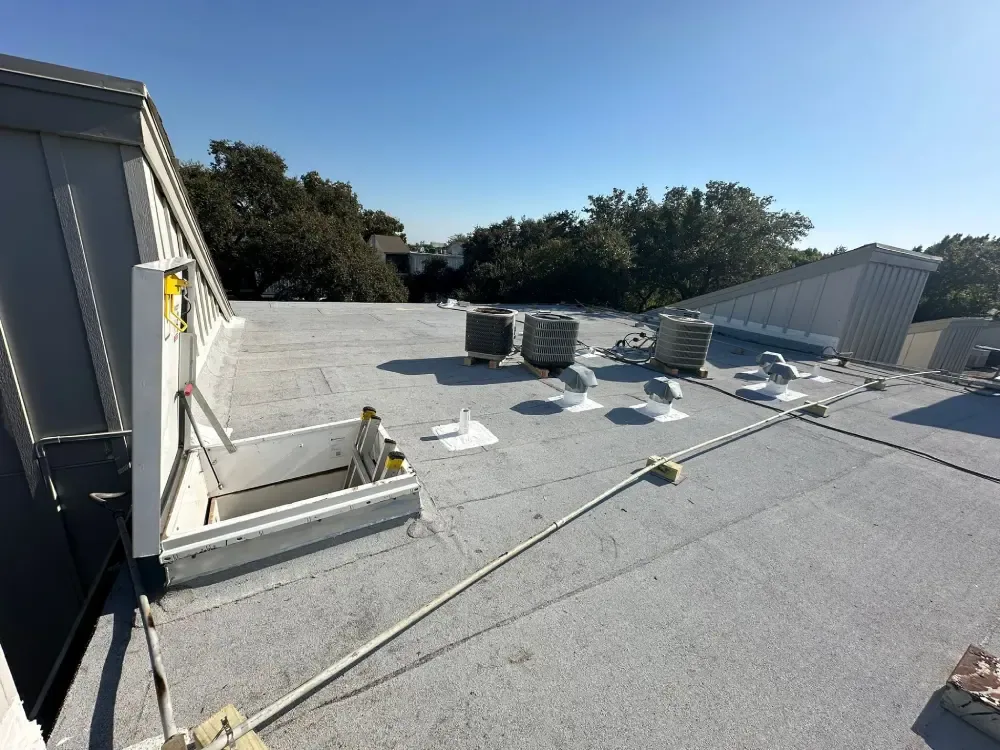
An EPDM leak can look minor from below while the roof surface holds a longer story: a field seam has lifted, an old patch has softened, or water has moved beneath a dark membrane before it found the ceiling. In Plantation, FL, the owner needs to know whether a local repair can close the entry point or whether moisture has spread into insulation. We inspect seams, flashings, attachment, drains, and perimeter conditions before setting a removal limit. In the Plantation Midtown district, offices, medical properties, mixed-use retail, housing, and a regional shopping center sit within the same commercial area, so access and interruption costs vary by building. Our roof inspection records the affected zone before the estimate separates protection from permanent work.
What makes an EPDM seam reliable?
EPDM is a flexible rubber membrane installed in sheets, with seams and details joined through system-compatible tapes, adhesives, or other specified methods. A sound repair depends on surface preparation, compatible materials, pressure, and a clean transition onto the existing sheet. Dust, moisture, age, or previous coating can weaken the bond. We examine the seam edge and nearby field rather than judging the assembly by color or appearance alone. If the membrane is brittle or the substrate is wet, a larger boundary may be needed. Adhesive and tape details must follow the membrane manufacturer's compatible system, and a repair should reach material that can accept the chosen bond. We check whether coatings, dirt, old sealant, or trapped moisture interfere with preparation. A small area may require cleaning and a new seam detail; a deteriorated field can make replacement more reliable than repeated patching. The estimate states which condition drives that choice.
Black EPDM also absorbs heat, and the sheet expands and contracts as conditions change. Movement can work on corners, terminations, pipe boots, and attached equipment. We check whether a seam failure is isolated or connected to attachment and perimeter movement. A targeted roof repair may work where surrounding material remains sound. If the current assembly contains widespread moisture or incompatible repairs, an owner may compare an overlay only after reviewing the existing layers and their condition.
Where can wind and movement open the roof?
The perimeter deserves separate attention because membrane attachment, edge metal, and wall transitions all help keep the assembly in place. South Florida faces tropical systems and damaging thunderstorm winds, so a loose termination or open corner should not be treated as a cosmetic defect. We document the affected edge, fastener line, parapet transition, and any water entry below it. The repair plan states what must be secured before the next weather window and which adjacent areas need inspection. We identify whether the repair ends at the wall, continues across an edge, or must include a transition to a different roof material, since each condition requires a distinct termination detail.
Rooftop units, pipes, and supports create additional transitions and service paths. Their bases may move differently from the field sheet, and repeated access can stress nearby seams. A perimeter and edge-metal review helps define metal-to-membrane details, while a support inspection identifies trade coordination around equipment. Plantation Gateway's State Road 7 district includes medical, office, dealership, and retail properties; in each building, the owner can set access hours and protect areas below before a repair crew stages material.
How does rain affect EPDM work?
Fort Lauderdale's climate normals describe a warm, humid setting with substantial annual rainfall. During the rainy season, a roof opening needs a defined closeout limit, not a vague plan to cover it later. We select the daily work area based on substrate condition, access, and the safe time left to secure the roof. If a storm arrives early, the crew stops extending the opening, protects exposed insulation, and documents what remains before leaving. That weather hold may affect production, but it is part of controlling water entry.
Drain bowls, strainers, overflow routes, and low areas should be checked alongside the EPDM surface. Slow drainage can leave seams wet and make leak tracing harder; it does not prove that a membrane puncture exists. A drainage inspection records whether the outlet is clear and whether water is moving to the intended path. If the surface shows repeated ponding or saturated material, a ponding-area scope can distinguish immediate repairs from work that requires opening the assembly. Broward's current statewide code basis is the 2023 Florida Building Code, effective at the end of that year; project requirements remain building-specific.
When should an owner compare systems?
Repair remains the narrow option when the EPDM sheet can accept a compatible detail and moisture is limited. A recover can be evaluated only when attachment, drainage, insulation, edge conditions, and code requirements permit another layer. Replacement becomes more relevant when seams fail in several areas, insulation is wet, the field has aged beyond reliable repair, or the perimeter requires substantial reconstruction. We map each finding to an option and record what a test cut must answer before quantities are final.
System comparisons should include details, not only membrane names. TPO roofing and PVC roofing use heat-welded seams, while EPDM repairs generally depend on their own surface preparation and bonding details. Those differences affect repair compatibility, accessory selection, and the crew's daily work sequence. A recover evaluation checks whether the existing roof can remain below a new assembly. For a live property, a phased plan ties tenant access and interior protection to each day's closeout.
What should be documented before authorization?
The written scope should identify membrane type where known, repair locations, seam length, perimeter work, flashings, drain details, removal assumptions, and disposal. It should state which conditions are visible and which remain concealed until an opening is made. If wet insulation extends beyond the initial boundary, the owner needs a quantity and price change before the crew expands the work. That keeps a repair allowance tied to a real roof zone instead of an open-ended instruction.
At closeout, preserve photos, repair locations, materials used, inspection findings, and any remaining maintenance item. A condition report lets the next property manager see which EPDM areas were renewed and which were only protected. Share the ceiling location of a leak, roof access rules, past repair notes, and authorization contact before scheduling. We can respond after hours when immediate protection is needed, then define the permanent work and the next approval once conditions allow inspection.
Commercial Roofing Questions
Can EPDM be patched when the surface is damp?
A lasting bond needs a prepared surface and compatible materials. We protect an active opening first, then return when conditions allow the repair detail to be installed and checked.
Does dark EPDM fail sooner in Plantation heat?
Color alone does not determine service condition. We inspect membrane age, seam bonds, attachment, drainage, and insulation before deciding whether repair or renewal is justified.
What if a leak is far from the visible ceiling stain?
Water can travel along a seam or insulation layer before entering the room. We trace above the affected space and mark the inspection zone instead of pricing from the stain alone.
Can another membrane go over existing EPDM?
Only after the existing layers, moisture, attachment, edge conditions, and project requirements support a recover. A test opening may be needed before the final scope is set.
How do you plan an EPDM repair before heavy rain?
We set a daily opening limit, stage temporary protection, and identify the point where work stops if the forecast or substrate changes. The owner sees what remains exposed and who approves a return.
Related Roofing Work
Find the EPDM leak path and set a repair limit
Share the interior impact, roof access requirements, and previous repair history. We will inspect the membrane and transitions, protect any active opening, and return a defined repair or renewal scope.