
Hurricane Roof Damage Repair for Plantation Businesses
Roof Damage Repair: Hurricane Roof Damage Repair
Once wind and lightning pass and access is safe, the first roof decision is whether water can enter before a permanent repair is ready. We check for displaced edges, open seams, damaged penetrations, loose rooftop components, and areas where wind-driven rain may have crossed a transition. During tropical-system response in Plantation, we check each roof section for displaced edges, open seams, damaged penetrations, and water entry before setting the repair boundary. We build the response around observed conditions and the property contact's priorities: protect occupied space, close an exposed opening, and establish what needs a closer inspection. A Plantation Gateway response can be planned around the site's approved roof zones and active entrances.
Temporary dry-in and permanent repair are separate decisions. A cover can reduce exposure while the roof is evaluated; the inspection must still assess insulation moisture and attachment at the affected area. We document the protected area, securing method, access limits, and return condition so the owner knows what remains. For a time-sensitive roof opening, we first confirm safe access and authority to proceed; if conditions remain unsafe, we coordinate a later inspection instead of representing an inaccessible roof as checked.
Triage the roof after the all-clear
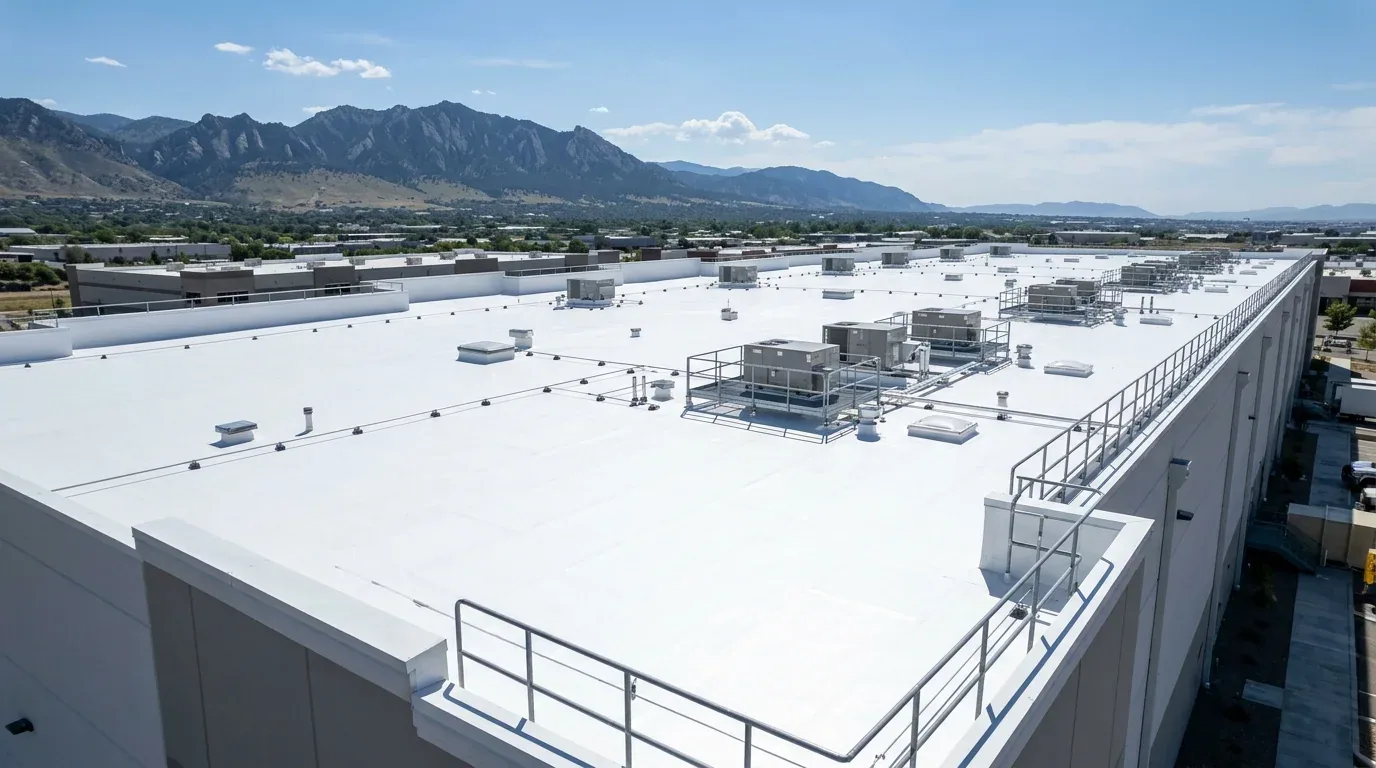
Start with the building contact's report of interior water, ceiling changes, equipment interruptions, and areas that must stay open. We use those observations to choose an initial roof route, then inspect the likely water path rather than assuming the stain below sits directly under the defect. On the roof, we look at perimeter metal, corners, wall transitions, curbs, skylights, drains, scuppers, seams, and any components that could have shifted. Photos and records identify where the crew stood, what was visible, and what could not be accessed.
Wind can lift an edge without tearing the field membrane, or pull at a termination while leaving the interior dry at the moment of inspection. Rain later can expose that weakness. The report records active water entry alongside loose edges or open transitions that could admit water in the next storm. A wind-damage inspection can focus on the edge and attachment pattern, while seam repair applies when an open or separated seam is confirmed. The owner receives priorities in order: active opening, unstable or loose material, vulnerable transitions, and less urgent observations. The findings apply to inspected zones; other areas remain outside the documented condition until checked.
Protect the building without hiding the repair
A temporary cover needs a defined footprint, secure attachment, and a plan for the weather expected before permanent work. We identify the roof area it protects, the method used, the limits of the installation, and who will check it after another weather event. Covering a wide area without securing the perimeter can create a new hazard. So can placing weight or fasteners on a roof system without confirming that the method is suitable. The property representative approves access and any work affecting other trades, rooftop equipment, or occupied space.
Fort Lauderdale's long record shows substantial annual rainfall, while South Florida's rainy season concentrates roof-drainage demand into several months. That makes an open penetration or loose perimeter detail time-sensitive, but the actual dry-in choice depends on safe access, available materials, and the roof's condition. If water is holding on the roof, a drainage assessment can determine whether an outlet is blocked or a low area needs further review. The closeout labels interim protection, its roof-zone boundary, and the inspection or permanent repair still required.
Find damage beyond the obvious opening
After the first closure, inspect adjacent roof areas and details that share the same wind exposure or drainage path. We inspect adjacent sections that share a wind exposure or drainage path for wet insulation, loose edge metal, compromised curbs, or seam movement that could change the repair boundary. Where signs point below the membrane, we explain what a test can establish and request approval before opening the assembly. A moisture survey may help identify areas for confirmation when roof surface and weather conditions support that method; its indication is not itself proof of wet insulation.
The responsible mechanical or electrical trade handles equipment shutdown and restart; the roofing scope names the approved curb or penetration work and its handoff. If the storm has affected a roof-mounted unit or its support, the repair boundary includes the surrounding flashing and attachment as well as the trade handoff. Where puncture or debris impact is visible, membrane puncture repair may be appropriate after the substrate is checked. Each finding is recorded as observed, tested, or pending review. That distinction lets the owner decide whether to authorize a focused repair, additional investigation, or a broader roof condition review.
Plan work around Plantation property operations
Plantation Midtown is a mixed-use district with office, medical, retail, housing, and regional shopping properties; Gateway's State Road 7 corridor includes commercial, medical, professional, dealership, and hospital uses. At each property, the manager identifies current operating hours, delivery routes, restricted rooms, emergency paths, and any required escort before the crew sets its sequence. The property manager identifies operating hours, entry restrictions, sensitive rooms, emergency routes, and any required escort. We then divide the roof into work areas and give the contact a sequence for temporary protection, inspection, and repair.
On an occupied property, debris control and weather closure matter as much as the repair technique. A phased roof-work plan may help where multiple zones must remain available, while a commercial office scope can address tenant coordination. If the site includes medical care, the building team sets clinical restrictions and the roofing crew follows them. We identify any period when the roof cannot be accessed, what protection remains in place, and which decisions are needed before the next visit. The property owner controls reopening and building use; our closeout speaks to the roof work and observed conditions.
Define permanent repair and closeout
At closeout, we separate the area permanently repaired from the area held under temporary protection and state what weather check remains. The record should show tie-in locations, materials installed, any exposed deck, and the condition of adjacent edges and drains. If the owner is weighing a larger scope, the comparison uses inspected zones and stated assumptions. That produces a storm-response file facilities staff can use after the immediate leak is controlled, without implying that uninspected roof sections share the same condition.
After a wind event, the first safe walk checks perimeter conditions, loose rooftop items, and drainage before anyone crosses questionable sections. We mark areas that cannot be reached until debris or access hazards are cleared. The owner can authorize temporary stabilization for exposed openings while a separate inspection documents attachment, flashing, and concealed-layer questions that affect the permanent scope.
Commercial Roofing Questions
Should we wait for the roof to dry before calling?
No. If water is entering, report it promptly and protect interior contents when safe. The roofer can assess whether temporary closure is possible after site access is released.
Can temporary covering count as a permanent repair?
No. A cover limits exposure for a defined period and area. The roof still needs inspection and a permanent repair plan once access and conditions allow.
Does a regional storm track prove roof damage?
No. It provides weather context only. The building's roof must be inspected, and any claim about cause should reflect the available evidence.
Can the repair crew work while our business is open?
Often, with a site-approved sequence and controlled roof access. The manager should identify entrances, critical rooms, deliveries, and restricted hours before mobilization.
What if the roof contains wet insulation?
The proposal should identify how moisture will be confirmed, where testing or removal is authorized, and how added quantities are approved before concealed layers are replaced.
Related Roofing Work
Set the post-storm roof response
Tell us whether water is entering, which areas are occupied, who can release roof access, and what protection is already in place. We will define the inspection and dry-in boundary.