
Commercial Skylight and Penetration Flashing in Plantation, FL
Commercial Roofing Services: Commercial Skylight and Penetration Flashing
A skylight or pipe curb can admit water at the point where the roof assembly has to change shape. For a commercial building in Plantation, FL, we inspect the glazing or penetration, curb, flashing, membrane transition, and space below before setting the repair boundary. The owner receives a record of the water path, materials to be replaced, and any interior protection needed. If inspection cannot yet isolate the water-entry point, testing or a controlled opening stays separate from the first repair authorization.
Plantation Midtown's office, medical, housing, and retail uses create different access and interior-protection needs than the hospital, dealership, and professional operations in Plantation Gateway. We ask who can open the room below, protect equipment, and approve roof access. A Midtown flashing inspection uses the property access plan, while a hands-on roof walk checks surrounding seams and drainage before a detail is closed.
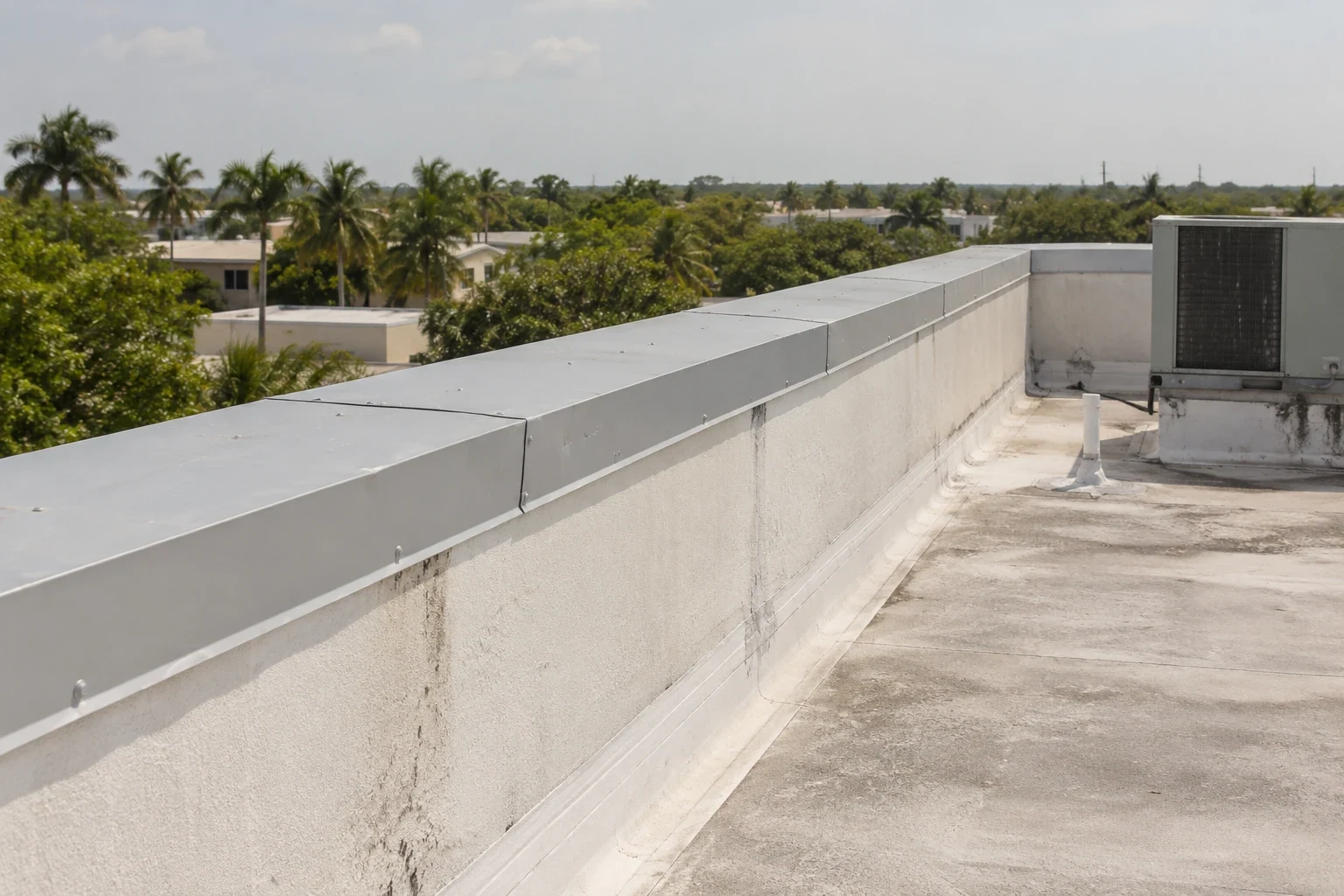
How do you trace a leak around a curb?
Water may enter at glazing, a frame joint, curb corner, flashing termination, fastener, or nearby membrane seam. We record the room and timing, then inspect the detail from the roof and compare it with the interior mark. Water can travel before it appears below, so the stain location alone cannot identify the roof opening. If more than one transition could explain the leak, the report identifies each candidate and the test that would narrow the repair.
Plantation's warm, humid climate and substantial rainfall put repeated demand on sealants and flashing details. We look for open laps, cracked sealant, loose counterflashing, standing water, and signs of movement at the curb. If water is active, leak response can protect the interior while a temporary dry-in secures the roof opening. Permanent work follows once the affected detail and compatible material are identified.
A pipe or equipment penetration needs a different repair from a skylight frame. We check the boot, collar, curb, pitch pocket, or sheet-metal flashing and identify how it meets the existing membrane. A roof repair scope can include nearby seam work only when the evidence supports combining it. The owner sees which detail is included and which adjacent area remains outside authorization.
What should the skylight inspection cover?
We inspect the glazing panel, frame, gasket, curb, fasteners, flashing, and membrane tie-in. A cracked lens or failed seal can cause water entry even when the roof membrane remains intact. Loose curb flashing or a low transition can create a separate water path. The report distinguishes those findings and identifies whether a glazing specialist, roofer, or both trades need to return.
Skylights also affect interior operations and fall protection. The property contact identifies whether the opening is beneath an occupied area, whether an interior barrier is needed, and who can authorize entry. We mark the roof zone and keep people clear of fragile or open components. In Plantation Gateway's hospital and professional properties, that coordination can include sensitive equipment and restricted rooms; Midtown's housing and retail uses may need separate occupant notices.
After severe weather, we inspect for visible impact, displaced framing, and broken glazing at the property before setting the repair boundary. South Florida storms can bring damaging wind, hail, flooding, and occasional tornadoes; tropical systems are more frequent later in the year. A storm review records the observed condition and immediate protection separately from the repair needed at the skylight.
What belongs in the flashing repair?
The scope identifies the curb or penetration, flashing material, preparation, tie-in length, sealant or membrane detail, and any framing or glazing work excluded. We connect new material to a compatible surface and sound substrate. If removal exposes wet insulation or damaged deck, the crew stops at the approved boundary, protects the opening, and reports the added condition for a separate authorization.
Cost changes with curb height, frame condition, access, number of transitions, material compatibility, and whether interior protection or a return visit is needed. We separate the measured repair from allowances for concealed conditions. An infrared moisture survey can help identify where testing may be useful, but readings need confirmation before wet material is identified. Any core cut or destructive check needs owner approval.
Florida's current building code and project requirements can affect skylight replacement, flashing, and alterations to the roof assembly. The design professional and local reviewer determine the applicable details. We identify the roofing work and record when a curb, structural, glazing, or electrical change needs coordination by another trade. The owner can authorize a repair with the relevant interfaces clearly identified.
Can detail work proceed above occupied rooms?
Many skylights sit over rooms where light, equipment, or occupants make interior protection important. We ask the manager what space lies below, whether operations can pause, and who will coordinate a ceiling check. Plantation Midtown combines offices, medical buildings, housing, and retail, while Gateway includes hospitals, dealerships, and professional offices. Those operating needs set the work window, roof access, and any restriction below the repair.
The crew sequences removal and closure so the opening is not left exposed beyond the approved weather window. The work plan names staging, temporary protection, interior contact, and the weather hold. Heat, humidity, rain, lightning, or wind can alter the sequence. If a return visit is needed, the closeout states what remains protected and when the owner should expect the next approval request.
If the skylight or curb cannot be repaired within a reliable boundary, we identify replacement or broader roof work as a separate decision. A replacement scope includes curb and penetration interfaces when the project requires them. We do not assume a new membrane alone resolves a failed frame or glazing condition.
What should the skylight closeout show?
Closeout includes dated roof and interior photos, curb or penetration label, material and preparation, completed tie-in, water test or observation when performed, and any remaining condition. The room below is included to coordinate protection while the roof detail is repaired. A photo-supported condition report can keep the detail's repair history with the roof-zone map.
For future maintenance, the property team should report new moisture promptly and keep access around skylights and rooftop equipment clear. Scheduled inspection can check sealants, frame joints, and nearby seams before water reaches occupied space. A maintenance visit records those observations separately from a repair authorization.
To arrange a flashing review, send the room location, timing of water entry, photos if available, roof access contact, and any restrictions below the detail. We will trace the path, protect the occupied space, and return a scope that separates confirmed flashing work from tests or glazing coordination still needed.
Commercial Roofing Questions
Can you tell whether a skylight or the roof membrane is leaking?
We inspect the frame, glazing, curb, flashing, nearby seams, and the reported interior location. If evidence supports more than one water path, we identify what test or opening would distinguish them before widening the repair.
Do you replace skylight panels as part of the roofing repair?
The scope states whether the repair is flashing, curb, glazing, or a combination. If a specialist or another trade must replace a component, we coordinate the roof interface and keep that work separate in the authorization.
How do you protect a room below a skylight repair?
The property contact identifies occupants, equipment, ceiling access, and any room restriction. We plan interior protection with the manager and define the roof opening, temporary cover, and weather hold before removal starts.
Will infrared imaging prove water is coming through the skylight?
No. Thermal patterns can help focus testing but do not identify a leak water-entry point by themselves. We compare the readings with the frame, curb, flashing, and reported path, then verify the detail before pricing permanent work.
What changes the cost of a skylight flashing repair?
Curb height, frame condition, material compatibility, access, interior protection, and concealed substrate can change the work. We measure confirmed repairs and list any test or hidden-condition allowance separately.
Related Roofing Work
Trace the opening before repairing it
Share where water appeared, what room is below, and who can provide roof access. We will inspect the curb and flashing and return a defined repair approval.