Acrylic Roof Coatings in Plantation, FL
Roof Systems: Acrylic Roof Coatings
An acrylic coating can renew a roof surface only when the material below it is sound enough to keep. Before pricing application in Plantation, FL, we look for wet insulation, open seams, failed flashing, and ponding that a new coating cannot correct by itself. The owner then has a choice: repair a defined area, prepare the roof for restoration, or compare a new assembly. Plantation Gateway includes medical and professional offices, dealerships, hospital and retail uses along State Road 7, so air intakes, access and occupied hours can affect preparation. A roof inspection maps the eligible surface and separates repair from coating work.
What must be true before acrylic is applied?
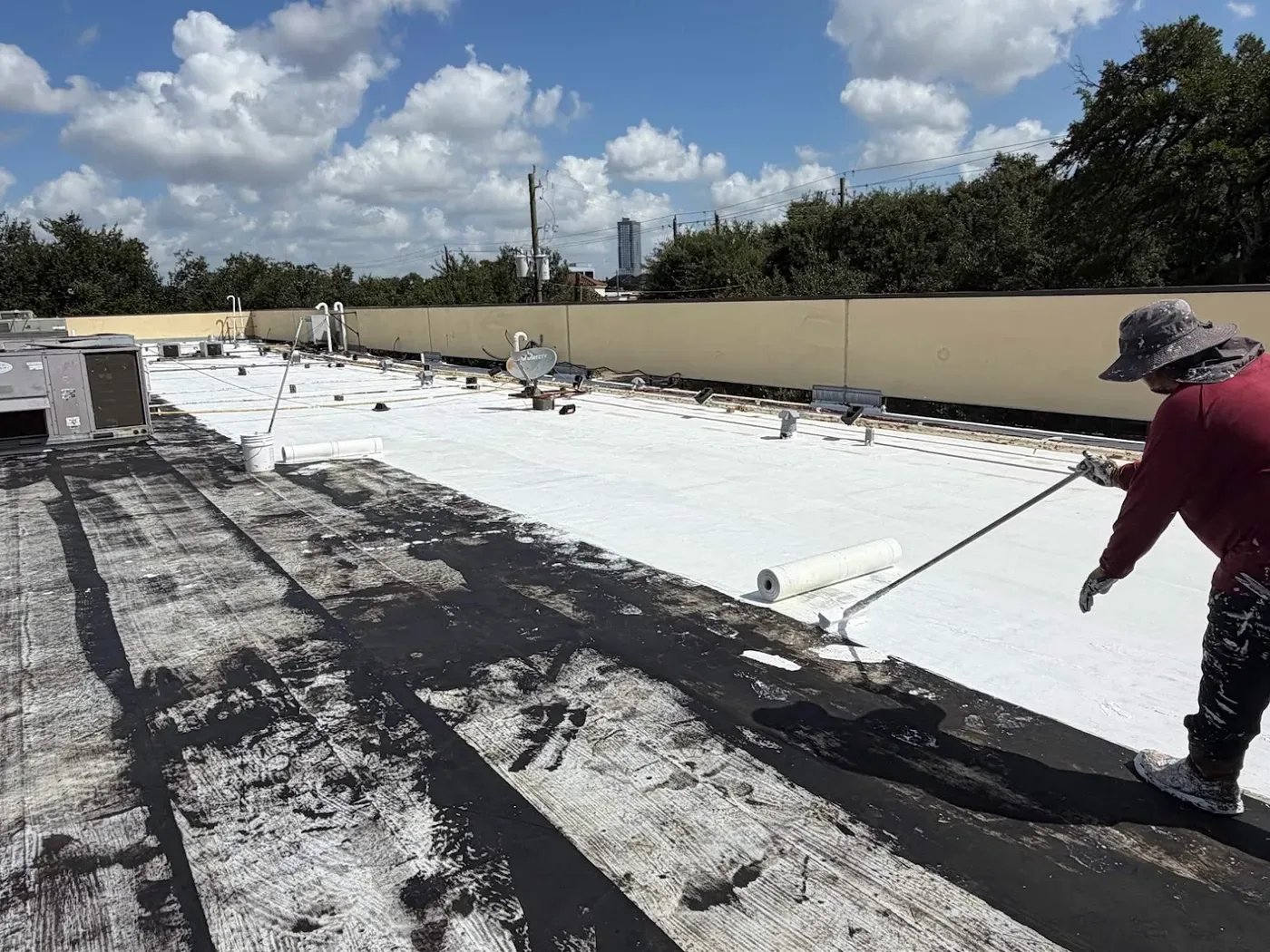
Acrylic systems require a compatible substrate, proper preparation, and application conditions that meet the product instructions. We identify existing membrane or metal, check coating adhesion where needed, remove loose material, and repair seams or penetrations before application. Water, dirt, chalking, incompatible prior coatings, and surface defects can interfere with bond. The scope defines cleaning, primer, reinforcing fabric at specified details, coat sequence, and protection for equipment and intakes. Each coat needs the specified coverage and time to dry before the next one is applied. The roof map should identify areas excluded from application, transitions that require hand work, and the condition of the substrate at those boundaries. If the first coat exposes a defect, the crew pauses and returns the added work for approval instead of treating it as an included repair.
Acrylic coatings can provide a reflective finish; restoration still depends on adhesion, substrate, moisture, and assembly condition. The existing roof must be dry and stable, drainage must be addressed, and the product must be appropriate for the actual exposure. A restoration scope identifies preparation and repair areas. Silicone coating and SPF roof systems involve different substrate, water, and application considerations. We compare those requirements rather than promise energy savings from a coating alone.
Can a coating stop the existing leak?
Only when the entry point is understood and corrected as part of the work. Water may enter at a seam, curb, flashing, drain, or edge and travel before it reaches the interior. We map the leak from below, inspect the roof above, and identify whether wet insulation or a failed detail sits outside the proposed coat area. A broad application over a hidden leak can delay discovery without solving the water path.
South Florida's warm, humid climate and heavy rainfall make drainage and drying conditions part of each coating decision. We check strainers, scuppers, overflow paths, and low areas, then record which items need correction before acrylic application. A drain and scupper review records outlet conditions; a ponding-water assessment may be needed where repeated water remains. In Davie, commercial property improvement programs and redevelopment activity span business and industrial areas, where building access and work timing can differ by property. The roof plan still turns on observed condition at the specific building.
How should application fit the rainy season?
Coating work needs a suitable surface and enough time for application and cure before rain. South Florida's rainy-season hazards include frequent thunderstorms, damaging winds, flooding, hail, and occasional tornadoes; a weather hold can alter the schedule. We divide preparation and application into roof zones, stage protection, and define how far the crew can proceed within the available window. If the surface is damp or a storm moves in, work pauses rather than covering unsuitable material.
Before mobilization, we confirm access routes, staging space, equipment protection, and restrictions near occupied rooms or air intakes. A phased work plan can coordinate notices, interior protection, and daily closeout. Plantation Midtown's corporate offices, medical facilities, retail, housing, and regional shopping-center cluster illustrate how nearby property uses can differ; the site contact identifies the specific restrictions for the roof being coated. Preparation, repair, primer, coating, and cure may occur on separate visits, so the estimate names the order and the next approval point.
When is replacement the stronger option?
Restoration can be considered where the existing membrane or panels remain intact, dry, attached, and suitable for coating. Replacement is more appropriate when wet insulation is widespread, seams or attachment have failed across sections, the substrate is deteriorated, or recurring leaks need a different assembly. We record what is visible and identify any test opening that may change the estimate. The coating scope does not silently absorb replacement work or structural repairs.
For an acrylic restoration, confirm the current Florida code provisions and product approvals that apply to the actual building before specifying the coating. A recover evaluation is separate from coating and checks whether a new assembly may be installed over the existing roof. We compare surface preparation, insulation, attachment, drainage, edge details, disposal, access, and weather holds. A moisture survey or test opening may help define the repair area, but each method has limits and should answer a specific question. The estimate states where testing occurs, what result changes the scope, and how additional wet material will be priced. The owner sees the point at which coating stops being a cost-effective restoration and removal becomes the more suitable project. If concealed conditions alter the scope, the owner receives a documented quantity and approval request before the crew expands the work zone.
What should the closeout record include?
Closeout should show the surface prepared, repairs completed, coating system and application areas, detail reinforcement, drainage work, and any exception left for future action. Measured film build or coverage should be recorded where the specified quality plan requires it. Photos and a roof map let maintenance staff distinguish coated sections from repairs or areas that were excluded. A condition report can keep those details together with future inspection findings.
Send the leak location, roof records, prior coating documents, access rules, and an authorization contact before work is scheduled. We can respond after hours to protect an active opening, then return when the surface is ready for permanent repair. The estimate separates cleaning, repair, primer, coating, drainage, access, and disposal. It should also name cure restrictions and any return visit needed for later work. That record makes it easier to plan roof traffic and avoid damaging a newly applied finish. That makes the next decision clear: authorize a bounded restoration, investigate a concealed condition, or price replacement for the roof section that no longer supports coating.
Acrylic restoration also depends on a surface that can dry between preparation and application. We identify low areas, shaded zones, and details that hold moisture, then set a weather hold point for each work stage. If rain interrupts the sequence, the crew checks the substrate and cure state before proceeding. That decision protects adhesion and gives the owner a clear return visit instead of a calendar date detached from conditions.
Commercial Roofing Questions
Can acrylic coating go over an existing coating?
Only after the existing product is identified, the surface is prepared, and compatibility or adhesion is confirmed. Loose, wet, or incompatible material needs a separate repair detail.
Will a reflective acrylic coating lower the building's cooling cost?
A reflective surface changes solar absorption, but insulation, air leakage, equipment, and controls also affect building load. We describe the roof scope without promising a utility result.
Can acrylic coating handle water that remains after rain?
Product instructions, roof slope, drainage, and exposure affect whether acrylic is suitable. We inspect standing-water areas and do not treat coating as a correction for blocked drains or failed insulation.
What if the inspection finds a wet area?
We mark the affected zone and determine whether an opening or moisture survey is needed. Wet material is addressed before coating proceeds, with added work returned for authorization.
How does weather affect the coating schedule?
Rain, humidity, surface temperature, and cure requirements shape the daily work limit. The crew pauses when conditions fall outside the specified application window and secures the open area.
Related Roofing Work
Confirm the substrate before coating
Share the leak location, current roof system, prior coating records, and site access rules. We will inspect adhesion and drainage, identify repairs, and return a preparation and application scope with weather limits.