
Silicone Roof Coatings in Plantation, FL
Roof Systems: Silicone Roof Coatings
A silicone coating proposal only makes sense after the owner knows what it will cover. If the roof has wet insulation, loose seams, or a failing edge, a new surface layer can hide the condition without resolving it. In Plantation, FL, warm humid weather and frequent rain make substrate dryness and application windows central to the decision. We inspect the existing membrane or metal, map repairs, test adhesion where needed, and separate restoration from replacement. Midtown brings corporate offices and medical properties into a district with retail, housing, and shopping-center uses; the building receiving the work determines access, intake, and occupancy limits. A roof inspection establishes the repair boundary before coating is priced.
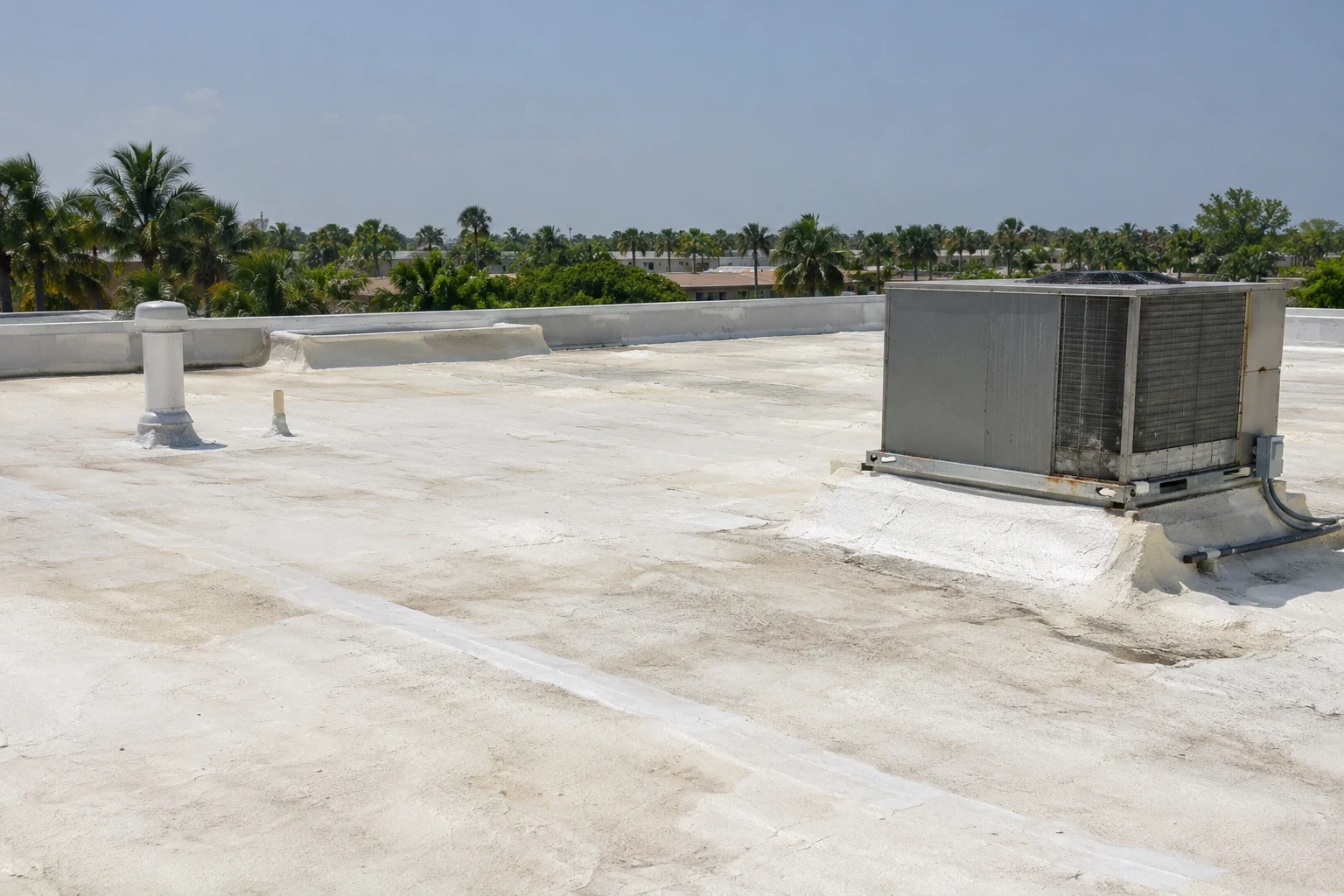
What must the coating bond to?
Silicone coating needs a compatible, prepared surface that is dry and sufficiently sound. Existing membrane, metal, or prior coating can differ in cleanliness, chalking, oxidation, and repair history. We identify the substrate, remove loose material, address open seams and penetrations, and use an adhesion test when system guidance calls for one. A coating should not bridge a failed seam, seal wet insulation, or substitute for replacing deteriorated material. We begin with the repair area and the roof around it: identify where coating has released, probe suspect seams, inspect flashings and curbs, and look for ponding or trapped debris. Cleaning removes dirt and residue that can interfere with adhesion, while loose coating and unsound substrate need their own repair detail. The estimate lists preparation by area instead of treating the entire surface as ready for one uniform application.
Preparation drives both performance and cost. The scope may include pressure cleaning, localized repairs, primer, reinforcing fabric at selected details, masking, and restoration of drains or curbs after application. A coating restoration plan describes which areas qualify and which require repair first. An acrylic coating system uses different application considerations, and SPF roofing relies on its protective surfacing over foam. We compare the actual roof and product requirements rather than selling a coating as a universal fix.
How should ponding be handled?
Silicone coatings can be considered for some roofs that hold water, but the coating does not change slope or correct a blocked drain. We inspect the roof's drainage paths, outlet condition, low areas, and nearby seams, then record where water remains after a storm. If the insulation is wet or the substrate is deteriorated, it must be addressed before application. A warranty or product limitation may also govern standing-water exposure, so the system documents control the proposed use.
Fort Lauderdale climate normals describe a warm, humid climate with substantial annual rainfall, and the South Florida rainy season concentrates drainage demand. That makes water management and cure conditions part of the schedule. A drain and overflow review can identify a separate correction, while a ponding-water assessment can distinguish drainage symptoms from membrane or insulation failure. Properties in Plantation Gateway include medical, professional, hospital, dealership, and retail uses. The owner identifies rooms below the work area that need protection during preparation and cure.
When can silicone be applied?
Application depends on the product instructions, substrate condition, surface temperature, humidity, wind, rain forecast, and time available for the coating to cure. We stage the work so cleaning and repair do not leave a large unprotected area. If rain threatens before the system can accept it, the crew stops at the agreed limit and protects the roof. The schedule states how a weather hold changes the next shift and whether the owner needs to approve a return visit. Before the crew starts, we confirm the area can remain clear of service traffic, protect equipment and intakes, and set the boundary for cleaning, repair, primer, and coating. Those stages may need separate visits. If a surface is damp or a storm shortens the window, the crew stops at the prepared limit and secures the roof rather than coating unsuitable material.
South Florida's rainy-season hazards include lightning, damaging winds, flooding, hail, and occasional tornadoes, with peak activity from May through August. Crews need a safe access plan and a clear work area, particularly near air intakes, equipment, and occupied entrances. A phased roof-work plan can coordinate tenant notices, delivery paths, and interior safeguards. The owner receives a line between surface preparation, coating application, and any repair that must be completed before the next coat.
How does restoration compare with a new roof?
Coating can extend a sound roof assembly when the membrane or panels remain stable, the substrate is dry, drainage works, and preparation can create a reliable bond. It is not appropriate when widespread saturation, structural weakness, failed attachment, or deteriorated material requires removal. We map the repair areas and state where an adhesion test or opening could change the estimate. The owner can compare coating quantities with replacement quantities on a defined roof section.
Before specifying a coating, confirm the current code provisions and product approval record that apply to this building and scope. A recover evaluation checks whether another assembly may be installed over the existing roof; it is a separate decision from coating. In Davie, redevelopment includes business districts and industrial land, where property work may need coordination with tenant activity and site access. We include those constraints in the work sequence, not as a substitute for roof-condition evidence.
What should be recorded after coating?
The closeout file should name the prepared substrate, repaired locations, product system, coat areas, application conditions, measured coverage or thickness where documented, and drains or transitions handled. It should also list exceptions where the existing roof was not coated and any future work still required. A condition report can connect the coating boundary to the roof plan, photographs, and maintenance schedule.
Before mobilization, share the leak location, existing coating records, roof access rules, and any warranty documents. We can respond after hours when an opening needs immediate protection, then inspect and price the permanent work once the surface is dry and safe. The estimate separates cleaning and preparation, localized repairs, coating, masking, drainage corrections, access, and disposal. That gives the owner a clear authorization for a restoration project and a separate path if replacement proves more suitable. We record the final coat boundary for future inspection. It also establishes what the coating does not include, such as deck reconstruction, insulation replacement, or correction of a slope problem.
Before mobilization, the owner should know which roof areas must remain clear while the coating cures and where service personnel can still travel. We mark equipment access, drains, and emergency routes, then sequence the application so later trades do not cross uncured material. If an area cannot be isolated from routine traffic, the work plan needs a protection or phasing decision before coating begins.
Commercial Roofing Questions
Can silicone be applied over any existing roof coating?
No. We identify the coating, prepare the surface, and verify compatibility or test adhesion before specifying a new layer. Existing loose or wet material must be addressed first.
Will silicone stop leaks at open seams?
Open seams and failed details need repair before broad application. We define the seam work and coating boundary separately so the surface layer does not conceal an unresolved entry point.
Does silicone correct water that remains after rain?
It may be suitable for some ponding conditions, but it does not create slope or reopen a blocked outlet. We inspect drainage and the substrate before recommending it.
How long must the roof stay clear after application?
The product instructions and weather conditions set the cure period. We state when foot traffic, equipment access, or the next work phase can resume.
When is replacement preferable to coating?
Widespread wet insulation, unstable panels, failing attachment, or deteriorated substrate can make replacement the more complete scope. We document the condition and compare options before the crew mobilizes.
Related Roofing Work
Verify adhesion and surface condition first
Share the roof material, leak location, prior coating record, and access requirements. We will inspect the substrate, test where needed, and define a preparation and restoration scope with a clear weather boundary.