Commercial Roofing in Hollywood, FL
Service Areas: Hollywood
Commercial roofing in Hollywood starts with the reported leak, roof access, and activity below the affected section. We inspect drains, seams, flashings, penetrations, edges, and rooftop equipment supports, then separate temporary protection from permanent repair. Hollywood connects to I-95, the Turnpike, FEC and CSX railways, Port Everglades, and two international airports. The property contact confirms the actual loading route and staging area. A Downtown Hollywood roof assessment and a Hollywood Beach District service plan follow separate district access contexts.
Hollywood has a substantial healthcare presence, including Memorial Healthcare System headquarters, Memorial Regional, and Joe DiMaggio Children's Hospital. Each healthcare property sets its own access, equipment, and patient-protection requirements. Managers share building use, roof plans, access rules, and operating schedules before work starts. We inspect the roof assembly and report what was reached, what requires testing, and which protection or repair decision comes next.
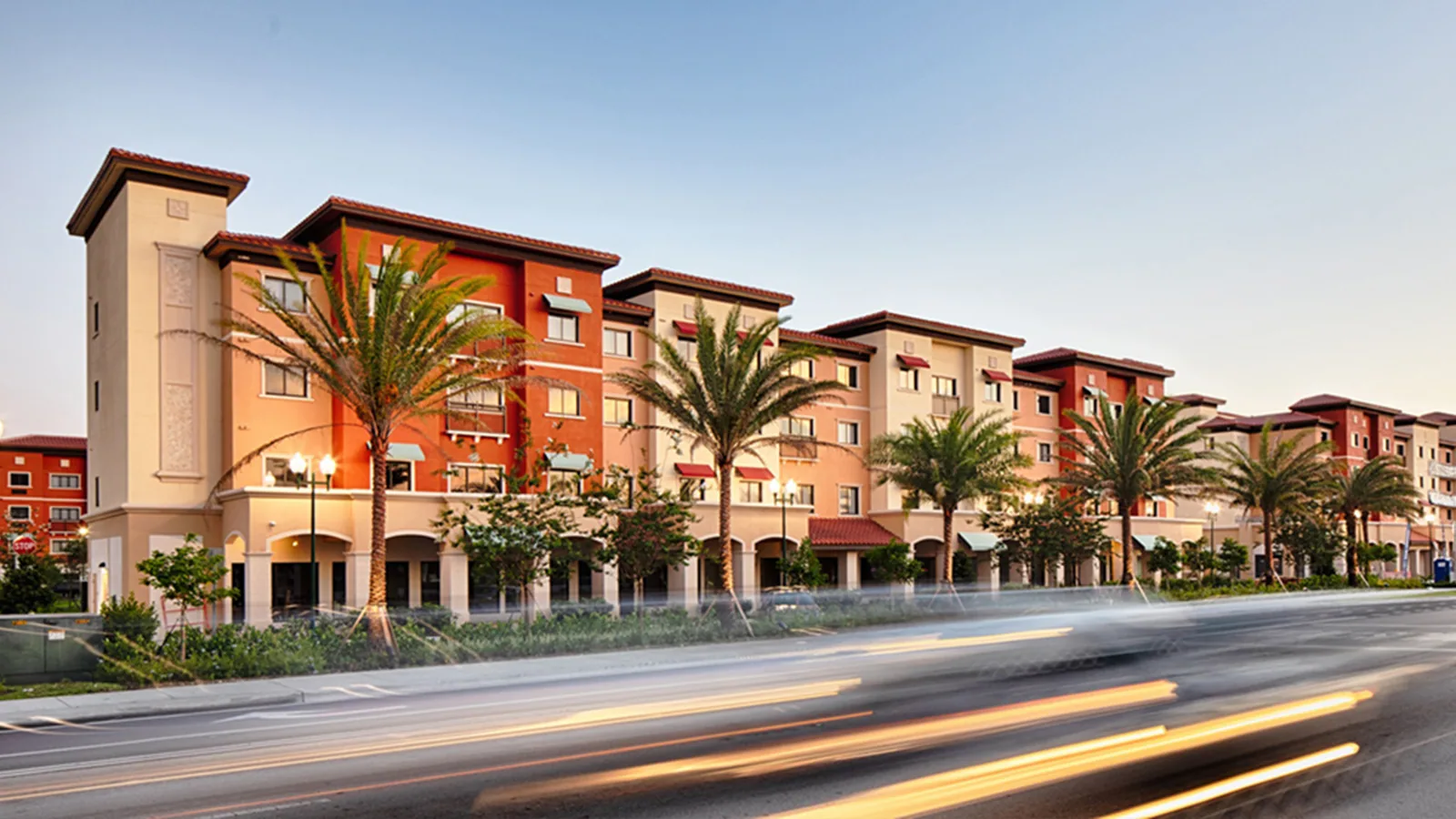
Plan access across a connected city
Regional connections can support delivery and crew planning, but actual property access depends on the owner's site rules, loading location, traffic conditions, and any active construction. Before arrival, the contact confirms gate instructions, staging, lift placement, access hours, and routes that must stay clear. If the site is near a rail or freight operation, the property team identifies any additional safety restrictions rather than leaving the crew to infer them.
For occupied work, phased roofing can separate production into zones when the building schedule and roof system allow. A temporary roof response may be needed first if water is entering. We establish a daily closeout line, identify any temporary cover, and explain what would require a return visit. The manager controls business or patient operations and any external notifications. Our work plan stays on roofing: access, protection, removal, installation, and the final inspection of the agreed scope.
Assess healthcare and other active facilities directly
Healthcare buildings have access rules that need to be part of the roof schedule. The facility's leadership identifies infection-control requirements, patient routes, equipment restrictions, noise limits, and available work windows. We coordinate roof access and record which spaces need protection below the work area, then divide the repair into sections that can be secured within each shift.
For offices, retail properties, and other commercial buildings, the inspection records the installed roof system, accessible details, and site restrictions. A condition inspection documents seams, drains, and flashing. If water is reported near a curb, wall, or pipe, a focused review can establish whether the transition is open. For replacement, the manager identifies equipment another trade must move or shut down. The scope separates roofing from electrical, mechanical, structural, and interior work and assigns each dependency to the responsible professional.
The facilities contact identifies which rooms, equipment connections, and access windows have special controls. We coordinate roof access with that team and keep any roofing shutdown separate from clinical or equipment decisions. The written sequence names the authorized contact, work area, and daily return condition so the building team can manage service obligations. A detailed handoff matters when work pauses for weather or a trade must restore equipment before the next roof section opens.
Check water management in South Florida weather
Fort Lauderdale's climate normals provide a nearby regional reference for Hollywood, with substantial yearly rainfall and a pronounced South Florida wet season. We inspect the property's drains, overflows, seams, and transitions directly, then tie the repair decision to those findings. Seasonal rainfall makes clear drainage and secure stopping points important during roof work. We record blocked strainers, standing water, and runoff crossing the repair boundary so open areas can be secured before the crew leaves.
During a heavy rain, the drain bowl, scupper, overflow, and low areas need to be read as one route. We check whether water can reach the outlet and whether a curb or prior repair interrupts that path. A blocked outlet may need clearing; a low slope or wet insulation calls for a separate scope. The estimate lists those quantities separately, so an owner can authorize drainage service without treating it as a membrane repair.
A ponding-water assessment can evaluate an outlet and roof slope. For a puncture or opening, membrane repair may be appropriate after system and substrate are confirmed. We distinguish current leakage from a visible detail that should be monitored. If moisture below the surface is suspected, the report states the evidence and how an approved test could resolve it. A defined test boundary gives the owner a priceable follow-up rather than a guess about concealed material.
Set a repair boundary and cost drivers
If the project replaces or modifies a roof assembly, the design team and local permitting authority confirm which provisions govern. We document the existing system where known and describe the proposed roof detail for that review. The proposal separates roofing from structural or mechanical work, and the closeout names the materials installed and any approval still needed. This keeps the building team's review distinct from the roofer's inspection and installation record.
When a scope could change an existing roof assembly, the owner asks the design professional and permitting authority what review applies before work is released. We describe the visible roof material, proposed tie-in, and affected area for that process. The crew works to the approved detail and records any concealed condition that changes quantities. Structural, electrical, mechanical, and interior work stays with the responsible trade. At closeout, the owner can see what material was installed and which approval or return visit remains, without confusing a roofing inspection with a building-wide compliance decision.
Close out for facilities and future service
At the end of work, the manager receives a record of roof areas inspected, defects repaired, materials installed, and conditions not resolved. Photos place each detail on the roof map, and notes identify zones that remained inaccessible. If a temporary measure stays in place, the report states its footprint and intended return check. If the crew found no opening during a dry visit, that fact does not prove no leak can occur later. Future service can use the record to compare changes and schedule inspection around building operations.
Hollywood's Downtown CRA and Beach District CRA are separate redevelopment areas. The property manager confirms which district or program applies and coordinates adjacent work. Roofing closeout records the repair, remaining roof conditions, and open approvals. For a commercial property in Downtown Pompano, we set the roof scope from that building's drainage, assembly, and access conditions. In Hollywood, the next step may be a maintenance check, a confirmed leak repair, an approved moisture test, or a broader replacement proposal tied to the roof inspected.
Commercial Roofing Questions
Do Hollywood's hospitals or transport links determine my roof scope?
No. They describe the city context. We base work on the actual property, roof system, operating rules, access, and conditions found during inspection.
Can you coordinate with a hospital or healthcare facility?
Yes. The facility's leadership sets access, noise, equipment, and interior protection requirements. We define the roof work area and follow the approved sequence.
What if our property is near rail or port activity?
Share any site-specific safety, loading, or access rules before mobilization. Regional connections do not replace the property's own permissions and route instructions.
Will you inspect the entire roof on the first visit?
We inspect authorized and accessible areas. Any section we cannot reach safely is listed as uninspected, with a return or test option if needed.
Can you compare repair with replacement?
The comparison uses observed roof condition, repair history, concealed-condition assumptions, access, disruption, and the owner's service horizon.
Related Roofing Work
Request commercial roof service in Hollywood
Share your building use, access restrictions, roof history, and any active leak. We will inspect the approved area and outline repair, maintenance, or capital options.