
Commercial School Roofing in Plantation, FL
Property Types We Roof: Commercial School Roofing
A leak over classrooms creates an immediate choice: protect the occupied space now or open more roof to locate the full water-entry path. We start by identifying the room below, the school contact who can authorize access, and the roof section that can be closed before weather changes. Plantation Midtown has corporate offices, medical facilities, mixed-use retail and housing, while Plantation Gateway along State Road 7 includes retail, professional and medical uses. At each school, district records and an on-site inspection set the roof zone, occupancy plan, and next approval. We inspect the school itself, separate temporary dry-in from permanent repair, and set the next approval before material is removed. A roof inspection maps the affected section and the limits of what we can confirm.
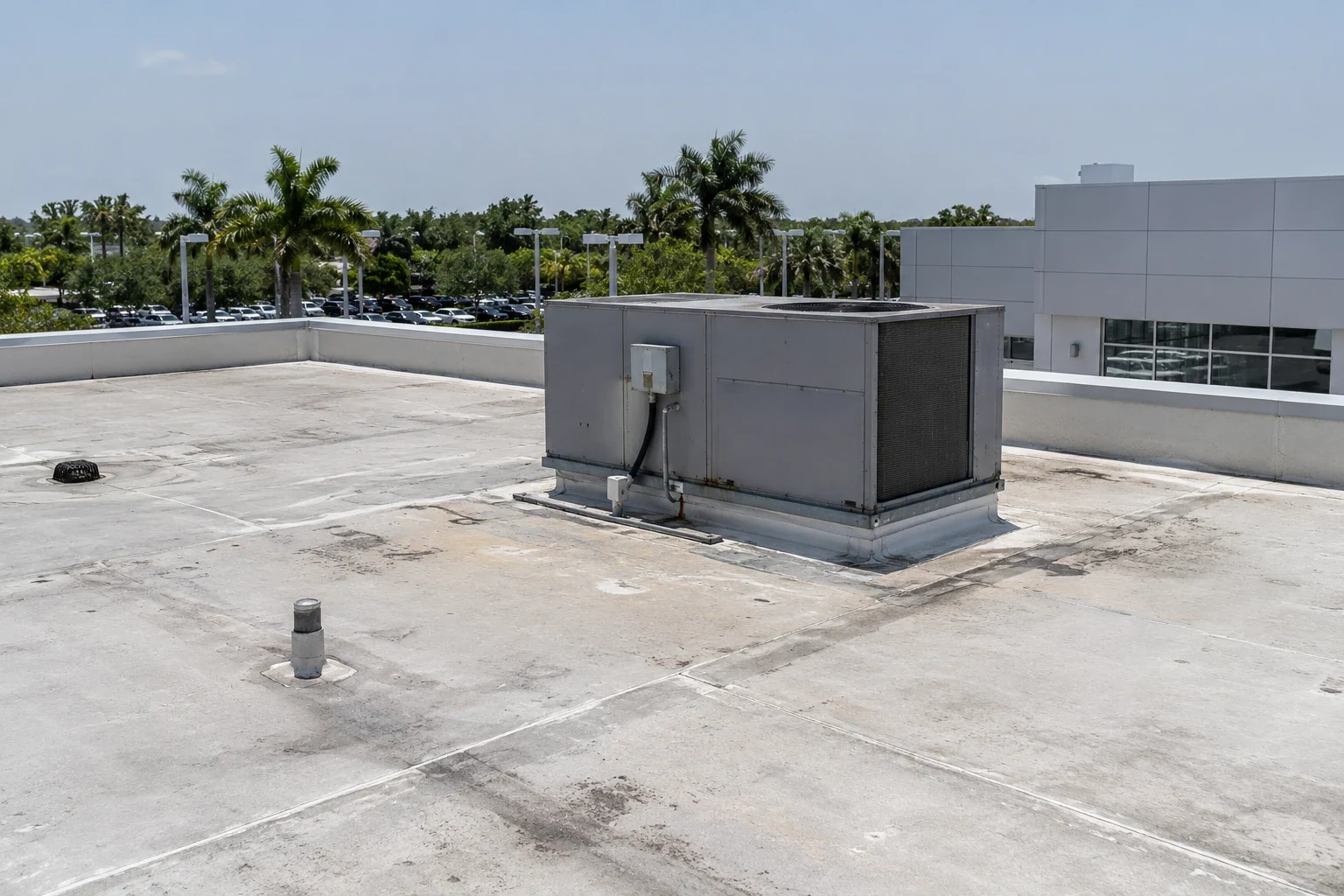
What needs protection before the next class period?
First-hour response starts below the leak. We identify desks, technology, lighting, ceiling systems, library materials or other contents that need to move or be covered, then establish a safe boundary for staff and students. The administrator identifies occupied hours, arrival and dismissal periods, testing dates, kitchen or gym schedules, and who can approve a temporary closure. Those constraints determine when a lift arrives, which entrance stays open and whether the crew can reach the roof without crossing a student route.
Outside, we locate the water-entry path rather than widening the opening from an interior stain. We inspect nearby seams, flashings, curbs, penetrations, drains and perimeter transitions, then photograph what is visible. If the roof is wet or lightning is present, access stops. We set an interim protection plan and state when it can be checked again. If moisture beneath the surface could change the repair boundary, a moisture survey may help prioritize testing, but a thermal pattern still needs confirmation before removal is scoped.
The school receives a short status tied to a roof section: what was protected, what remains exposed, which rooms need monitoring and who owns the next work authorization. That makes the immediate response useful even when the permanent repair waits for a safe weather gap.
What changes the roof scope after a storm?
South Florida's rainy season concentrates a substantial share of yearly rainfall into several months. In Fort Lauderdale's 1991-2020 record, the rainy-season share is 37.49 inches out of 60.95 inches for the year. That concentration makes school drain capacity and a secure temporary closeout key parts of the repair plan. We check roof drains, scuppers, overflow openings, low points and water paths around rooftop units. If an outlet is blocked, that condition is different from a slope or wet-insulation problem. A drainage review can document the outlet path; the owner approves any added work after the cause is clear.
When a weather hold interrupts removal, the crew closes the active roof section before another is opened. Lightning, damaging wind, hail, flooding and occasional tornadoes are among the region's rainy-season hazards, with severe conditions more likely from May through August. We plan for a safe shutdown point and confirm the temporary protection after the event. A hail assessment or wind review should record observed damage, not assume every roof nearby was affected.
For larger projects, removal limits should follow the portion the crew can secure before dismissal or a storm alert. Materials, lifts and debris need a route that remains separated from student circulation. Those details can change the schedule and labor allowance before they change the membrane specification.
Can work fit between school operating hours?
A school may remain in use while a roof is repaired or renewed, but the sequence depends on access, safety controls and the assembly. We mark roof sections, define the temporary dry-in boundary, and identify the rooms or entrances below each phase. If the work is noisy, an administrator can match removal or fastening to a period when the affected building is less active. If an HVAC shutdown is needed, it goes through the school's authorization path before the crew arrives.
A phased reroof plan can separate classroom wings, common areas or support spaces when the roof layout allows it. We coordinate lifts, barriers, material storage and daily cleanup with the facilities contact. The first phase should prove the handoff: who checks the ceiling below, how a weather hold is called, and who approves a scope change if wet insulation or deck damage appears.
Across Plantation Midtown and Plantation Gateway, operating hours vary by building use. For a school, the administrator sets the calendar, access contacts, and room protections that shape the roofing window. An university roof plan may require a different campus coordination approach, while a hospital scope may need continuous service access.
What changes repair into replacement?
A localized repair may fit a failed seam, penetration or flashing detail if the surrounding assembly is still serviceable. A recover requires confirmation of existing layers, attachment, moisture, substrate and project requirements. Replacement deserves comparison when deterioration spans several sections, moisture is confirmed beneath the membrane or repeated repairs leave the school exposed to another interruption. We explain the observed finding, the repair allowance and what test or selective opening would change the recommendation.
Cost and duration move with tear-off depth, insulation, deck repair, drains, edge details, equipment clearance, lift access, student protection, disposal and the number of roof sections open at one time. A recover evaluation can compare retaining the assembly, while replacement planning can define removal and the new system. If a leak continues while the permanent scope is developed, emergency repair can protect the opening as a separate authorization.
A school scope is reviewed against Florida's active eighth code edition, which began statewide use on December 31, 2023. Broward County also publishes commercial energy-code guidance and High-Velocity Hurricane Zone examination resources. The designer and owner must confirm which provisions apply to the actual building and work. We state the roof assembly and scope split so the school can coordinate its next approval.
What should the school receive after the crew leaves?
Closeout should name each inspected or repaired roof section, show photos of the detail, identify any area blocked by weather or access and list the next approval. If a ceiling still needs monitoring, the affected room and return-visit trigger belong in the handoff. If moisture was suspected but not confirmed, the record identifies the test that remains. That separates an observed roof defect from an open question.
We also confirm temporary protection, debris removal, access restoration and any equipment status agreed with the school. If a second phase is planned, the manager should know what roof section comes next, when the crew can return and what room or route needs notice. The final recommendation compares immediate repair with longer-term work in terms of school interruption as well as roof condition.
For a multi-building program, a condition report can keep photos, repair limits and budget decisions together. A nearby office roof or medical office may use the same report format, but each school section still needs its own access and occupancy plan.
Commercial Roofing Questions
What should happen when water is dripping into a classroom?
Protect contents and people below, isolate the affected area if safe, and call for a roof inspection. We identify the room, trace accessible roof details and set temporary protection before defining the permanent scope.
Can roof work be scheduled around students and staff?
Yes, when roof access and the building layout support it. We coordinate arrival, dismissal, testing, occupied hours and equipment shutdowns with the school contact, then set roof zones and daily closure points.
Does a nearby storm mean the school roof is damaged?
Not by itself. We inspect edges, seams, flashings and drainage, document visible conditions and separate storm-related findings from earlier wear or repairs.
What if a weather hold leaves a roof section open?
The crew follows the agreed dry-in boundary, protects the active area and records its status. Work resumes after the surface, access and weather conditions support a safe restart.
When should a school compare a recover with replacement?
Compare both after checking layer count, attachment, moisture, deck condition and repair history. We identify which finding supports each option and what additional test could change the scope.
Related Roofing Work
Set a school roof response
Describe where water appeared, the room below it, who can authorize access and the next available work window. We will set the first inspection and protection decision.