
College and University Roofing in Plantation, FL
Property Types We Roof: College and University Roofing
A campus leak can interrupt a lab, lecture space, residence hall or student service before the roof scope is known. We first identify the room below, the next occupied period, and the amount of roof that can be protected if rain arrives. Plantation Midtown combines corporate offices, medical facilities, retail and housing, while the Davie Road corridor has been evaluated for transit connections to colleges. Miramar also reports several higher-education institutions. Together they place campus operations within a varied regional building market. We inspect the building receiving work and map the first-hour protection separately from permanent renewal. A Midtown roof project can have a different access plan than a college building, even when both face the same weather.
Which campus space needs protection first?
The facilities contact identifies the affected room, the activity below it and any equipment that cannot be moved or shut down. A leak over a classroom, laboratory, residence hall or dining space creates different response needs. A campus clinic may also share access questions with hospital roof planning when treatment rooms or medical equipment are nearby. We set a safe interior boundary, protect contents and identify the person authorized to allow roof access. The campus calendar matters: move-in, exams, events and summer work periods can change the available window. We ask for those dates before setting a lift or closing a corridor.
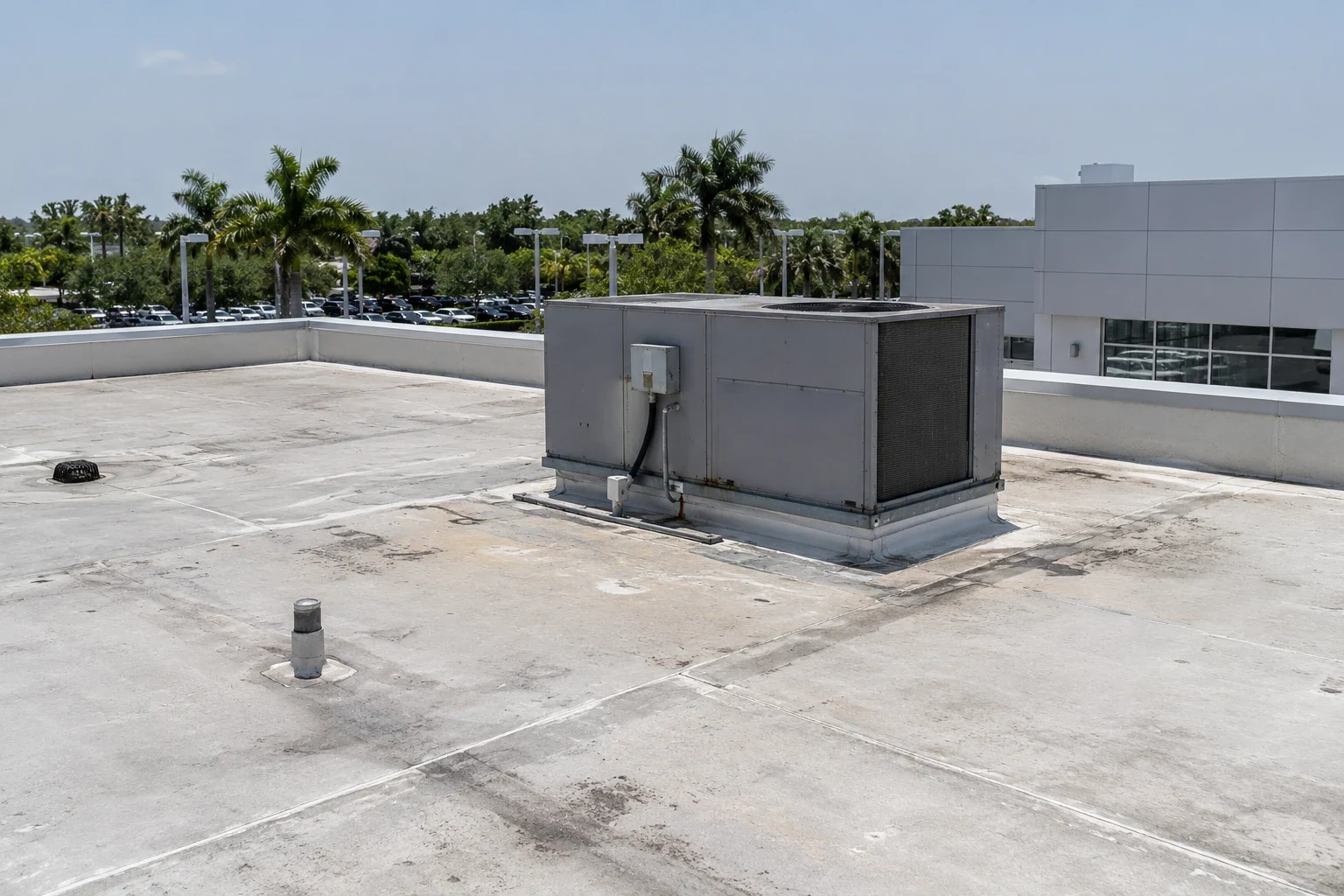
On the roof, we trace the water-entry path through seams, flashing, equipment curbs, penetrations, drains and perimeter details. We record the membrane or metal visible, earlier repairs and any section hidden by equipment. If the ceiling mark and roof defect do not align, the path may continue through insulation or the deck. We record what is confirmed and which opening or test could settle the remaining question. A roof inspection gives the owner a section-by-section view; emergency protection can stabilize an active opening while the broader scope is reviewed.
Campus maps and building names are useful for dispatch, but they do not replace a designated access contact. We confirm loading doors, roof hatches, escort requirements and utility shutoffs for the specific structure. That avoids sending a crew to a locked entrance while the weather window narrows.
What can the next storm change?
In South Florida, the rainy season concentrates roof-drainage demand into several months. Fort Lauderdale's 1991-2020 normals include 37.49 inches during that season, so a campus work plan needs a protected stopping point, not just an installation target. We set the roof section size, interim protection and person authorized to call a weather hold before removing material. Lightning, damaging wind, flooding, hail and occasional tornadoes can disrupt May-through-August work; crews pause when access or exposure is unsafe.
We check roof drains, scuppers, overflow routes and low areas around curbs, screens and mechanical equipment. If an outlet is blocked, we separate clearing it from a suspected slope or moisture problem. A drain-capacity review can identify the path from the roof field to the outlet; a moisture survey may help prioritize a test where concealed wet insulation could increase removal.
When wind warnings approach, loose materials and openings need to be secured before work stops. The manager receives the last completed roof zone, the dry-in boundary, and any condition that must be checked before crews return. That information supports campus operations even if the permanent repair must wait for a clearer work window.
How can roofing fit the academic calendar?
A phased project can move building by building or roof section by section when the assembly and safety plan allow it. We identify which spaces stay occupied, the route for students and staff, and where material can be staged. The daily limit should be small enough to close securely before dismissal or a weather hold. An occupied-building work plan can set those transitions. If classes are in session, noise-heavy removal can be assigned to agreed periods, while inspection, flashing work or interior protection may follow a different schedule.
Plantation Gateway's State Road 7 corridor includes professional, medical and retail properties, and Plantation Midtown includes corporate offices, housing and medical uses. These local settings reinforce that a regional contractor schedule cannot substitute for the college's own calendar and access rules. We confirm event dates, room use, deliveries, energy systems and emergency routes with the campus contact.
If the project involves several buildings, an owner may stage the scope by condition and operational impact. A roof with active water entry may need interim work before lower-risk sections enter a capital bid. We state which work can proceed now, what needs a separate authorization and which phase can be deferred without leaving an opening exposed.
What drives the repair allowance?
Repair can suit one failed seam, curb or flashing transition if surrounding material remains serviceable. A recover can be considered only after layer count, attachment, moisture, deck and project requirements are checked. Replacement deserves comparison when water has reached insulation or deck, deterioration crosses multiple roof areas, or recurring service calls keep interrupting campus operations. We connect the recommendation to an observed condition and identify any test that could change it.
Costs depend on tear-off depth, insulation, deck work, drain modifications, edge metal, rooftop equipment, lift access, lab or classroom protection, occupied hours and debris removal. We separate the immediate repair allowance from renewal work and show the owner where an approval is needed if hidden conditions appear. A recover assessment can compare retention with removal; replacement planning can define the new assembly. A TPO assembly or modified-bitumen system is chosen from the building requirements, not the school name.
What approval comes next?
After each phase, the facilities team should receive roof-zone photos, completed work, any access limit, and the next decision. We identify where temporary protection remains and whether a classroom or lab below should be checked after rain. If an observed area still needs testing, the owner sees the cost and access implications before authorizing a return visit.
A condition report can help a campus compare buildings, but every roof section should retain its own materials, repairs and access history. Plantation Midtown and the Davie Road corridor provide nearby commercial and institutional context; neither tells us what a particular college assembly contains. The next budget decision should follow the inspection record, not a district label.
Before the crew leaves, we verify the temporary closure, remove debris, restore agreed equipment status and clear occupied routes. The project contact receives an update on the next work window and the person who owns that approval. That closes the immediate response while keeping the permanent plan visible.
Commercial Roofing Questions
What should a campus report when a leak interrupts a class or lab?
Identify the room, activity, contents at risk and when water appeared. We use those details to set interior protection and trace the roof section without assuming the stain marks the entry point.
Can work be scheduled between academic terms?
Often the calendar can create a longer access window, but delivery, events, utilities and weather still control the sequence. We confirm the campus schedule and define daily closure points before mobilization.
How do you decide whether an affected building needs a recover or replacement?
We inspect existing layers, attachment, moisture, deck condition and repair history. The owner receives the findings, an explanation of the cost drivers and any test needed before the capital choice.
What happens if a weather hold cuts a phase short?
The crew secures the active roof section, records its boundary and updates the campus contact. The next shift checks the closure and access conditions before opening another area.
Can a campus bid several roofs as one project?
The owner can evaluate a portfolio while keeping building-level findings separate. We identify urgent protection, planned renewal and access constraints for each roof so approvals do not blur distinct scopes.
Related Roofing Work
Plan a campus roof response
Describe the affected room, academic or event schedule, roof access and who can authorize work. We will set the first protection decision and return window.