
Church Roofing in Plantation, FL
Property Types We Roof: Church Roofing
A roof leak before a service creates an immediate choice: protect the gathering space or open enough roof to trace the full entry path. The property lead needs to know which rooms are occupied, when the building can be accessed, and who can approve a temporary dry-in. Plantation's humid, rain-prone climate makes that closeout boundary part of the first decision. We inspect the roof assembly, edges, drains, penetrations, and earlier repair points, then separate temporary protection from permanent work. Plantation Midtown combines medical, office, retail, and housing uses; the Davie Road corridor has retail and office properties. Those settings show why access and schedules matter locally, while each worship property establishes its own limits. An inspection maps the findings to the next approval.
Which rooms and entrances must stay available?
A sanctuary, fellowship hall, kitchen, classroom, or office may have a different event calendar and protection need. We begin with the room below the reported water and check what activity is planned during roof access. The building contact identifies entrances, accessible routes, fire lanes, sound-sensitive areas, and any room that cannot be entered without notice. We set the interior protection boundary before work starts, then trace upward to the roof zone that could be responsible. If water has traveled along the deck or insulation, the ceiling stain may not mark the opening.
Congregations often share their buildings with childcare, community meals, meetings, or weekday programs. A repair window therefore needs a clear start, a stop point, and a person who can change the schedule. Lift placement and material staging can affect parking and pedestrian flow even when roof work stays above the building. A phased occupied-building sequence separates work areas and daily dry-in decisions. For a property with a connected school or care wing, a school-roof scope can identify calendar and classroom safeguards without assuming that every space has the same occupancy pattern. A hospital roof plan applies similar care to clinical routes, but the approval chain and room controls differ.
Where should the inspection follow the water?
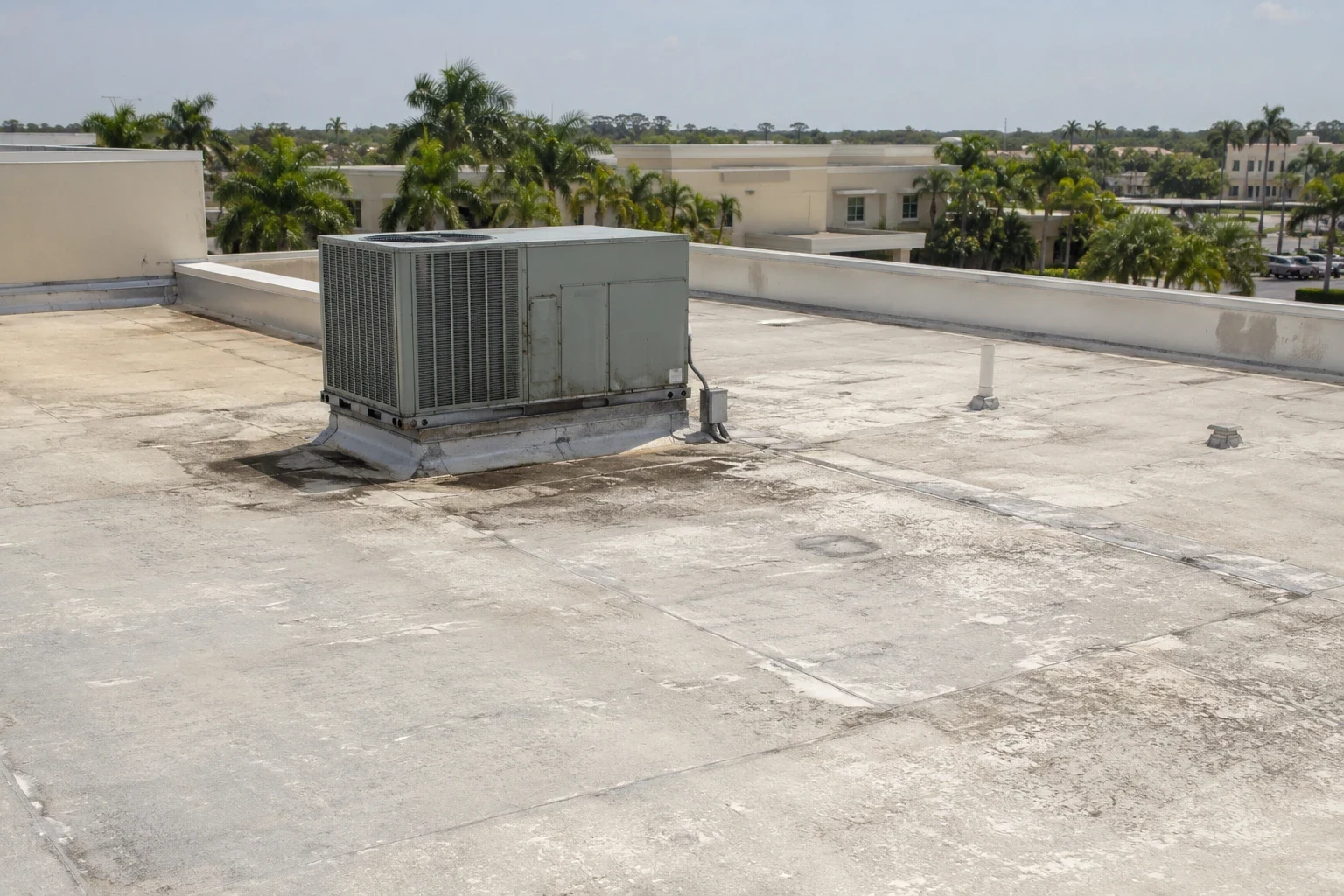
Water entry can start at a seam, perimeter edge, pipe boot, skylight, curb, wall transition, or drain detail. We compare the interior report with roof features above and beside it, then record confirmed openings, suspected paths, and areas that could not be reached. A roof plan helps tie observations to sections and elevations. Previous patches matter because a new repair must bond to compatible, sound material. We check whether moisture extends beneath the visible defect and whether a test opening or infrared moisture survey would change the scope.
Drainage is another part of the inspection. We look at drain bowls, strainers, scuppers, overflow paths, and visible low spots. We inspect the outlet, slope, and membrane detail to determine why water remains on the roof. South Florida's wet season places more demand on roof drainage during a concentrated part of the year. An outlet and scupper inspection can define drainage work separately from a membrane repair. If a weak seam or open flashing explains the entry, a seam assessment or flashing review identifies the affected material and transition.
What can be secured before permanent repair?
Temporary protection is a defined measure with a boundary, not a promise that the entire roof is dry. We identify the opening, protect the interior below, and state what area remains exposed or unverified. If rain is approaching, a smaller controlled opening may be safer than extending removal to chase an uncertain path. The work record identifies material placed, roof section covered, and any condition that requires a return visit. An urgent response can be requested at any hour, including holidays; safe access, site authorization, and current weather govern whether a crew can work immediately.
Storms can bring lightning, flooding, hail, damaging winds, and occasional tornadoes to South Florida. Tropical systems also require preparation ahead of warnings, including securing loose materials and addressing vulnerable openings. We check current conditions before roof access and set a weather hold rule with the property contact. If a warning or storm changes the sequence, the closeout records what was protected and what remains for inspection. A first-hour roof response can stabilize a reported opening; a follow-up inspection documents visible conditions separately from assumptions based on a regional alert.
When does a repair become a larger project?
A focused repair can fit when the defect is limited, nearby membrane or metal remains secure, and the insulation is dry. We name the preparation, compatible material, seam or flashing tie-in, work limit, and closeout condition. If multiple rooms report leaks, several roof zones show wear, or moisture extends beneath the field surface, the scope may need testing before a permanent price is complete. Widespread loose attachment, failed edge metal, or repeated repairs can raise a recover or replacement decision.
A coating is suitable only when the existing assembly and surface meet preparation, moisture, and compatibility requirements. It will not correct a failing drain or hidden wet insulation. Recover work requires review of the existing layers, attachment, structure, drainage height, and code requirements. The project designer should confirm current Florida and Broward requirements when preparing the permit scope for recover or replacement work. A repair scope can isolate a sound roof area; a renewal estimate sets removal, transitions, staging, and daily dry-in by roof section.
What approvals and records affect the budget?
Cost changes with roof access, lift requirements, staging, material handling, interior protection, after-hours work, and how much deteriorated material must be removed. A small repair may need a weather-sensitive setup and tenant-safe access even when the material quantity is modest. We keep emergency protection, permanent repair, testing, and potential concealed work as separate estimate lines. That allows the board or facilities contact to authorize the urgent step while deciding whether more information is needed for capital work. A repair allowance should state its assumptions and the approval process if the opened area differs from the visible condition.
Retain roof plans, prior service records, photos allowed by property policy, work dates, materials, and the areas inspected. A condition report can capture observations and access limits for future maintenance or budget review. Plantation Gateway follows State Road 7 through medical, professional, retail, and dealership uses; Midtown includes mixed-use buildings and offices. A worship property may have a different operating pattern, but the record should still identify who controls each next approval. Share the room below the leak, access rules, calendar limits, and any roof documents before scheduling. The closeout states what is permanent, what remains temporary, and when a return inspection is warranted.
Commercial Roofing Questions
Can roofing work avoid service hours?
Usually, if the access window, crew size, staging area, and weather allow the planned section to be opened and closed in that period. We confirm the calendar with the property lead and set a limit for any work that could affect entrances or gathering spaces.
Does a ceiling stain identify the roof opening?
Not always. Water may follow a deck, insulation, or framing before appearing inside. We compare the room location with roof seams, penetrations, drains, and transitions, then mark what is confirmed separately from a suspected path.
What should happen before the next service if a leak is active?
Protect the affected room under the building's safety procedures and identify the person who can authorize roof access. We can evaluate temporary dry-in, document its boundary, and state what permanent inspection or repair remains.
Can a coating solve a recurring leak?
Only if the existing roof is compatible, adequately prepared, and free of conditions that a surface application cannot correct. A failing seam, wet insulation, or drainage defect needs its own diagnosis before coating is considered.
How will the congregation know what the repair covered?
The closeout records the roof zone, material, detail repaired, temporary measures, and any area that was not reached. It also identifies the next inspection or approval so a later leak report can be compared with the completed work.
Related Roofing Work
Keep the gathering schedule in the roof plan
Tell us which room is affected, when the building is occupied, who can authorize roof access, and how quickly protection is needed. We will inspect the roof zone and separate immediate dry-in from permanent scope.