Big-Box Retail Roofing in Plantation, FL
Property Types We Roof: Big-Box Retail Roofing
A leak over a large sales floor can become a stock, safety, and opening-hours problem before the roof repair scope is clear. We first mark the affected aisle or department, protect merchandise and electrical equipment below, and determine how much roof can be opened and closed safely. Pembroke Pines reports over 10 million square feet of commercial development, much of it along Pines Boulevard, spanning several property types. Plantation Gateway also includes retail, dealerships, medical and professional offices, and a hospital along State Road 7. Pines Boulevard and the Gateway corridor support different commercial operations, so we inspect the assigned roof's seams, drains, curbs, and perimeter, then set a dry-in limit with the manager. Store receiving rules and customer hours determine the work window.
What has to stay protected during open hours?
The first response should account for the people and inventory below the roof as well as the wet area itself. The store manager identifies the affected department, stock that can be moved, any customer route that needs a barrier, and equipment that should not be exposed to water. A sales floor, stockroom, pharmacy, or food-service area may require different interior controls. We establish the boundary with the store contact and keep customers away from ladders, ceiling openings, or wet floor hazards. If the leak is active, temporary collection or covering can limit immediate damage while a crew traces the entry point from above.
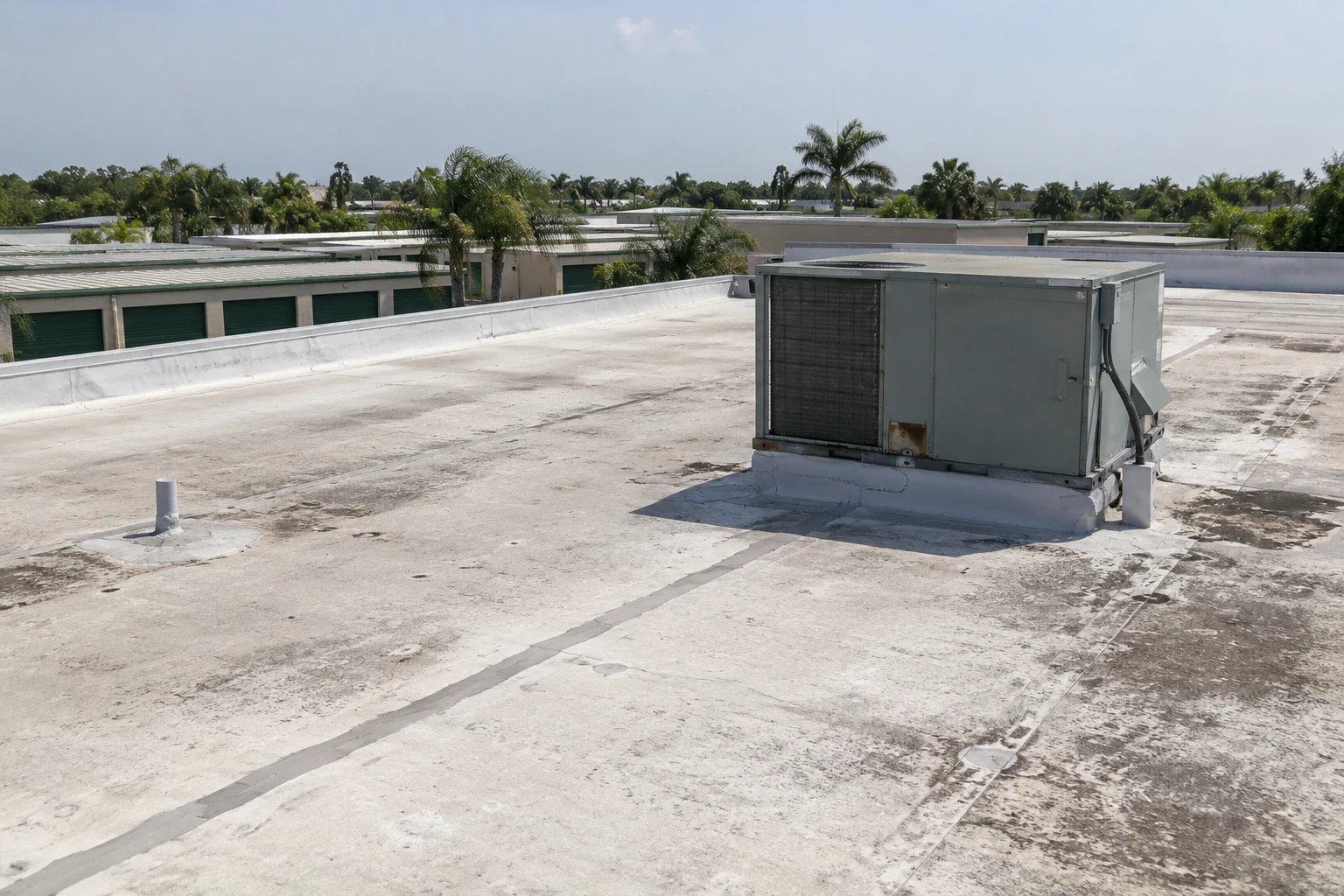
On the roof, we map the reported area and check the nearby seam, penetration, rooftop unit, drain, scupper, and edge detail. A leak may travel under a membrane or along a deck before it appears indoors, so the ceiling location alone does not define a permanent repair. Photos and zone labels connect what we observe to the interior report. A temporary emergency response can secure an active opening; the roof inspection determines what permanent work the evidence supports. For a store with cold cases, grocery roof planning adds refrigeration and product-protection decisions to the same first-hour process.
How does a weather hold affect a large roof?
Large roof areas make the daily stopping point a cost and safety decision. Fort Lauderdale's long-term normals average 60.95 inches of rain annually, with a large share arriving during South Florida's extended wet season. Thunderstorms, damaging winds, flooding, hail, and occasional tornadoes can interrupt removal or installation. Weather alerts guide safe access; the field review identifies roof sections with open seams, displaced edge metal, punctures, or trapped water. Before work starts, we agree on the maximum area that can be safely exposed, the temporary materials on site, and the person authorized to call a weather hold.
A big-box store may receive freight throughout the day and keep customer entrances open while work is underway. We identify lift locations, trailer staging, delivery windows, fire lanes, and the route from the roof access point before setting the sequence. If the forecast changes, the crew protects the roof section first and the manager receives a status on completed work, remaining exposure, and the next available return window. A storm damage review can document observed conditions after an event, while an edge and wind review can focus on uplift or displaced components. Neither service decides coverage or promises a claim result.
What belongs in the repair allowance?
The owner needs to know whether the recommendation addresses one confirmed transition or a broader roof condition. We separate an immediate patch, drain clearing, flashing repair, wet-insulation investigation, and full section renewal so an urgent item does not blur into a larger allowance. If the surrounding membrane remains serviceable, a targeted repair may be the right next step. If moisture or deterioration crosses several roof zones, testing can help determine whether repair, recover, or replacement deserves comparison. We identify assumptions about deck condition, insulation thickness, attachment, curb detail, access equipment, and disposal before pricing is approved.
A large footprint may call for zone-by-zone work rather than a single closure. A drain and scupper review can isolate outlet problems from membrane damage. A shopping-center roof plan may add several tenant schedules and common-area routes, while a warehouse roof scope can place greater weight on loading and equipment access. The proposal should state what the fixed price includes, which concealed conditions could change it, how temporary protection is handled, and who must authorize work outside the defined area.
Can roofing be done while the store remains open?
Often the project can be divided into manageable work zones, but the layout and assembly set the limits. We review roof access, customer entrances, receiving bays, fire lanes, rooftop equipment, and the interior area below each phase. The manager confirms opening hours, inventory controls, security requirements, and whether a lift can occupy a section of the lot. Material should arrive when the loading area can accept it and leave a clear route for freight and emergency vehicles. The plan identifies the daily roof boundary, protection below, and secure point where the crew stops.
Plantation Midtown combines offices, medical facilities, retail, housing, and a regional shopping center across an 860-acre district. For a store in a mixed-use setting, nearby activity does not dictate the building's hours, so the operations contact confirms them directly. A phased occupied-building plan can assign roof sections, tenant or department notice, noise periods, and weather contingencies. If the safe boundary cannot be maintained, work pauses before the opening grows. The store receives a daily closeout with the areas completed, protection left in place, and any decision needed before the crew returns.
What decision should the property team receive next?
After inspection or repair, the store should receive a concise zone record: reported condition, visible findings, work completed, temporary measures, and items still requiring approval. Photos should show the affected detail and the surrounding roof area so a later visit can compare like with like. If a hidden layer could change the proposal, we identify the test and the access conditions rather than assume what lies below.
Before demobilizing, we confirm the roof is closed at the agreed limit, customer paths are clear, debris is removed, and the manager knows the next return date or approval. A roof condition report can support a portfolio or capital-planning discussion without replacing design review. The decision should be concrete: authorize the documented repair, schedule a defined moisture test, or compare a larger renewal. That helps the owner control cost and store operations.
Commercial Roofing Questions
Can the store stay open during roof work?
The answer depends on customer routes, loading activity, interior protection, and whether the crew can maintain a secure roof boundary. We coordinate the work zone with the store contact, protect the area below, and stop at a dry-in point that can be closed before weather changes. The team approves entrance or freight changes.
What should we do when water reaches merchandise?
Move stock only when it is safe, protect nearby electrical or sensitive equipment, and isolate a wet floor or ceiling area. Tell the manager where water appeared and whether it is still active. We trace the path above, install temporary protection if needed, and separate that response from the lasting repair recommendation.
Does a storm report prove roof damage?
No. Weather context can help organize the inspection, but the roof must be examined for actual changes such as loose edge components, punctures, seam separation, or blocked drainage. The inspection record describes visible conditions and uncertainty without assigning a cause that has not been established.
How can we keep freight moving during replacement?
Set delivery hours, lift position, debris-container location, and fire-lane clearance before the work begins. We phase the roof by section when the assembly allows a secure daily closeout, and the store contact confirms each shift's access route and any blackout period.
What can change the quoted repair cost?
Concealed wet insulation, deck repairs, added edge work, equipment access, after-hours labor, and disposal can change the allowance. We list the assumptions and define how approval works if an unexpected condition is found, keeping the confirmed repair separate from optional testing or renewal.
Related Roofing Work
Protect the store first, then price the roof work
Tell us where water appeared, what department or equipment sits below it, who can authorize roof access, and when freight or customers must move. We will inspect the roof section, set a secure temporary dry-in, and return a defined repair allowance and next approval.