Apartment Roofing in Plantation, FL
Property Types We Roof: Apartment Roofing
A water report from an apartment triggers two decisions: protect the resident and inspect the roof without disrupting more units than necessary. We start with the affected unit, ceiling or wall location, active water status, and any electrical or personal-property concern reported by the resident. Property staff control entry and resident notices; our crew maps the roof zone and defines temporary protection. Plantation Midtown is an 860-acre mixed-use district containing housing alongside offices, medical facilities, retail, and regional shopping. Nearby Pembroke Pines has more than 10 million square feet of commercial development, including retail, office, industrial, warehouse, flex-space, and hospital properties. At a Midtown apartment property, access and resident notices should be settled before opening a roof section.
Which residents or units need attention first?
The manager identifies where the resident saw water, when it started, whether it continues, and which rooms or belongings may be affected. We ask whether the ceiling is bulging, a light is wet, or water is near an electrical fixture; residents should stay clear of any unsafe area and management should follow its emergency procedures. The roof crew does not enter an occupied unit without permission. If an interior look is needed, the property contact arranges it and identifies an escort or access window.
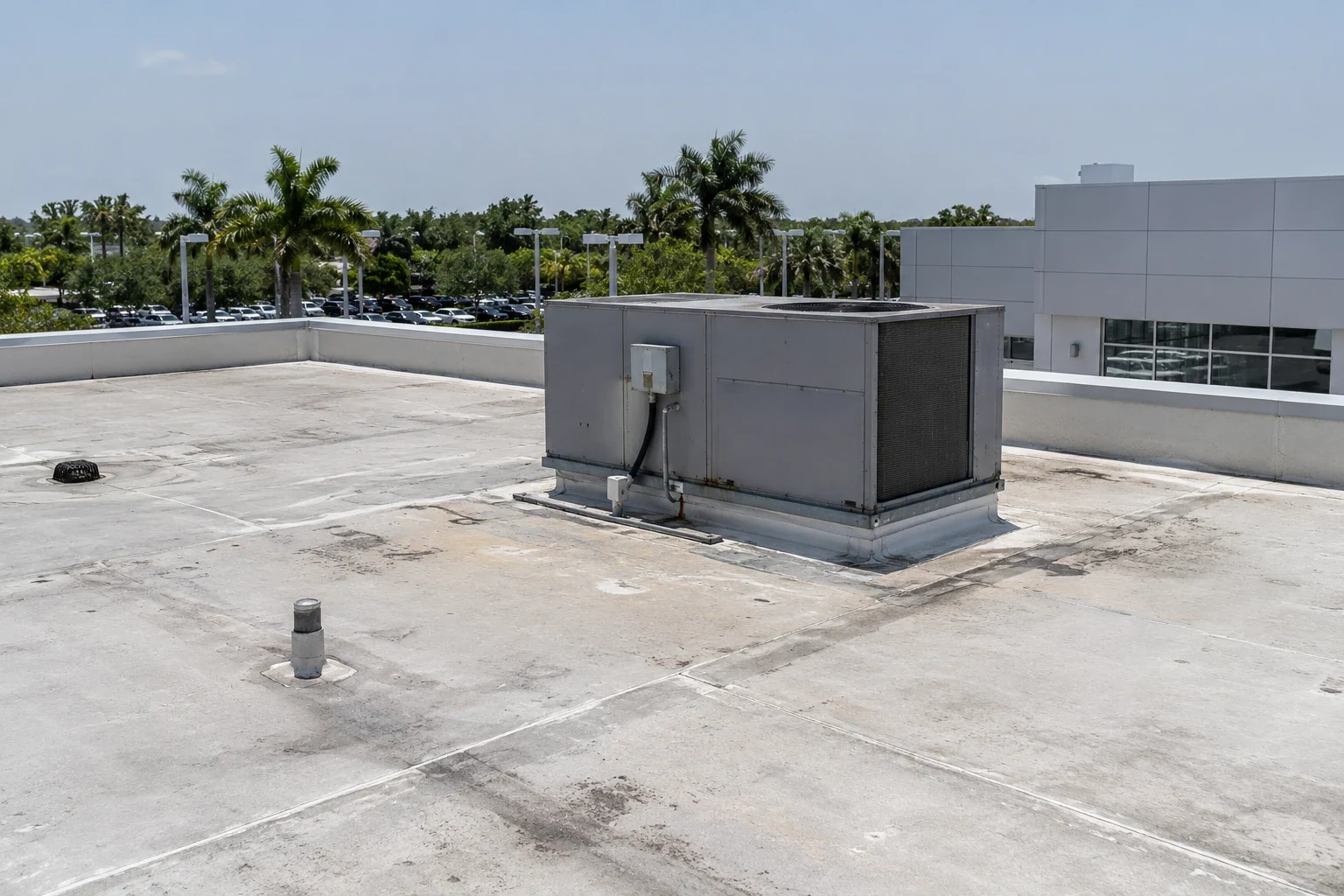
From the roof, we inspect the likely water path across seams, penetrations, drains, parapets, equipment supports, and prior repairs. Water can move along the deck or through insulation before reaching a unit, so the room location alone does not identify the failed detail. Photos by roof zone help connect the finding to management's report. If wet insulation is suspected, the scope may call for testing before a larger opening. A leak repair can address a confirmed entry point, and a moisture survey may help prioritize verification where conditions suit that method. The proposal distinguishes immediate water control from any work that would affect additional residents.
How should the property plan for rainy-season work?
Fort Lauderdale's 1991-2020 climate normals include 37.49 inches of rainfall during the rainy season and 60.95 inches annually. That regional pattern can compress the time available to open and close a roof section, especially when multiple occupied floors sit below it. South Florida thunderstorms may bring lightning, damaging wind, flooding, hail, or occasional tornadoes. Weather alerts help set safe access and timing; an inspection identifies damage at the property. We define the day's maximum work area, the dry-in method, and who can call a weather hold before removal begins.
Management may need to notify residents about noise, a lift, blocked parking, or a temporary change in access. We confirm the route for materials, rooftop equipment clearances, and any area that must remain available to emergency services. If a shower interrupts work, the roof closes at the agreed boundary and management receives a report of what is protected and what remains to be done. A temporary roof response can control active entry; a post-storm inspection can document visible changes. The insurer handles coverage decisions, while management directs resident-safety measures; our report records roof findings and repair status.
What changes the apartment repair allowance?
The price depends on the roof section and the condition confirmed, not simply the number of units in the building. We identify the membrane or roof type where visible, the seam or flashing involved, drainage conditions, interior protection needs, access equipment, debris route, and any test needed to check concealed moisture. A localized repair may be enough if the surrounding assembly is sound. If water has reached insulation or deck, or repeated reports point to a wider condition, management may compare repair, recover, and replacement. We list the assumptions and any hidden condition that needs written authorization before expanding the work.
Multi-building properties need the record to distinguish one roof from another. An asset condition report can carry unit reports, roof-zone photos, repairs, and return visits into a property-level budget. A hotel roof scope may also protect occupied rooms, but the apartment manager controls lease notices and resident entry. We keep those work-planning considerations separate from the actual roof diagnosis. If the building needs work in stages, the allowance should state which section is included, how long resident notice is needed, and the condition that would pause the next phase.
Can residents remain in place during replacement?
Residents may be able to remain in their units while roof work proceeds, depending on the section, safety boundaries, noise, interior conditions, and daily closure plan. The property manager determines whether a unit must be vacated or entered. We provide information about expected work zones, roof access, material delivery, debris handling, and any temporary limits that affect a resident-facing area. Each shift should have a roof boundary that can be secured, along with a contact for questions or schedule changes.
Plantation Gateway includes roughly 400 businesses across retail, medical and professional offices, auto dealerships, and hospital uses. For an apartment roof visit, the property manager confirms parking, access, and resident-protection rules at the building before lift or material staging. The team checks where a lift can stand, how residents reach their vehicles, and when deliveries or maintenance staff need the loading area. An occupied-building phase plan can set section handoffs and tenant communication, while retail property roofing presents a different tenant pattern. If weather or a hidden condition changes the sequence, management receives a revised section and return window before the crew proceeds.
What should management receive after the visit?
The closeout identifies the reported area, roof zones checked, work performed, and protection still in place. It should say whether access to a unit was arranged, not imply that the roofing crew entered without permission. Photos should support the roof decision while keeping resident privacy intact. If the inspection cannot determine the water path without a test or opening, we explain what approval is needed and how the result could change cost.
Before the crew leaves, we confirm the roof is closed at the agreed stop line, resident routes are clear, and the manager knows whether another visit is needed. A follow-up roof inspection can verify a defined condition; a maintenance visit can check agreed details later. The next approval should identify the roof zone, budget, access conditions, and resident notice window.
Commercial Roofing Questions
Will roofers need to enter an apartment?
Not always. We first inspect the roof and compare it with the reported interior location. If an inside look is needed, management arranges resident permission and an access window. The roofing crew does not treat a repair request as permission to enter an occupied unit.
What should a resident do if water appears?
Stay clear of unsafe ceilings, wet floors, and electrical fixtures, then notify property management with the room and time. Management directs any unit access or personal-property response. We use that report to locate the roof zone and set temporary protection while the permanent repair is evaluated.
Can a roof replacement happen while apartments are occupied?
Often a building can remain occupied if the work is properly phased and the roof can be closed at each daily stop. Management identifies notice requirements, parking and entry routes, while we define roof sections, noise periods, and protection below. Any need to restrict a unit remains a management decision.
Does a leak in one unit mean the whole roof must be replaced?
No. We inspect the related roof area and determine whether the condition is localized or extends into other sections. Moisture testing or a limited opening may be recommended when concealed layers could change the choice between repair, recover, and replacement.
How do you keep track of repeated reports?
Management can record unit, date, weather, and interior location, then compare those reports with roof-zone photos and prior repair records. We keep each building and section distinct so a recurring leak can be evaluated against observed conditions rather than assumed to share one cause.
Related Roofing Work
Connect the resident report to a roof-zone decision
Tell us which unit or common area is affected, what the resident observed, who can authorize roof access, and what notice is required. We will inspect the related area, define a temporary dry-in, and provide a repair scope with a clear next approval.