
Sika Sarnafil Roofing in Plantation, FL
Roofing Manufacturers: Sika Sarnafil Roofing
A Sika Sarnafil leak puts two choices before the owner: protect the occupied room, then identify the membrane before opening it. The permanent repair depends on identifying the sheet and the layer beneath it. In Plantation, heat, humidity, and recurring storm rain make a same-day closure plan part of that choice. We mark the reported area, check the roof edge and nearby transitions, and state what can be secured before the crew leaves. Plantation Midtown combines medical, office, retail, housing, and shopping-center uses, so occupied hours may shape the sequence below the roof.
Before scheduling a weld, confirm who can authorize access and what space beneath the seam needs protection. A small membrane opening over an active medical or office area can require more coordination than a larger repair over an isolated roof zone. We document that distinction with the repair length, roof map, work window, and the closeout time needed to keep the section dry. Those details make the first approval specific enough for the crew to prepare the correct materials.
Which membrane is in the work area?
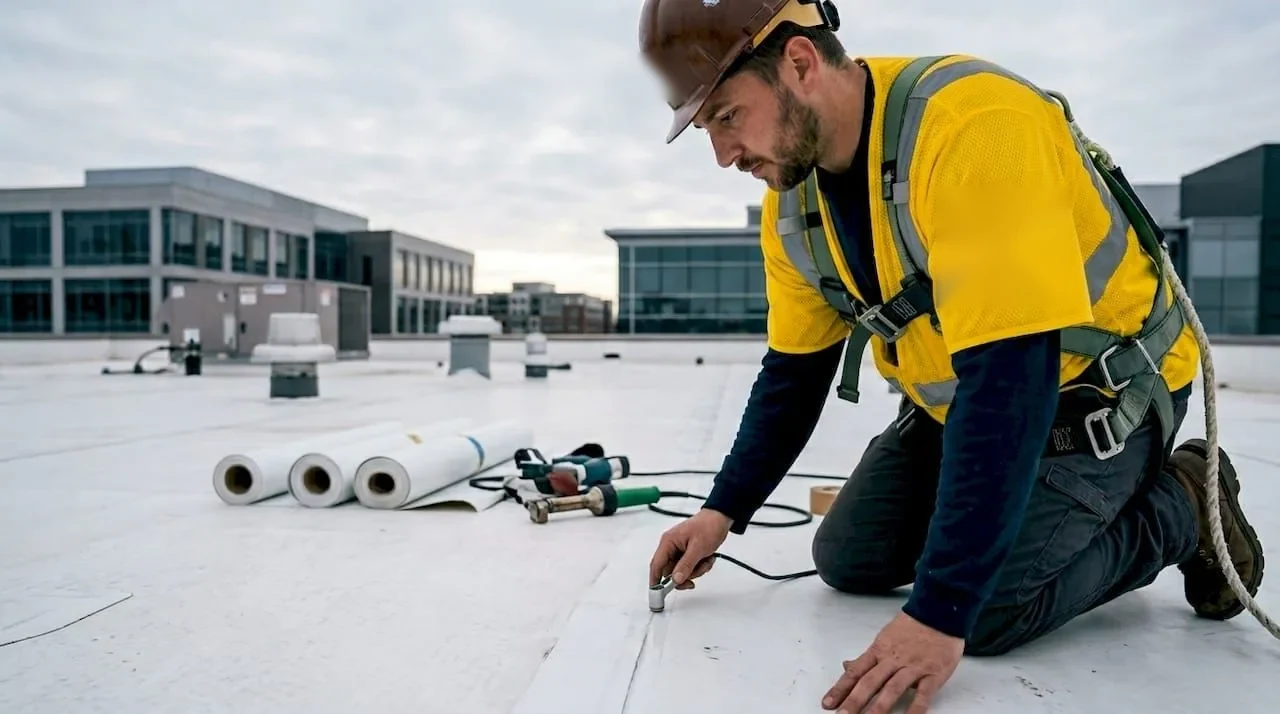
Sarnafil is associated with reinforced thermoplastic single-ply membranes. The field still needs identification: later repairs, coatings, or added roof sections can leave a different surface than the original system. We compare records, markings, exposed sheet, seam construction, and attachment in the area being repaired. Thermoplastic laps are heat welded, so cleanliness, compatible material, and the condition of the adjoining sheet matter. A split weld that reaches brittle or contaminated membrane may need a larger tie-in than the visible opening suggests.
Use the same inspection basis for alternatives. A GAF membrane comparison or Carlisle system review can help the owner compare documented systems, but the repair method remains specific to the installed PVC or other confirmed sheet. We note the roof zone, seam direction, substrate, and any patch that hides the original layer before pricing a material-specific repair.
Where can water cross a seam or transition?
Water may cross the field at a lap, then travel along insulation or deck before it shows inside. We follow the reported path and inspect seams, curbs, pipe boots, wall terminations, drains, and perimeter details. The owner receives a distinction between visible opening and suspected hidden moisture. A penetration flashing inspection sets the scope for a curb or pipe transition; a cover-board review checks the supporting layer if it could change removal.
If moisture is not visible at the surface, the next useful step may be a survey or an approved test cut. We specify the proposed location and what a result would change before opening material. A drainage check records blocked outlets or faulty drain details separately from a seam failure. Once opened, the repair boundary reaches sheet that can accept a weld and closes with the proper edge or flashing treatment.
When records are thin, the most useful test is the one that changes the repair choice. We explain whether a thermal survey, probe, or core cut can resolve the insulation question and identify its limits. Any destructive sample gets a defined boundary and immediate closure method. If readings show a pattern but do not confirm wet material, the owner receives that status separately from a measured removal quantity.
How does the weather change the work window?
Fort Lauderdale's yearly rainfall normal is 60.95 inches, of which 37.49 inches falls during the South Florida rainy-season span. Frequent storms and lightning interruptions make surface readiness and same-shift closure practical schedule questions. We plan around surface readiness and the amount of sheet that can be prepared and welded within a safe shift. Drains and overflows are checked before removal; the day's opening limit is tied to a secure temporary boundary. Hail, damaging winds, flooding, and tropical systems can also change staging, so the contact who calls a weather hold is named in advance.
Plantation Gateway's State Road 7 corridor includes office, medical, retail, dealership, and hospital uses. Those property types can need different delivery and access windows, but the manager confirms the actual limits at the repair building. A first-hour weather response may stabilize an active opening. Phased roof work can keep occupied rooms apart from removal when a secure section break is possible.
When does a repair stop being the economical choice?
Keep repair in view when one weld has separated but the surrounding sheet, attachment, insulation, and perimeter remain stable. Compare a larger project when several seams fail, water recurs across roof zones, or the substrate has lost support. We state what was inspected, what the proposed repair covers, and which test might expand the quantity. A repair allowance should end at a defined material boundary rather than carry the uncertainty of the full roof.
A recover evaluation asks whether the existing layers can stay beneath a new assembly; replacement estimates include removal and the transition into existing sections. Both need review of moisture, drainage, attachment, and deck before price is compared. A property in Plantation Midtown may have several operating uses below the same building, so the scope names the roof zone and protected space together. Submitted project records, not the membrane brand alone, define warranty terms.
For staged renewal, the transition between the new membrane and the section that remains needs its own detail and inspection point. We identify which edge is temporary, which tie-in is permanent, and what condition must be confirmed before the next phase proceeds. This is especially useful when occupied hours or rain divide work across several shifts. The estimate carries the return visit as a planned item, not an open-ended allowance.
What should the closeout leave behind?
Closeout records the identified membrane, repaired seam length, preparation and welding method, flashing details, insulation findings, drain status, photographs, and any area excluded from the authorization. If the crew finds wet material beyond the planned limit, it secures the opening and returns added removal for approval. A roof-zone key links the repair to the property plan without assuming that every section has one age or assembly.
Before dispatch, share prior submittals, leak location, roof plan, access rules, and the person who can authorize testing. We return the inspection result, temporary dry-in boundary, permanent repair scope, and next approval. If the proposal includes replacement, identify the sheet, insulation, attachment, flashings, and perimeter components as one assembly. That makes the future service record useful to maintenance staff without treating a product label as proof of what was installed in each area.
Commercial Roofing Questions
How can a Sarnafil membrane be distinguished from another PVC roof?
We compare product records with markings, welds, exposed edges, and system details in the work area. The report identifies supporting evidence and unresolved transitions.
Can a short split weld be repaired in place?
The crew can repair it in place when the adjoining sheet is sound, cleanable, dry, and wide enough for a proper weld. We inspect beyond the split and define the tie-in before opening the sheet.
What does a moisture test add to a seam repair?
Moisture testing can show whether insulation or cover board below the seam changes the removal limit. We identify a test location and get approval before opening the assembly.
How is the roof closed if rain interrupts welding?
The daily plan limits removal to an area that can receive interim protection. We record the secured boundary and schedule permanent work when conditions permit.
What should a replacement comparison include?
Compare removal, insulation, attachment, seam details, flashings, drainage, access, and protected interior space over the same roof zone. We separate those quantities for review.
Related Roofing Work
Set the membrane repair boundary
Send the roof plan, leak location, prior system records, access rules, and the person authorized to approve testing. We will inspect the assembly, identify the confirmed repair area, and return a clear scope with the next decision.