
Holcim Elevate Commercial Roofing in Plantation, FL
Roofing Manufacturers: Holcim Elevate Commercial Roofing
A roof system labeled Holcim Elevate can still contain later repairs or a different membrane in the leak area. In Plantation, FL, recurring rain, humid heat, and storm interruptions make identification and a safe closeout part of the first decision. We trace the reported water path, compare records with the exposed sheet and attachment, and set how much material can be opened before temporary dry-in is needed. Plantation Midtown's offices, medical buildings, housing, retail, and shopping-center uses bring different operating hours, so the building contact helps define the roof boundary and protection plan.
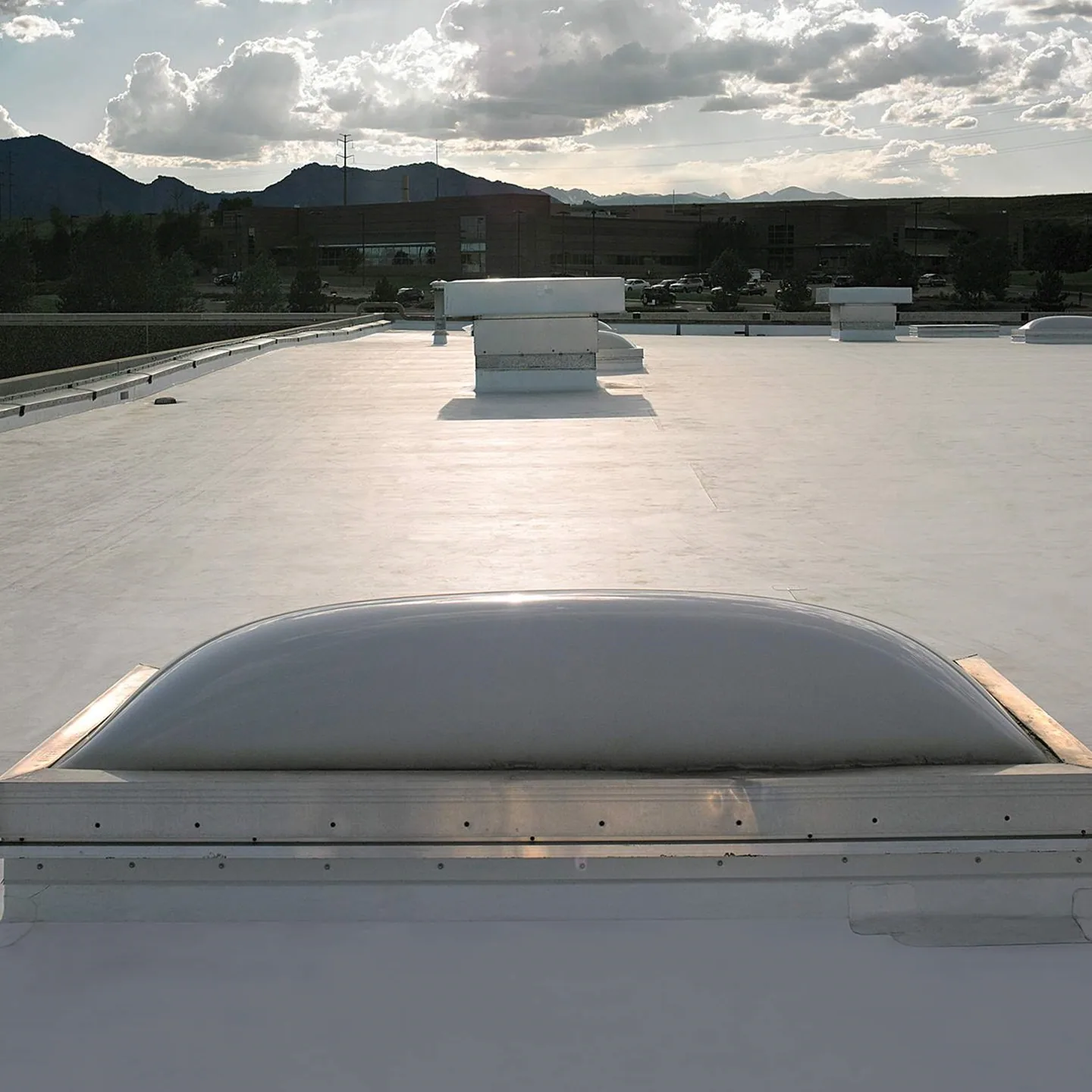
What should be confirmed on this membrane system?
Before selecting a Holcim Elevate detail, compare roof records with sheet markings, seam type, flashing, attachment, insulation, and any exposed edge. Prior repairs can leave more than one material on a building. We label each identified section instead of assuming an invoice describes the whole roof. TPO and PVC details use thermoplastic preparation; EPDM has its own seam and accessory approach. The work order should state what was identified and what requires a test, especially if a change in sheet or substrate would alter the repair.
A penetration detail review can isolate the curb or pipe boot from the membrane field. An insulation assessment asks whether lower layers remain in the repair quantity, and a drainage inspection records whether water management is part of the same scope. These inspections yield separate measured items rather than a generic system allowance.
Attachment deserves the same attention as membrane type. Fastener rows, adhered areas, and perimeter conditions affect what must be opened and how a new detail will be tied in. We note movement, lifted edges, and the condition at corners or parapets, then compare those observations with the proposed assembly. Where a test or core is authorized, the report shows the location and how the opening was closed.
How do you set a repair boundary at the membrane?
Set the repair perimeter only after checking the seam or opening beyond its visible edge. We inspect adjacent sheet, attachment, substrate, and previous patches, then identify the nearest material that can accept a compatible tie-in. A test opening is proposed when the result could change how much insulation or cover board is removed. It includes a location, anticipated size, temporary closure, and approval contact. If the roof differs from available records, the crew pauses the material order until the system is clear.
When water is active, a weather response can secure the authorized opening before the permanent scope is set. We identify what the temporary repair does not settle and schedule any additional inspection or testing. If several occupied areas sit below the roof, phased work can create daily limits that match the access and protection plan. Each shift ends at a documented boundary.
At a seam, note whether the failure sits at a field lap, end joint, curb wrap, or termination. The repair method and labor differ, and each feature can carry a separate access or preparation need. We include the junction and adjoining sheet in the photo record, then identify how the new material connects to the existing assembly. If the connection depends on a test result, that condition appears as a decision point rather than an assumed repair.
At parapets and roof corners, attachment and termination need inspection as well as the field lap. We record loose metal, lifted membrane, open sealant, or fastener movement when observed, then distinguish a maintenance repair from membrane replacement. If wind damage is reported, each visible perimeter finding is tied to a photograph and roof zone. Temporary securement remains a stabilization step; lasting edge work receives a separate quantity if removal or replacement is required.
What does Plantation weather mean for the work sequence?
The May-through-August severe-weather peak in South Florida brings lightning, flood risk, hail, tornadoes, and damaging thunderstorm winds. With wet conditions and summer heat, a thermoplastic weld or adhesive detail needs a suitable surface and enough time for secure closure. We check drains and overflows before removal and set the maximum roof area for the shift. When a storm hold interrupts the plan, the temporary closure and remaining work are written separately, with the return visit tied to the approved boundary.
Pompano Beach reports a large industrial and warehouse market, while Plantation Gateway follows State Road 7 through medical, professional, retail, dealership, and hospital uses. Those settings show why delivery and occupancy plans matter across the region, but only the site contact can confirm access restrictions at this building. We schedule staging around the property's actual route and hours, not a neighboring site's practices.
When should the owner consider a new system?
Repair remains a sound comparison when one detail fails and the adjacent field, attachment, and insulation remain in serviceable condition. More than one leaking seam, broad moisture, or weak perimeter attachment changes the calculation. We show the measured repair, unresolved test area, and recover or replacement option as distinct scopes. If retaining the existing assembly is considered, the evaluation reviews layers, moisture, deck, drainage, and edge height before it becomes an assumed savings.
The submitted system and project documents establish applicable product and warranty terms. Florida code provisions and product approvals must match the actual proposed work. A recover option can be compared against tear-off, insulation, membrane, edge metal, and disposal by roof zone. Plantation's varied property uses can alter occupied hours and equipment coordination, so those costs belong beside the corresponding work area.
Do not compare a patch estimate with a replacement bid that assumes a different access route or interior closure. We hold those assumptions steady, call out exclusions, and separate measured material from concealed-condition allowances. The owner can approve temporary protection first, testing second, and system renewal only after the findings support it. This sequence keeps urgent weather control from committing the property to a broader capital project.
What should the installation record show?
Record the Holcim Elevate assembly identified, materials proposed or installed, roof zones, substrate findings, seam and flashing details, attachment, drainage checks, photographs, approved changes, and remaining maintenance. If test removal finds a different layer or wet insulation, map the additional quantity and wait for approval before it enters the base work. Photos made before concealment can show how the new edge ties into existing material.
Send product records, roof drawings, reported leak, access restrictions, and the authorized testing contact. A GAF assembly or Carlisle assembly can provide a comparison when the owner is selecting a different system family. We return the observed condition, repair limit, schedule assumptions, and next decision. A Plantation Midtown property receives the same roof-zone record, with its own room protection and access plan.
Commercial Roofing Questions
How do you identify a Holcim Elevate membrane at a repair?
We compare records, markings, seam construction, flashing, and exposed layers in the affected zone. The scope says what is confirmed and where identification remains uncertain.
Can a TPO repair detail be used on EPDM?
No. The sheet type and seam approach control preparation and accessories. We verify the installed membrane before selecting a permanent repair method.
What if the roof has multiple generations of work?
We mark transitions and assess each section separately. The repair material follows the exposed assembly, and any uncertain boundary becomes a test or allowance decision.
Does a recover avoid testing the existing roof?
No. Moisture, attachment, layers, deck, drainage, and edge conditions still need review before existing material is retained.
Who decides the warranty terms?
The submitted assembly documents and project terms establish applicability. The closeout identifies installed materials and work for the owner to reconcile with those records.
Related Roofing Work
Confirm the membrane assembly before choosing a repair
Share the existing roof records, leak location, roof plan, access limits, and person who can approve testing. We will inspect the membrane and underlying layers, then return a system-specific repair or replacement scope with its boundary stated.