
Duro-Last Commercial Roofing in Plantation, FL
Roofing Manufacturers: Duro-Last Commercial Roofing
A Duro-Last roof leak needs a sheet-level inspection before anyone prices a patch. We locate the reported interior impact, identify the PVC membrane and any later work, then set a temporary closure boundary for the shift. Plantation's humid heat and concentrated seasonal rain make dry-in planning part of the first approval. Plantation Midtown contains offices, medical facilities, retail, housing, and a regional shopping-center cluster; each roof project needs access and tenant protection tied to the occupied space below.
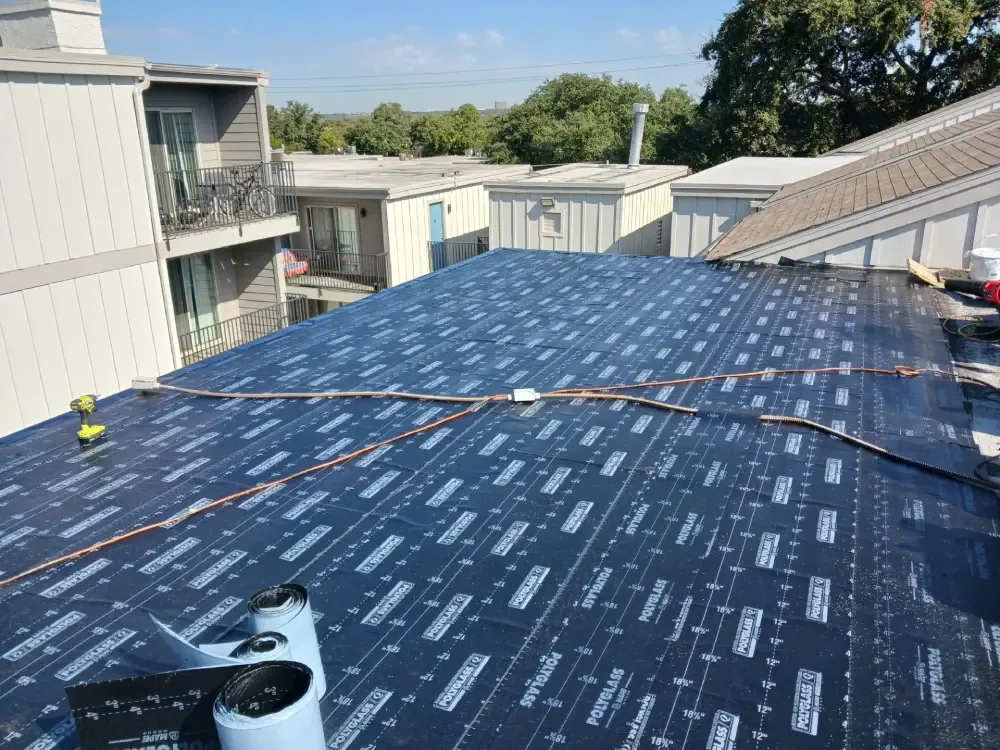
What should match the existing Duro-Last assembly?
Duro-Last systems use PVC roofing membrane and can include prefabricated components. That product distinction helps only after the field sheet is confirmed. We compare records with visible markings, welds, flashings, roof edges, and any added coating or overlay. A prefabricated curb detail still needs inspection where it meets the field membrane, and a later repair may have changed the original transition. We mark each section where material or seam construction differs before selecting compatible repair components.
A PVC roof review can explain the sheet and seam requirements after system identification. If an owner is considering alternatives, a Versico membrane system or Sika Sarnafil assembly must be compared as its own complete set of membrane, insulation, attachment, and flashing details. The original brand name alone does not establish that a new component matches.
Prefabricated accessories can reduce field fabrication at some details, but the junction between the component and the roof still needs review. We inspect corners, curb wraps, pipe boots, drains, and termination bars for separation or movement. If a later trade cut the sheet, the repair may involve more than replacing a factory-made part. The report names what can be reused, which weld needs replacement, and whether the surrounding PVC remains capable of accepting a new connection.
Where does the leak enter, and what can wait?
At the reported leak, we check welds, corners, pipe boots, curbs, parapets, drains, and nearby patches. If the split continues beneath a patch, we measure the full separation to sound, weldable sheet. A drainage review distinguishes outlet trouble from a membrane opening; equipment or pipe transitions remain separate quantities. If the ceiling mark is offset from the defect, we trace water through the deck or insulation and propose a test only when it could change the removal limit.
The owner approves the test location, dimensions, interim closure, and added work limit before material is disturbed. If removal reveals wet insulation, we measure the added area and secure it before pricing replacement. An authorized rapid storm response can address active entry; phased work planning can schedule a permanent repair around occupied hours once the confirmed condition is known.
How does Plantation weather affect a repair day?
Fort Lauderdale records a 77.2°F mean temperature and 60.95 inches of yearly precipitation; 37.49 inches of that normal falls during South Florida's rainy season. Before opening PVC sheet, we check drains and overflow routes, make sure the preparation surface is dry enough for the specified weld, and cap the work area at a size the crew can close. Thunderstorms and lightning can interrupt access; damaging wind, flooding, hail, and occasional tornadoes may also change staging or require a separate inspection.
Plantation Gateway follows State Road 7 through medical and professional offices, retail, dealerships, and hospital uses. That corridor includes varied commercial uses. We confirm this property’s delivery route, room-protection needs, weather-hold authority, and work hours before dispatch. When rain shortens a shift, the closeout records what is sealed and what must wait for the return visit.
Rain and lightning make the work limit especially important when a weld is being prepared. We confirm the sheet can be cleaned and dried as required, then set the area to match the crew's ability to finish and check each seam. If conditions change, the secure boundary and unfinished work are recorded before the site contact receives the return plan. Equipment access, guest or patient routes, and material staging are confirmed before the new sheet arrives.
When should a repair become a replacement review?
A seam repair may be enough when the PVC sheet remains flexible and attached beyond the separated weld, the lower layers are dry, and the tie-in can be prepared. Multiple failing welds, recurring water entry, broad delamination, or wet insulation change that calculation. We record the measured seam length and the reason any adjoining section needs removal. The owner can then compare a repair with recover or replacement without pricing unidentified area as confirmed.
A recover assessment checks layer count, attachment, moisture, drainage, and edge height; replacement work identifies tear-off and new assembly quantities. A prefabricated component does not remove the need to inspect its perimeter connection. Each proposed scope lists curb and drain details, access equipment, disposal, and daily dry-in as separate cost drivers so an approval does not blur membrane work with site logistics.
Replacement should be compared with repair on a marked roof plan. List each section, measured tear-off, insulation, deck allowance, curb, drain, and perimeter transition, then identify how the new sheet will meet any retained membrane. If concealed damage changes those quantities, stop at the agreed boundary and return an updated scope. That lets the owner decide whether to fund a test or proceed with the alternate assembly without blending uncertain work into a fixed repair price.
For an occupied property, the work plan should show where equipment, visitors, staff, or deliveries travel below the roof. The manager supplies those boundaries, and we coordinate lifting and material movement before opening the sheet. A change in the route or hours can alter mobilization even when the repair length stays the same, so those assumptions are visible in the estimate and the daily closeout.
What belongs in the final roof record?
At closeout, identify the Duro-Last PVC sheet, roof section, weld or flashing repair, drain observations, lower layers opened, photos, and any condition left outside the work authorization. Mark where prefabricated details were reused or replaced and which transitions tie into older work. If the crew stopped under temporary protection, set the return visit and permanent closure as an open item, not a completed repair.
Share product records, roof plan, leak location, access conditions, and the person who can approve testing. We return the inspection result, bounded repair, exclusions, and renewal comparison when the condition warrants one. Keep the marked plan with material records so a future leak can be compared to the same roof area. Plantation Gateway properties receive site-specific timing and room safeguards; no corridor profile substitutes for a roof inspection.
Commercial Roofing Questions
What confirms that the roof is Duro-Last PVC?
We compare records, markings, weld shape, flashing components, and exposed edges at the affected section. We note the evidence and any transition where the field material differs.
Can a short seam split be repaired without replacing the section?
It can when the surrounding PVC remains stable and can accept a compatible weld. We inspect the run and adjacent substrate before measuring the repair length.
Do prefabricated corners eliminate curb inspection?
No. The field connection, curb, and flashing still need review for movement, prior repairs, and water entry. We include any added transition work separately.
What if the test opening finds saturated insulation?
We close the authorized opening, document the affected area, and return added removal for approval. The original seam quantity stays distinct from insulation replacement.
Can a repair proceed during rainy season?
Only while the sheet can be prepared and closed within a suitable window. We set a weather stop and maximum removal area before starting, then secure the roof if conditions change.
Related Roofing Work
Inspect the sheet before pricing the tie-in
Share the product records, roof plan, leak location, access rules, and contact who can approve testing. We will identify the installed membrane, document the affected section, and return a bounded repair or renewal scope.