Versico Commercial Roofing in Plantation, FL
Roofing Manufacturers: Versico Commercial Roofing
A Versico repair call needs a fast split between the active leak and the material choice that will last. We first protect the occupied area, then identify the membrane and layers at the reported roof section. Plantation's hot, humid weather and concentrated wet-season rain make a secure shift-ending boundary important. Plantation Midtown includes office, medical, retail, housing, and shopping-center uses; access and interior safeguards differ from property to property. The condition we find, not the label on a prior invoice, sets the next approval.
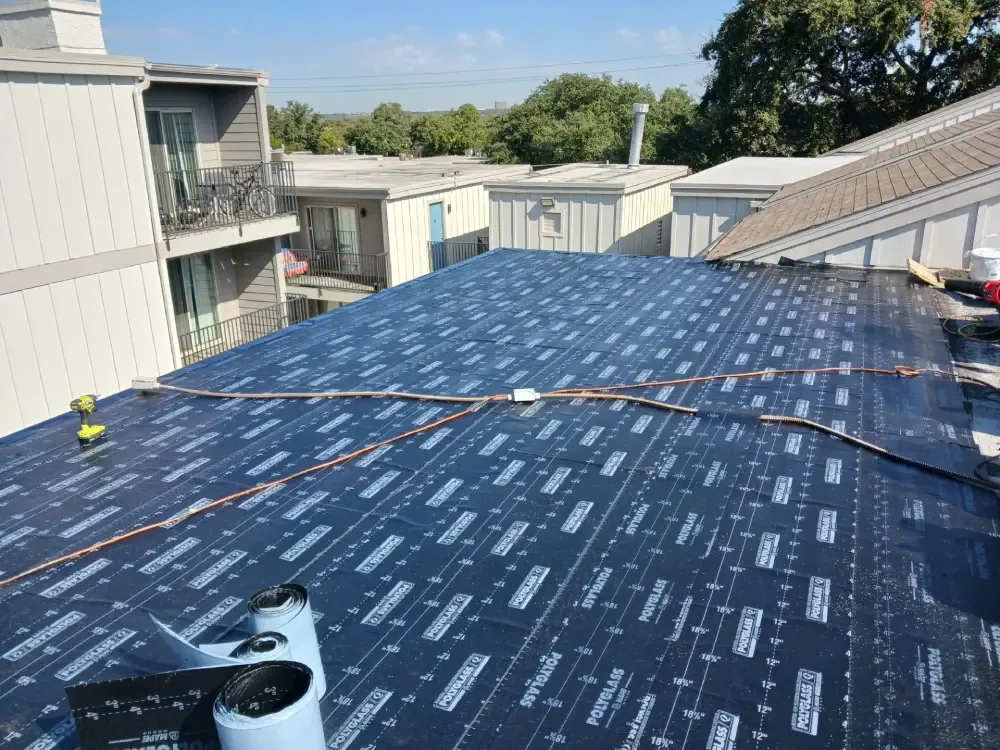
What does the roof actually have installed?
Versico systems include commercial single-ply options, but an older roof may combine original sheet, a later repair, and an added section. We compare product records with exposed edges, membrane markings, seam method, attachment, and the detail at a drain or curb. A thermoplastic seam calls for a weld approach; EPDM requires compatible materials for its own laps and transitions. If inspection shows more than one family, we map each before ordering anything intended to cross between them.
A TPO seam review makes sense only when the field sheet is confirmed as TPO and the work can reach prepared material. A lower-layer review records whether wet insulation or board changes the patch quantity. If a curb or pipe boot contributes to the entry, a penetration-detail inspection gives that transition its own price and approval.
Attachment can explain why a sheet moves even when a seam still appears closed. We inspect visible fasteners or bonding evidence, perimeter restraint, corners, and rooftop penetrations that may transfer movement into the field. If the owner has records for a prior overlay, we compare the build-up and identify whether a new patch would tie into the original membrane or an added layer. That distinction changes preparation, quantity, and closeout.
How do you keep a small opening from becoming a large scope?
A stain inside may be separated from the entry by the deck, insulation joint, parapet, or equipment curb. We compare the room report with roof slope and inspect the seam run, drain bowls, flashings, previous patches, and any area where the sheet has moved. The repair length is set by the point where the existing material can take a compatible connection, not by the size of the ceiling mark. If insulation condition is unclear, we propose a measured sample before extending removal.
Temporary closure has its own boundaries and cost. Before cutting, we agree on the opening size, material to be disturbed, interior protection, and who approves added work. A storm response may secure an active opening; the permanent membrane work follows after the exposed condition is understood. This avoids charging a short-term cover against a larger repair allowance without showing what each step accomplishes.
How should Plantation storm exposure shape staging?
South Florida rainy-season hazards include frequent lightning, damaging winds, flooding, hail, and occasional tornadoes. A storm can change both access and the time available to close a seam. We set a hold contact and limit how much sheet can be removed in one work window. The city describes Plantation Gateway as a commercial district with roughly 400 businesses, including retail, medical and professional offices, auto dealerships, and a hospital. The facilities contact still confirms this property's delivery route and occupied hours.
Material staging and work zones should leave the approved tenant routes clear. A phased sequence can divide roof work by a secure transition and daily closeout. Before comparing recover, we check attachment, moisture, deck, drainage, and existing layers; a new sheet over an unresolved wet area only carries the condition forward. The forecast and inspection determine whether repair continues or waits for a safer window.
Weather planning begins before the first cut. The work order names the maximum open area, how temporary protection will be secured, and who can release a return visit after lightning or rain. If a property cannot provide roof access during a storm watch, staging can be arranged so materials remain protected and crews do not open beyond the next safe closure. The closeout records the secured roof section and the condition still awaiting permanent work.
When should the owner compare repair and replacement?
A local tie-in is worth comparing when the defect is confined and the surrounding Versico membrane remains attached and dry. Several leaks, recurring seam openings, wet insulation, or edge movement across different sections can shift the budget toward broader renewal. We identify the roof zone, test evidence, and quantity included in each option, then set an allowance only for conditions that remain hidden.
A recover feasibility review tests whether the present layers and deck can remain; replacement prices removal, insulation, perimeter metal, flashing, and equipment interfaces separately. Carlisle or Johns Manville products may be compared only as alternative assemblies with their own attachment and detail schedule. Even within a chain, roof sections can differ; we price the option against the inspected area and its confirmed layers.
Budget review is clearer when the owner sees the repair allowance beside confirmed work. We measure the seam or flashing repair, list the insulation test separately, and state how the result would alter removal. Replacement quantities should include equipment curbs, parapet transitions, drains, and perimeter metal rather than stopping at the field sheet. A comparable roof-zone map makes it easier to route the next approval without treating an entire portfolio as one assembly.
What should the work record clarify?
For a Versico roof record, note the system identified, the sheet and accessories found, seam and flashing method, insulation evidence, drain observations, photos, and approved changes. If another membrane generation meets the repaired field, draw that line on the roof map. Closeout distinguishes a permanent weld or patch from interim protection and lists any follow-up survey or maintenance task.
Before the visit, share roof drawings, prior work records, water-entry location, access constraints, and testing authority. A Carlisle membrane system and a Johns Manville assembly can be compared if the owner is considering a change, using equivalent zones and quantities. We return the confirmed condition, exclusions, dry-in plan, and next approval. A Plantation Gateway site receives its own work map and operating schedule.
Closeout also records whether a test opening changed the work. Show the sample location, layers found, closure method, and who approved any additional insulation replacement. If the owner deferred that work, label it as open rather than complete. The distinction is important when facilities staff review the next service call after heavy rain and need to know which roof section was actually restored.
Commercial Roofing Questions
What evidence identifies the membrane as Versico?
We compare product records, markings, exposed layers, and seam construction at the affected zone. The closeout states what supports the identification and what remains uncertain.
Can one Versico repair detail fit every roof section?
No. Sheet family, age, attachment, prior work, and substrate condition can differ across a building. We map transitions and choose the compatible detail for the work area.
Will a surface coating fix an open seam?
A coating does not replace diagnosing and repairing a failed lap or saturated insulation. We trace the entry, price the seam detail, and consider restoration only if the assembly supports it.
What if exploratory removal increases the wet area?
The crew secures the agreed opening and documents the measured change. Added insulation or deck work goes back to the owner for approval before the boundary expands.
How do storm delays affect temporary protection?
The work plan names the maximum exposed area and weather-hold contact. We record the secured section and return date if rain or lightning prevents permanent closure.
Related Roofing Work
Match the repair to the installed system
Share the roof plan, prior product records, leak location, access limits, and authorized contact. We will inspect the membrane and lower layers, define the work boundary, and return the repair or renewal scope for approval.