
Commercial Roofing for General Contractors in Plantation, FL
Industries We Serve: General Contractors
A roof scope can hold up the next trade when the opening, dry-in limit, or equipment reset is not defined. General contractors in Plantation, FL need roof quantities that connect to access, sequencing, and the condition found in the field. We inspect the assembly, identify the roof section, and separate roofing work from mechanical, electrical, and structural responsibilities. Davie's CRA covers business districts and industrial land and offers commercial property-improvement grants and incentives for business expansion. Pompano Beach has more than 28 million square feet of industrial space and is Broward's largest industrial, warehouse, and distribution submarket. Project documents and the roof inspection set the scope for each building.
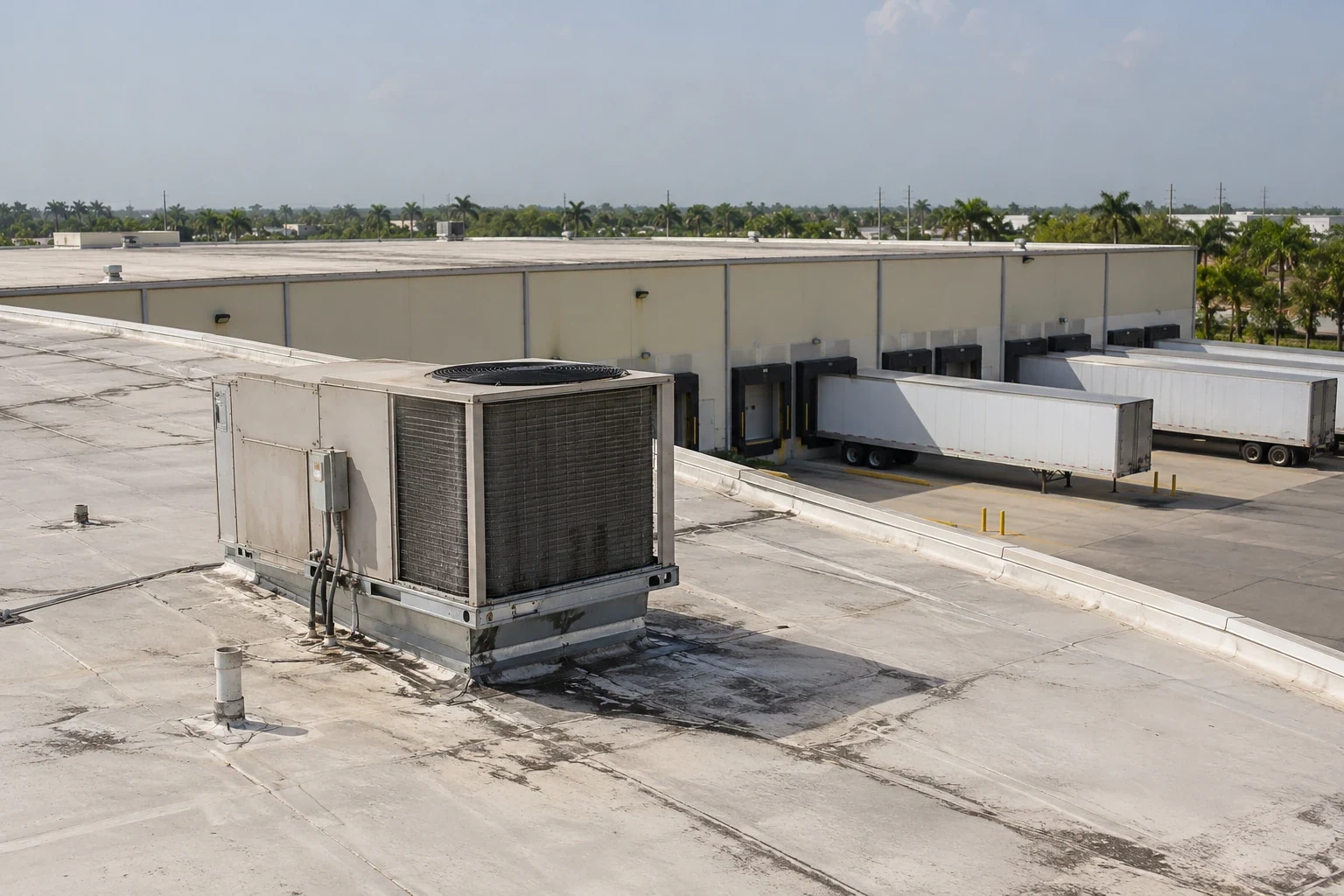
What belongs in the roofing trade scope?
Start with the roof assembly and the transitions that may need removal or repair: membrane or panels, insulation, vapor retarder, drains, flashings, edge metal, curbs, and terminations. We identify what is visible, what drawings indicate, and what must be confirmed after an opening. If concealed deck repair, equipment movement, or interior work falls outside roofing, the estimate names the handoff instead of assuming another trade will absorb it.
A field inspection can reconcile plan details with actual roof conditions before bid or mobilization. A roof assembly assessment can address insulation and cover board; a perimeter review can identify coping, edge metal, and gutter transitions. The proposal should state removal depth, disposal, test openings, protection, access equipment, and closeout. That gives the GC a scope that can be carried into schedule and submittal review. Identify the conditions that trigger a change, such as wet insulation beyond a marked area, a deck requiring replacement, or an existing penetration that differs from the drawing. The estimate should also say whether testing, removal, crane access, and disposal are included. When those limits are stated together, the project team can compare bids without assuming two contractors priced the same roof assembly.
How do roof activities fit the site sequence?
Mark crane and lift access, material routes, hoisting windows, other trades on the roof, and areas below that remain occupied. The roofing supervisor needs a named site contact who can release each zone and coordinate a change when weather or a concealed condition shifts the plan. The look-ahead schedule should identify the last time a section can be opened, the materials needed to close it, and the person who will inspect temporary protection before the crew leaves. Where several trades need the same roof access, assign staging periods and lifting routes in advance. That prevents an unplanned equipment move from consuming the weather window allocated for dry-in. We set daily limits so an opened section can be protected before the crew leaves. If equipment cannot be moved, the schedule identifies who owns the isolation and reset.
Davie Road runs through the downtown redevelopment area, where planning considers parking, transit connections to colleges, stormwater, and street infrastructure. Before staging near the corridor, we confirm current delivery routes and access with the project contact. A phased work sequence can preserve occupied access; a logistics-site plan can coordinate dock movement where deliveries share the work area. We confirm actual routes and closure approvals in the preconstruction meeting.
What does a South Florida weather hold change?
Fort Lauderdale's 60.95-inch annual rainfall normal includes 37.49 inches during South Florida's rainy season. The schedule sets each removal limit against the local forecast, available dry-in time, and trades waiting for roof access. Lightning, damaging winds, flooding, hail, and occasional tornadoes can suspend access or require material securement. We identify the weather-hold contact and next safe return window before removal begins.
A schedule that assumes a roof can remain open overnight creates risk for the work and interior finishes. The roofing scope identifies temporary cover, daily closure, and any work that cannot proceed until another trade completes a reset. A weather response can protect an opening when authorized; a drainage check can distinguish outlet work from membrane repair. The GC receives the status, remaining exposure, and a clear decision about time or added cost if the forecast changes the sequence.
What evidence helps close the roof package?
Submittal and closeout records should identify the specified assembly, approved materials, roof zones, seams and flashings, drain work, daily closures, inspection photos, and changes accepted in the field. We document the actual work without making product certification or warranty claims that are not part of the approved package. If a detail conflicts with field conditions, we show the location and request direction before covering it.
Keep penetrations and edge transitions visible for the inspection hold point. A specified TPO assembly still requires tie-ins that match the roof details; manufacturing facilities also need sequencing around process equipment. The record should state what was installed, what the inspector accepted, and which punch-list item remains. That way the GC can close the roof trade without absorbing open assumptions into general completion language.
How should concealed conditions return for approval?
Before tear-off, agree on a test opening, documentation method, quantity basis, and person who can authorize added work. If the deck differs from the drawings or wet insulation extends beyond the allowance, we stop at the agreed boundary, mark the added roof section, and price the change. The proposal separates labor, materials, access, protection, and any reset by another trade so the GC can assess schedule and cost together.
Infrastructure investment in Davie's CRA includes storm sewers, roads, sidewalks, lighting, and water lines. Along the Davie Road commercial corridor, we confirm current access and delivery arrangements with the property contact before mobilization.
Before mobilization, identify the property manager's approval contact when the building remains occupied. Send the roof plan, schedule, safety rules, trade list, and approval chain. We return the roof boundary and next decision in writing, supported by a marked plan, photographs, daily closure, installed material, and the exact area that remains outside the roofing scope. If the sequence depends on electrical isolation, mechanical reset, or structural review, we identify the hold point and who must release it. Before another trade covers an interface, confirm which party inspects the flashing, curb, or edge condition and records acceptance. A written handoff keeps completed roofing distinct from work still pending.
Before roofing starts, the coordination meeting should identify who owns substrate acceptance, who disconnects rooftop equipment, and which trade restores each penetration. We mark these boundaries on the roof plan and add inspection hold points before another crew covers the interface. When sequencing changes, the superintendent can compare the revised opening area with the approved dry-in plan and authorize a safe stopping point for the shift.
Commercial Roofing Questions
Can you price a roof scope before the field opening?
We can price the visible and specified work, then identify the allowance and test that could change it. The bid should state what is excluded until the substrate is exposed. That quantity basis should match the drawings.
Who coordinates mechanical equipment resets?
The GC assigns the qualified mechanical trade and approval contact. Our estimate identifies roof flashing and support work separately from shutdown, disconnect, and restart.
How do you keep roofing from delaying other trades?
We set roof-zone sequencing, access routes, and daily dry-in limits with the site team. Any hold point that affects another trade is listed before the work begins.
What happens if tear-off finds a different deck?
We document the location and condition, secure the approved section, and submit a change quantity. Work outside the agreed limit waits for the GC's direction.
What should be included in roofing closeout?
Retain approved submittals, roof-zone photos, installed materials, seams and flashing details, inspection records, accepted changes, and any item still open for the punch list.
Related Roofing Work
Set the roof boundary before the critical path moves
Send the roof plans, schedule, access and safety rules, equipment contacts, trade list, and change approver. We will inspect the assembly, define the roofing scope, and identify the handoff that affects the next activity.