
Cool Roof Installation in Plantation, FL
Commercial Roofing Services: Cool Roof Installation
A reflective roof can change surface heat absorption, but the owner still needs a system that fits the building and roof below. In Plantation, FL, we inspect the existing assembly, drainage, edges, equipment, and occupied spaces before comparing a cool-roof installation with coating, recover, or replacement. The scope identifies the selected surface, preparation, insulation assumptions, and details that control performance. Any projected utility-bill impact depends on the building assembly, insulation, HVAC equipment, and operating schedule; a building-specific energy analysis estimates that effect.
Plantation Midtown's offices, medical buildings, retail, and housing have varied equipment and occupancy demands. Plantation Gateway includes hospital, dealership, professional, and shopping properties with different access windows. A Midtown roof assessment maps the actual building and roof zones. A hands-on inspection checks whether the substrate and details can support the proposed assembly.
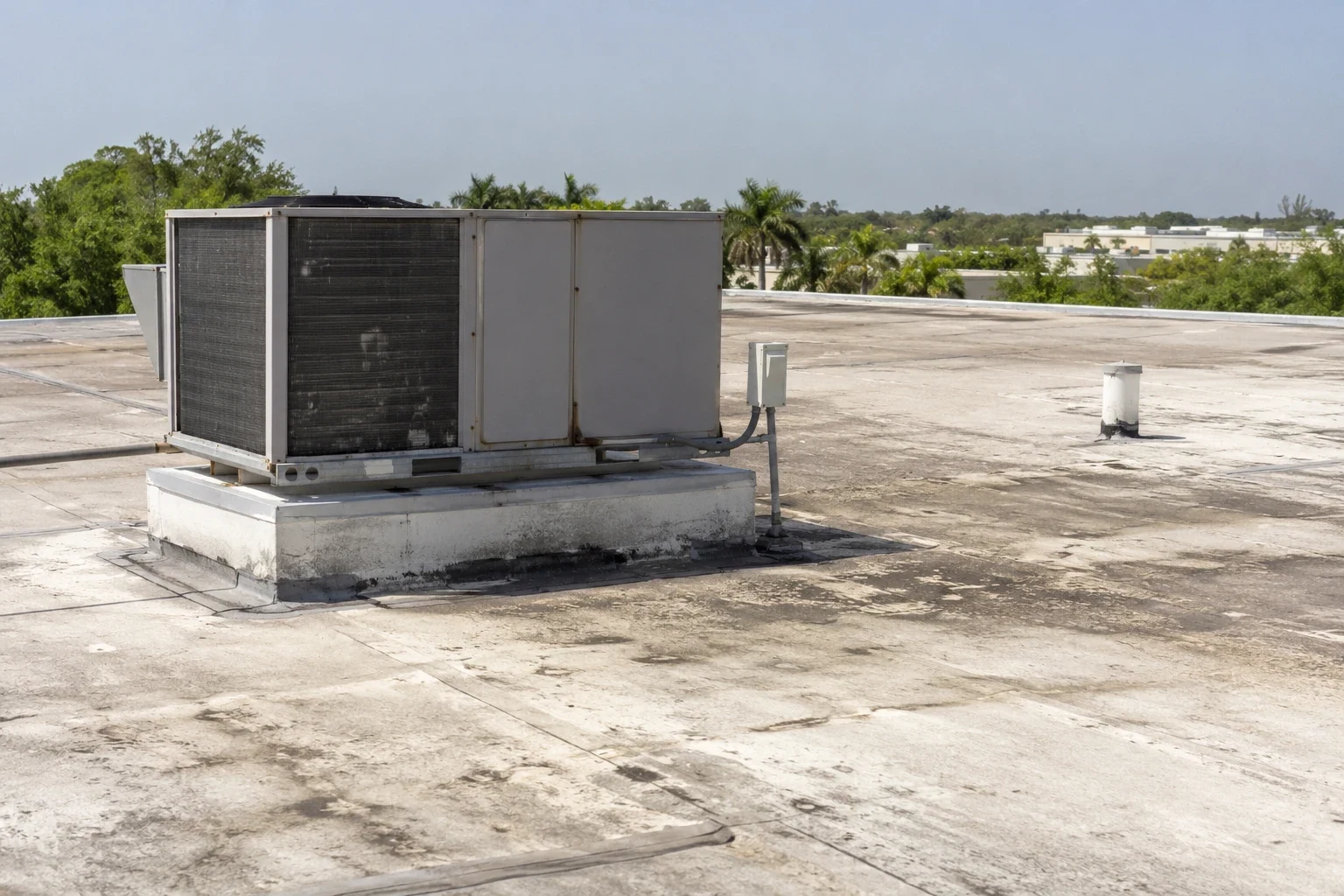
What should be checked before choosing a reflective system?
We review the existing membrane or metal surface, seams, flashing, attachment, insulation, ponding, and repair history. A reflective finish cannot correct wet insulation, a loose edge, or a failed transition. The report identifies repairs required before installation and any test that could change the boundary. Infrared screening may help focus verification, with core cuts used only when authorized.
System choice depends on substrate compatibility, movement, drainage, exposure, and the building's goals. A coating may fit a sound roof that can be prepared, while a new membrane may make more sense when the assembly or attachment needs a reset. A coating restoration review separates preparation and repair from the coating quantity. A new membrane is another option when design and roof conditions support it.
Fort Lauderdale climate normals describe warm conditions, high humidity, and substantial rainfall. Sun exposure can heat a surface while frequent rain tests seams, drains, and terminations. We compare product requirements with local exposure and roof design rather than treating a light-colored surface as the whole solution. Any thermal or energy estimate belongs to a qualified building analysis based on the property, insulation, HVAC, and operating schedule.
How does insulation change the cool-roof decision?
Surface reflectance and insulation perform different functions. Reflective finish can limit solar absorption at the roof surface; insulation changes heat flow through the assembly. The owner should know which performance objective the project addresses and how the design measures it. We record existing and proposed layers, cover board, attachment, and roof height so the assembly remains compatible at drains, curbs, parapets, and equipment supports.
Plantation's long warm season makes solar exposure a practical design consideration for offices and medical properties. Midtown's business and residential uses can operate different schedules, so HVAC loads and occupied hours vary from one building to another. A contractor should not assign projected savings from roof color alone. If energy performance is the principal goal, the property team can compare the roof scope with utility history and HVAC information in a building-specific analysis.
Adding insulation can raise the finished roof. We check drain bowl height, scupper elevations, equipment curb clearance, skylight framing, and edge metal before the design is finalized. A cover-board and insulation plan identifies thickness, taper, and attachment; a drainage review checks outlet compatibility. Those details affect both installation quantity and the water path after the work.
When can the roof be opened and closed?
Application and membrane work depend on dry surfaces, temperature, wind, and cure conditions. Plantation's rainy season brings frequent storms and severe weather can include damaging winds, flooding, hail, and occasional tornadoes. Tropical systems peak later in the year. We set a daily close point, identify the section the crew can protect, and state a weather hold before opening material. If the forecast changes, the owner knows which roof zone remains protected and who confirms the return visit.
Plantation Gateway includes hospital and professional operations that may require escorted access or limits on staging. Midtown has medical, office, retail, and housing uses that can need separate occupant notices. We coordinate material delivery, equipment shutdowns, and any interior protection with the property contact. A phased work plan can set the sequence when operations stay active during installation.
At day close, the crew records installed area, exposed boundary, temporary protection, and any detail awaiting approval. New transitions around curbs, drains, and edges are checked before the next area is opened. If a cool-roof surface is applied as a coating, cure time and weather requirements control the return window; if a new membrane is installed, system-specific seams and flashings need their own inspection.
When is a cool roof not the right scope?
Repeated leaks, widespread wet insulation, unstable attachment, or deteriorated substrate may require removal or repair before surface reflectance is considered. We identify the evidence and compare repair, coating, recover, and replacement on the same roof map. A recover feasibility review checks whether the existing layers can remain; a replacement scope addresses tear-off and new assembly details.
South Florida storm exposure also means edge securement and water shedding need attention. A reflective roof that leaves loose coping, a blocked drain, or open flashing does not solve those failures. A repair boundary can correct a localized issue before the larger installation. The proposal keeps urgent protection, measured roof work, and any energy-analysis assumptions separate.
The applicable requirements under Florida's current adopted building code depend on the alteration and design. The design professional and local reviewer determine project requirements. We state the roof material, insulation, attachment, drainage, and perimeter details that need coordination before installation. Any structural or mechanical changes remain with the responsible trade.
What should the owner receive after installation?
Closeout records product and assembly, preparation, repairs beneath the new surface, installed areas, roof-zone photos, drain and edge details, weather holds, and any exclusions. If the project includes an energy target, the record identifies the data used and the professional responsible for measuring results. A photo-supported condition report keeps roof performance assumptions tied to the actual property scope.
Future inspection should check seams, coating condition, drains, flashings, and equipment transitions. Maintenance protects the assembly and documents conditions; it cannot isolate the roof's contribution to energy use by itself. If the owner later compares HVAC performance, the review should account for operating hours, equipment changes, occupancy, insulation, and weather alongside roof surface data.
To plan a cool-roof review, share roof records, leak history, energy goal, equipment constraints, access contact, and occupied hours. We will inspect the assembly, compare suitable roof options, and return a scope with preparation, insulation, drainage, and weather assumptions separated. The next decision will reflect roof condition and project goals.
Commercial Roofing Questions
Will a reflective roof lower our energy bill by a set amount?
A savings figure needs a building-specific energy analysis. Results depend on insulation, HVAC equipment, operating hours, utility rates, occupancy, and climate. We define the roofing scope; a building-specific energy analysis estimates performance.
Can a reflective coating go over the roof we have now?
Only when the existing surface is sound, dry, and compatible with the selected coating system. We inspect seams, flashing, attachment, and moisture concerns, then identify repairs or testing needed before an application quantity is approved.
Does a cool roof replace the need for insulation?
No. Surface reflectance and insulation address different parts of roof performance. We identify the current assembly, proposed layers, and project objective, then coordinate insulation thickness and code review with the design professional.
How does Plantation's weather affect the installation window?
Rain, humidity, wind, and cure conditions can change when a surface is ready. We set a daily close boundary and weather hold, then state what protection remains if storms interrupt application or membrane work.
What if the roof has leaks before the cool-roof project?
We trace active water entry and identify repairs or tests needed before coating or new membrane work. The proposal keeps immediate protection separate from the broader installation, so an unresolved leak is not hidden under a new surface.
Related Roofing Work
Compare the roof system before installation
Share the building's energy goal, roof records, access limits, leak history, and occupied hours. We will inspect the assembly and return a roof option with clear performance assumptions.