
Commercial Roofing for Insurance Restoration in Plantation, FL
Industries We Serve: Insurance Restoration
A storm-hit commercial roof raises an urgent protection decision, followed by a separate review of what the visible evidence supports. In Plantation, FL, humid heat, heavy seasonal rainfall, damaging winds, hail, and occasional tornadoes can affect the timing and scope of a restoration visit. We secure an active opening, inspect the roof assembly, and prepare a dated condition record with the repair scope. Plantation Gateway includes medical, retail, professional office, dealership, and hospital uses along State Road 7; Plantation Midtown mixes offices, medical facilities, housing, and shopping. A repair record must still describe the actual property, roof section, and event-related damage seen there.
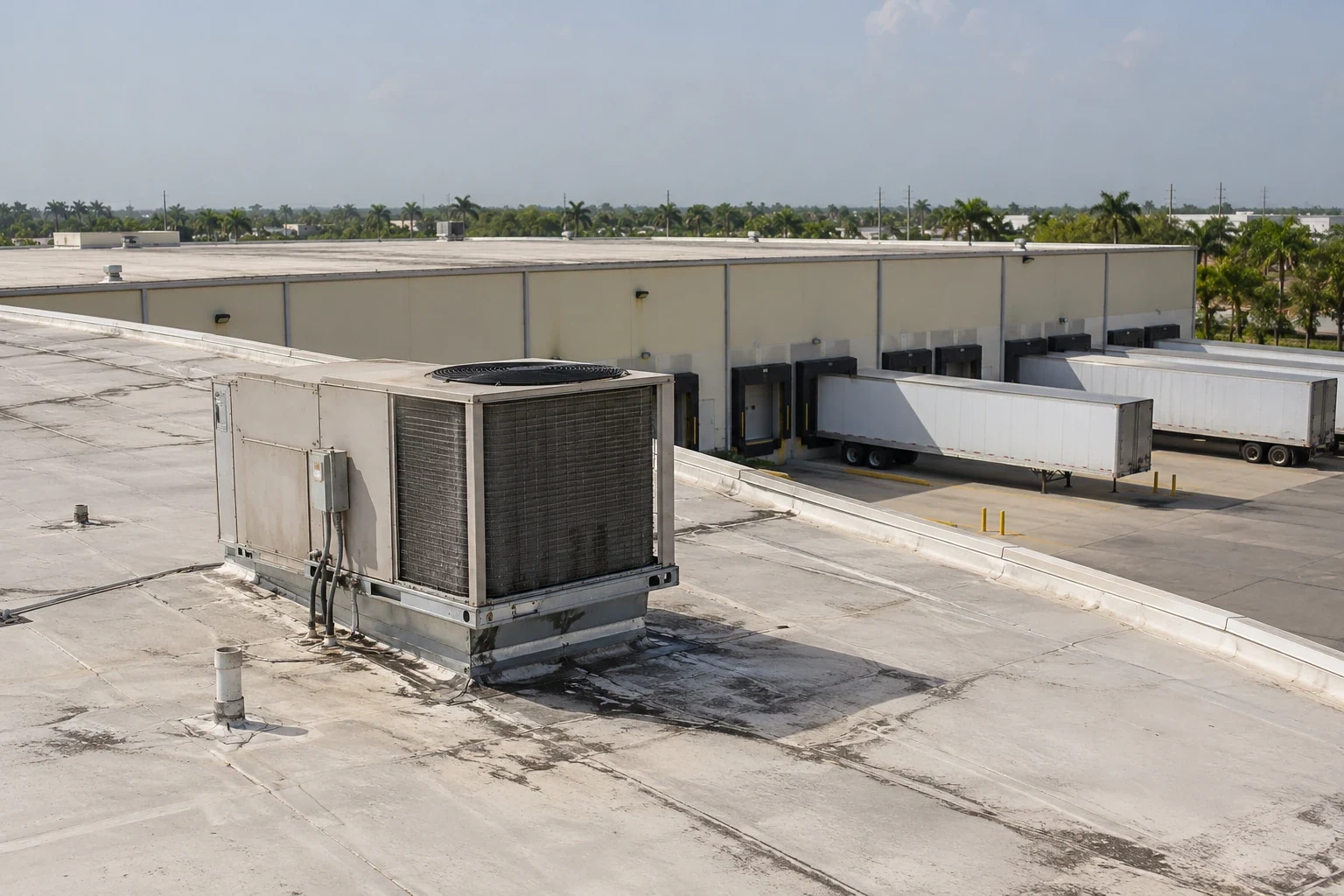
What should the first roof record capture?
Record the inspection date, reported event, affected roof area, material, visible damage, interior impact, temporary protection, and any access limits. Photograph the roof detail from useful angles and tie it to a marked roof zone. A dent, lifted edge, puncture, displaced panel, or wet area should be described as observed, not assigned to a cause that has not been established. We separate storm findings from pre-existing deterioration or unrelated maintenance items when the inspection supports that distinction.
A roof claim documentation visit can assemble photos, measurements, and a written scope for the property file. A storm damage inspection evaluates the roof details and temporary needs. Plantation Midtown's mix calls for distinct work windows and protection plans; the report identifies the operating constraints and roof conditions at the property under review. The report should identify what remains inaccessible or unconfirmed and what further testing could resolve it. When the file will be reviewed by multiple parties, use a consistent photo sequence: wide roof context, medium view of the affected section, then close detail of the seam, flashing, puncture, or displacement. Label each image with its roof zone and date. Keep field records factual, record who was present, and separate owner-reported symptoms from conditions observed during the visit. This gives the review team a clear basis for its next questions.
How is an active opening protected while a scope is reviewed?
Temporary protection should have a defined roof boundary, attachment method, interior safeguard, and return date. If water is still entering, the property contact identifies the affected room and equipment below. We limit removal to the section that can be secured in the available weather window, then report any remaining exposure. A temporary cover is not the same as a permanent repair; the estimate should state what material remains and what inspection is still needed.
South Florida's rainy season concentrates a substantial portion of annual rainfall into several months, and severe weather can include lightning, damaging wind, flooding, hail, and occasional tornadoes. The crew needs a hold contact and a closeout point if a warning interrupts work. A first response can stabilize an authorized opening, while a leak investigation traces the entry before permanent work expands. If removal reveals concealed moisture, we document the additional area and return for approval rather than treating it as event damage automatically. The team can then compare the initial finding, exposed substrate, and revised work quantity without losing the original condition record.
How do you keep observed damage separate from assumptions?
Describe each condition at its location: membrane seam, curb flashing, metal panel, fastener, edge, drain, or substrate. The report can describe whether a component is displaced, split, punctured, corroded, wet, or otherwise visibly affected, then state what test would support a broader conclusion. We record the conditions seen and identify which test would resolve an uncertain cause or quantity. That gives the owner, adjuster, and restoration team a clear basis for reviewing the scope.
A hands-on inspection checks the assembly and surrounding transitions. A moisture survey can locate suspect areas, but testing or a cut may be needed to verify conditions below the membrane. For edge damage, a perimeter review records attachment and flashing details. Each finding should include the roof zone, photo reference, repair option, and any limit on access. The repair quantity remains separate from a concealed-condition allowance and from unrelated deferred maintenance.
When does a storm scope become a larger roof project?
A localized repair may fit when the damaged area is bounded, surrounding materials remain serviceable, and the substrate is dry. Multiple failed zones, wet insulation, loose edge attachment, or repeated entry can support a broader replacement comparison. We identify which findings were observed, which are consistent with the reported event, and which still need an opening or additional review. The insurer evaluates coverage; our report documents roof conditions and the work required to address them.
The 1991-2020 Fort Lauderdale normals record 60.95 inches of annual rainfall, including 37.49 inches during the rainy season. That timing can affect drying, temporary covers, and the return visit after removal. For a replacement scope, check the selected assembly against current Florida code requirements and product approvals for the property. A recover evaluation reviews existing layers, moisture, attachment, and drainage, while a drainage inspection separates outlet work from membrane repair. We price a defined scope and identify any item that requires another authorization.
What should the restoration file contain?
Keep dated photographs, roof-zone marks, observed damage, moisture results, temporary protection, repair quantities, and approved changes together. If a roof area could not be accessed, record the limit and schedule the next inspection. The closeout should identify installed material and repaired detail, along with conditions that remain open. Interior photographs and occupant information follow property privacy rules; a roof report should stay focused on the building assembly and scope.
Before the visit, provide the reported event date, roof plan, leak location, access procedure, prior repair history, and who can approve a test opening. A property manager's roof record can retain the building findings, while a portfolio review can help ownership compare repair timing across assets. Plantation Gateway and nearby areas may face the same regional weather, but each inspection must document what happened at that specific building. We return the photos, condition summary, repair scope, limits, and next approval in a format the restoration team can review. If an adjuster or consultant attends, record the areas inspected together and any location that remains inaccessible. A written scope should list the material, quantities, removal depth, temporary cover, and whether testing is included. Include dated insurer correspondence with the final repair file while keeping field findings, work authorization, and coverage determination distinct. This supports a clear handoff from emergency response through permanent work and closeout.
Commercial Roofing Questions
Can your roof report determine whether an insurance claim is covered?
No. We document observed roof conditions, temporary protection, and the repair scope. Coverage decisions belong to the insurer and policy process.
What should be photographed after a storm?
Capture each damaged detail, a wider view locating it on the roof, the affected interior area when permitted, and any temporary protection. Tie images to a roof-zone map and inspection date.
How do you handle damage mixed with older wear?
We list observed conditions separately and avoid assigning a cause when the roof evidence does not support it. Testing may be needed to distinguish wet material or a hidden failure.
Can temporary protection be installed before a full scope is ready?
When authorized, we can secure a defined opening and record the material and area protected. Permanent work follows after the roof condition and repair boundary are established.
What if more damage appears during tear-off?
We stop at the approved boundary, document the added area, and submit a change for review. The record identifies the condition and keeps the new quantity separate from the original scope.
Related Roofing Work
Document the roof before the next weather window
Share the reported event, affected room, roof plan, access rules, and person who can authorize temporary protection or testing. We will document observed conditions, secure an active opening, and return a repair scope with its limits stated.