
Commercial Tornado Roof Damage Repair in Plantation, FL
Roof Damage Repair: Commercial Tornado Roof Damage Repair
After a tornado warning or nearby report, check whether the roof is open, material is loose, water is entering occupied space, or a safety restriction affects access. We coordinate with the person controlling the site, confirm the released work zone, then inspect from stable edges toward the reported damage. Tornadoes can accompany South Florida's severe-weather season, but a regional alert cannot establish impact at a particular address. The roof inspection must show what moved, separated, punctured, or remains uncertain. A Gateway-area assessment can account for the corridor's business mix while keeping repair findings specific to the property.
First-hour work may involve securing loose material or covering a confirmed opening. That is a limited protection step, not a permanent repair. We record how the area was secured and what conditions still need evaluation. When a rapid roof response is required, the manager identifies access limits, interior exposure, and who can approve temporary work. If the structure or roof is not cleared for entry, we wait for the responsible authority rather than risk personnel or treat a distant visual check as a roof inspection.
Make the first roof pass safely
High winds can leave sharp metal, broken rooftop components, loose membrane, damaged ladders, or unstable edge conditions. The property representative confirms roof access, escorts, fall-protection requirements, and any areas already restricted. We inspect from a safe route and do not cross loose or unsupported sections simply to complete a checklist. A safe ground-level observation can identify obvious debris or openings, but it cannot verify concealed attachment or every roof zone. The report distinguishes a visible observation from an area that could not be reached.
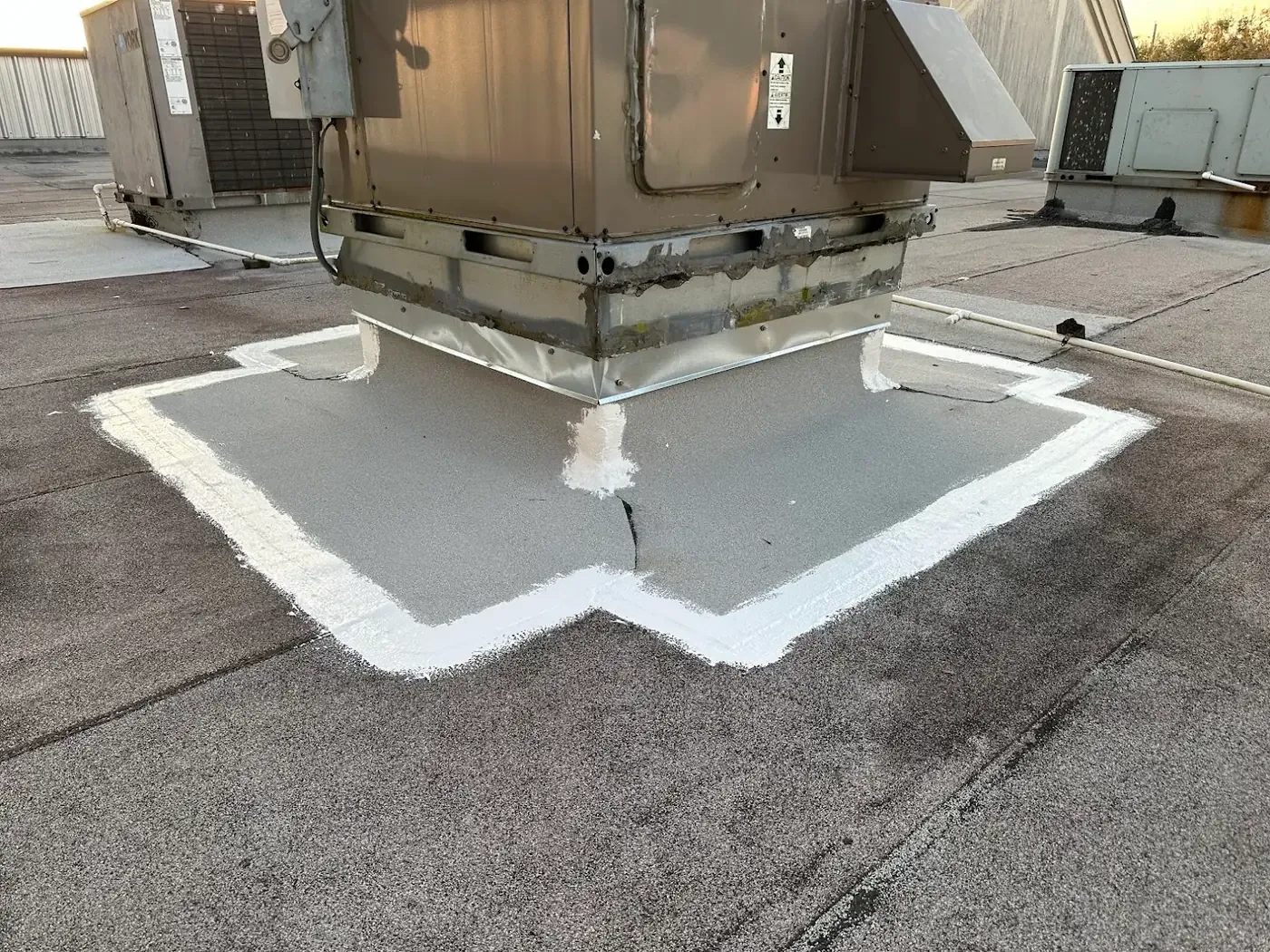
Once access is cleared, we map the damage by roof section and inspect the perimeter, corners, seams, wall transitions, penetrations, equipment curbs, drains, and overflow paths. We look for direction and extent of displacement without assuming that a single impact point represents the whole roof. A wind damage review can address uplift and movement at edges; flashing repairs may be needed where a transition has pulled away. The work plan begins with immediate hazards and water entry, then moves to permanent scope. Any structural instability or damaged electrical equipment is referred to the qualified professional responsible for that condition.
Trace water paths and hidden movement
Interior staining after a severe wind event may come from a roof opening, a shifted flashing, a damaged drain connection, or water that traveled along the deck before appearing below. We ask the building contact where water appeared, when it began, and whether the affected room has equipment or contents that need protection. On the roof we compare that report with drains, seams, penetrations, and transitions in the likely drainage path. The location of a ceiling mark is useful evidence, but it is not an exact map of the defect.
Plantation's rainy season concentrates a substantial share of regional rainfall over several months, which makes unresolved roof openings more consequential as the next storm approaches. We identify visible insulation or deck concerns and recommend a test opening only when it will clarify the repair boundary. A moisture survey can help target confirmation when conditions support that method; the thermal pattern alone does not prove material condition. If water is standing near a drain, a ponding-water evaluation can separate a drainage issue from storm-related displacement.
Stabilize the roof with a defined boundary
Temporary protection should specify the opening or roof zone, attachment approach, weather limitation, and next inspection point. A cover that is loosely placed or extends into an unstable area can create a second problem. We confirm the material and method are appropriate for the existing roof and that the property contact authorizes the work. We also identify how the secured section will be checked after renewed wind or rain. If that inspection cannot occur within a reasonable interval, the owner should understand that the temporary closure is not an indefinite solution.
South Florida severe-weather guidance emphasizes securing loose materials and preparing building openings before tropical conditions. After damage, the same operating discipline applies: loose roofing material must be handled safely, and exposed spaces need a controlled closure. A puncture repair may address a discrete membrane opening after substrate condition is checked, while a broad separation may need a different system-specific approach. The scope describes protection separately from permanent material replacement, so the owner can authorize immediate work without mistaking it for full restoration. We identify the conditions that could change the repair once the assembly is opened.
Coordinate repairs around active facilities
Plantation Midtown includes office, medical, retail, housing, and regional-shopping uses within one mixed-use district. The Gateway corridor includes commercial and hospital properties along State Road 7. These citywide facts show why access planning can matter, but a site's manager supplies actual operating details. Before mobilization, confirm occupied rooms below the work area, emergency entrances, delivery windows, rooftop equipment, and any customer or patient routes that must remain clear. We sequence roof zones accordingly and identify when noise, debris handling, or temporary interior protection may affect operations.
On a larger property, an occupied-building work sequence can help phase repairs while keeping defined areas available. A hospital roof plan may need added access coordination, but only the site's leadership sets restrictions. We identify the roofing crew's working limits and leave building use and reopening decisions with the owner. If another contractor must move equipment, isolate power, or evaluate a structural element, the roof scope notes that dependency before the repair crew returns. This avoids placing a roof patch over a condition that another trade has not made safe.
Close the repair loop
The final record should map each area where material shifted, detached, or required temporary protection and say how the restored section was examined. A neighboring roof zone that looks intact from the access path is not automatically included in the inspection. We list places that remain inaccessible, any trade clearance still needed, and whether a return visit should follow the next rain. The owner can then distinguish a completed repair from an open question and assign the appropriate person to each remaining action.
When several trades return after a severe event, the roofing contact should have a simple sequence: who clears the area, who authorizes access, which zone is protected, and what must be complete before final roof closure. We list those dependencies with the roof work instead of assuming a repair crew can resolve building-wide safety questions. This makes the next dispatch more efficient and gives the property representative a specific checklist for coordinating inspections, equipment restoration, and weather protection.
Commercial Roofing Questions
Does a tornado report mean the roof needs replacement?
No. The report only gives regional context. Inspection determines whether damage is localized, affects multiple roof zones, or requires additional evaluation before a repair choice.
Can you tarp a roof if the surface is unstable?
Only when the crew can reach and secure the area safely. If access is restricted or unstable, the site must be cleared and a safe method approved before work proceeds.
How do you decide what to inspect first?
We begin with active water entry and hazards, then follow the reported interior symptoms and examine vulnerable edges, seams, transitions, penetrations, and drainage paths.
Will you move rooftop equipment to complete the repair?
Not without the owner's authorization and the responsible trade's coordination. Equipment movement, disconnection, and restart are stated as separate dependencies when needed.
What should our manager prepare before the visit?
Identify the authorized site contact, roof access route, restricted areas, active leaks, interior rooms needing protection, and any other crews or safety controls in place.
Related Roofing Work
Arrange a safe tornado-damage roof assessment
Share the reported roof area, any active water entry, site access status, and the person authorized to approve temporary protection. We will set the inspection boundary and next steps.