Commercial Hail Damage Roof Repair in Plantation, FL
Roof Damage Repair: Commercial Hail Damage Roof Repair
A hail report or marks alone do not establish roof failure. First determine whether water is entering, a seam has opened, metal has shifted, or equipment was affected. We inspect accessible zones and distinguish visible impact from a condition affecting watertightness or service life. In Plantation, warm humid weather and frequent rain can make an open defect consequential quickly, but neither climate nor a storm report tells us what happened on a particular building. A Plantation Midtown roof inspection can begin with the active leak, then widen to representative roof zones so the owner has a useful repair boundary.
Hail may bruise a membrane, damage a coating, fracture brittle components, or dent metal without creating an opening. The reverse is also possible: a small impact at a seam, curb, edge, or drain detail can matter more than broad cosmetic marks. We do not judge the roof from a single photo or count marks as a repair quantity. The inspection notes roof type where identifiable, accessible areas, observed impact, water signs, and anything requiring a closer test. If an area is unsafe or inaccessible, it stays listed as uninspected until an approved return visit.
Separate surface marks from functional damage
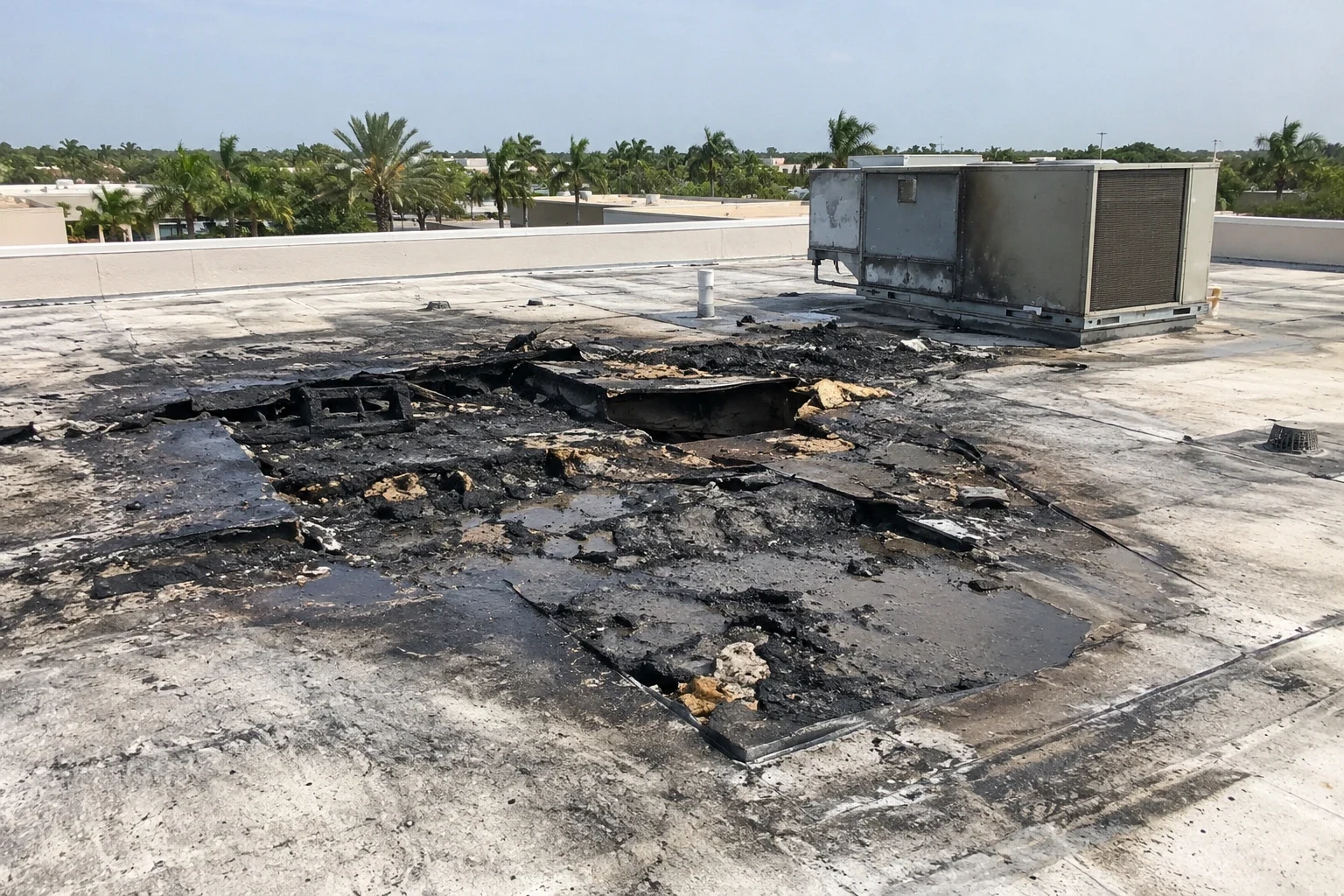
On a membrane roof, the inspection looks for cuts, punctures, abrasion, displaced flashing, open seams, and damage around penetrations. A shallow mark on the top surface is not automatically a leak; a break through the membrane or loss of a welded or bonded transition may be. On coated roofs, we look for fractures, loss of adhesion, exposed substrate, and water paths around details rather than assuming every dimple requires recoating. Metal roofs call for attention to panel deformation, fasteners, closures, ridge and edge conditions, and whether a dent has changed the drainage plane or loosened a connection.
We also look at drains, scuppers, gutters, and overflow routes. A storm can move debris into a drainage path, and standing water can obscure the distinction between impact and an older drainage issue. We document observable conditions and identify whether the next step is repair, testing, further evaluation, or monitoring. A flashing repair assessment can address a damaged curb or wall transition, while membrane puncture repair is relevant when a discrete opening is confirmed. We preserve the difference between a surface observation and a confirmed defect so the repair scope stays proportionate.
Check the roof assembly, not just the top layer
Impact can have effects beyond the visible roofing surface, especially where the roof includes insulation, cover board, deck, edge metal, or equipment supports. An indentation does not prove that the assembly is compromised, and an intact-looking membrane does not establish that concealed layers are dry. We check accessible seams and details, observe interior signs supplied by the building team, and recommend testing only when its result could change the repair. If a test opening is appropriate, the owner approves its location, method, closure, and any interior coordination before work proceeds.
Where moisture is suspected, a roof moisture survey may help identify areas for confirmation, subject to suitable conditions and interpretation. Thermal indications are not a substitute for verification. We explain what the proposed method can and cannot establish, then keep confirmed findings separate from areas that remain uncertain. If a repair exposes wet or damaged material, the proposal should state how the quantity will be handled and who authorizes added work. This approach prevents an inspection from turning into an open-ended removal while still allowing the owner to address concealed damage when evidence supports it.
Prioritize water entry and protect operations
If the building has an active leak, stabilization may take priority over a full hail assessment. We identify the affected interior area with the property contact, check the corresponding roof zone where access is safe, and determine whether temporary closure can limit further entry. Water staining may reflect a path that began away from the visible ceiling mark, so we avoid promising that a single roof puncture explains every interior symptom. A temporary roof response can address an approved opening while the permanent scope is developed.
Plantation Midtown includes offices, medical facilities, retail, housing, and regional shopping in a mixed-use district. Access and continuity needs vary, so the manager supplies the occupancy plan. We sequence the inspection around deliveries, entrances, sensitive spaces, and equipment identified by the site contact. The hospital roofing approach may be useful where clinical operations affect access planning; the roof condition itself still requires a building-specific inspection. We state which zones were reached, what protection was installed, and what must happen before the crew returns, so a manager can coordinate the next step without treating an incomplete inspection as a final condition report.
Build a repair scope that can be priced and checked
A sound hail repair proposal separates observed damage from optional investigation. It should identify roof areas, repair materials compatible with the existing system, edge and penetration work, access assumptions, debris handling, and how the completed work will be checked. If multiple roof systems appear on one property, the proposal should not assume a repair method is interchangeable across them. For a TPO, PVC, EPDM, modified-bitumen, coating, or metal assembly, material compatibility and attachment details shape the repair. We confirm the existing system as far as visible evidence allows and flag any uncertainty before committing to a method.
For a larger affected area, compare repair with a phased restoration or replacement only after establishing the roof's condition and the owner's time horizon. A commercial roof inspection can create a baseline beyond the storm-related concern, while condition reporting can help organize future capital decisions if the owner needs that broader view. The estimate should state any exclusions and change-order triggers in plain language. Our closeout identifies repaired areas, materials used, and any condition left for follow-up. That gives facilities staff a practical record of what changed without overstating what the inspection could see through intact layers.
Use local weather context without guessing at storm history
South Florida's wet season concentrates substantial rainfall into a few months, and severe thunderstorms can bring lightning, wind, flooding, hail, or an occasional tornado. Those conditions make drainage and prompt temporary protection relevant after a storm, but they do not identify the date, intensity, or effects of a particular event at a property. We rely on the owner's observations, available event information, and roof inspection rather than assigning damage to a storm without support. Plantation Gateway follows State Road 7 through retail, medical, professional, automotive, and hospital uses; the corridor context can help with mobilization while each building retains its own roof access and operating requirements.
Before starting, confirm who can authorize access and repairs, whether the roof has fall-protection or escort requirements, and whether other contractors are working in the same area. If lightning or unsafe weather interrupts work, the crew secures the work zone and resumes when conditions allow. A wind damage review may be needed if edges or panels moved, but separate findings should remain separately described. The owner receives a clear distinction between immediate risk, confirmed hail-related repair, and recommended follow-up. That keeps a storm response focused on the roof's actual needs and avoids converting weather context into unsupported claims about the building.
Commercial Roofing Questions
Does every hail mark mean the roof needs repair?
No. A mark can be cosmetic, while a small break at a seam or penetration can allow water entry. Inspection determines whether function or attachment changed.
Can a roofer confirm the damage from ground photos?
Photos help identify areas to inspect, but they rarely show membrane integrity, attachment, or concealed moisture. We verify accessible roof conditions before defining repairs.
Should we repair the roof before an insurance inspection?
Protect active openings when needed and document the work. Coordinate timing with the property representative and insurer, but do not leave a known leak exposed solely to preserve a later visit.
Can the inspection happen while tenants are working?
Often, if the manager approves access and identifies restricted zones, entrances, and sensitive operations. We plan the route around those conditions and record any area we could not reach.
What if hail damage is mixed with older wear?
The report should separate observed conditions by location and describe which findings appear storm-related, which appear pre-existing, and what cannot be determined without additional testing.
Related Roofing Work
Schedule a focused hail-damage roof inspection
Share the building type, any active leak, roof access limits, and the areas where impacts or interior symptoms were noticed. We will identify the inspection boundary and the next repair decision.