
Heat and UV Roof Damage Repair in Plantation, FL
Roof Damage Repair: Heat and UV Roof Damage Repair
Heat-related roof wear usually develops as a pattern, not one dramatic failure. A surface may become brittle, a coating may lose continuity, seams may separate, or flashing may pull away after repeated expansion and contraction. The useful starting point is to determine whether the roof still sheds water and where the first functional weakness appears. Fort Lauderdale's long-record climate has a mean annual temperature of 77.2 degrees and substantial rain, so heat, humidity, and moisture interact on Plantation roofs. That heat and rainfall inform maintenance timing; an inspection shows whether a roof section needs repair, testing, or broader evaluation. A Midtown commercial roof review can focus on representative surfaces and the details that control water entry.
We look at the roof system, age and repair history supplied by the owner, exposed edges, membrane seams, coating condition, penetrations, drains, and rooftop equipment transitions. Surface fading calls for closer inspection of adhesion, seams, and water-shedding performance. Cracking, loss of adhesion, exposed substrate, open laps, recurring leaks, or brittle flashing may carry more weight. The report states what is visible and whether an area needs testing before a repair method is chosen. If the roof is actively leaking, a temporary response may be needed while the permanent scope is developed.
Midtown's offices, medical facilities, retail, housing, and regional shopping bring a broad range of operating schedules and roof-access needs. That mix of uses makes it practical to set inspection timing around each property's operating calendar. We identify the roof area, system, and observed wear so the owner can align repair with planned shutdowns or access windows rather than wait for a leak to set the schedule.
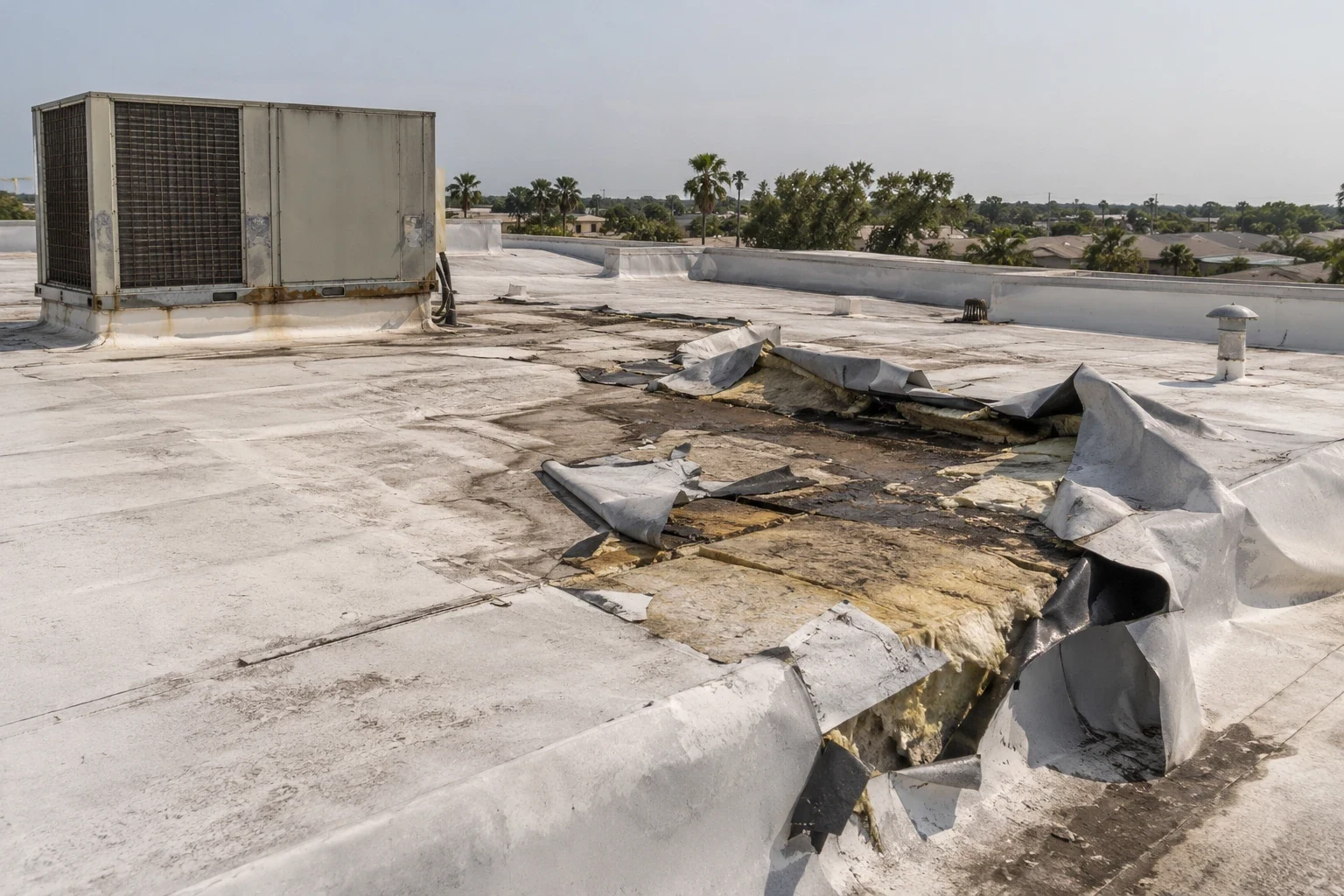
Identify the failure pattern before selecting material
Different assemblies respond to heat and ultraviolet exposure in different ways. Thermoplastic membranes may show seam or surface changes that need a weld check; EPDM relies on compatible repairs and sound transitions; modified bitumen and built-up systems need attention to surfacing, laps, and exposed asphalt; coatings depend on adhesion, coverage, and the condition beneath them. Metal roofing has its own movement, fastener, closure, and coating considerations. The repair needs to match the existing assembly rather than impose one generic patch.
At each area, we record whether the condition is isolated or repeated, whether the material remains attached, and whether water entry is present. A TPO roof-system review may be relevant where that membrane is identified, while silicone coating work requires a suitable substrate and confirmed compatibility. If the existing system cannot be confirmed visually, the proposal states that limit before materials are ordered. We describe the seam, crack, failed bond, or other visible condition so the owner can evaluate the repair.
Check details where heat stress becomes a leak
Field surfaces are only part of the assembly. Changes in temperature can stress perimeter transitions, wall flashings, equipment curbs, expansion joints, skylight edges, and penetrations where different materials meet. We inspect these interfaces for open corners, splits, lifted edges, failed sealant, loose metal, and evidence of repeated patching. The surrounding membrane matters: a new bead over a moving or contaminated joint may not hold, and a localized repair can fail if the substrate is unstable.
Drainage details deserve attention as well. Debris or a blocked outlet can keep water on a roof, and retained water can make a deteriorated surface harder to assess. A flashing repair can address a confirmed transition defect, while seam repair applies to a separated lap or joint after the system is identified. If moisture appears to extend below the surface, a moisture survey may help select locations for confirmation, subject to conditions and interpretation. We explain the method's limits and request approval for any test opening.
Separate maintenance from repair
A maintenance visit removes debris from accessible drains, records visible surface changes, and identifies developing concerns before they become urgent. Repair restores a defined failed detail or material area. Restoration or replacement addresses a larger portion of the assembly and needs a different comparison of cost, disruption, and remaining service expectations. These scopes should not be blended into one undefined allowance. We explain which work addresses an active leak, which is preventative, and which item still needs confirmation.
Fort Lauderdale's regional rainfall profile makes clear drainage paths important throughout the year, not just during the wet season. A ponding-water assessment can identify whether an outlet, slope, or low area needs separate attention. The owner can then decide whether to authorize that work alongside a heat-related repair. If multiple roof zones show similar wear, a condition inspection can establish a broader baseline. The resulting scope identifies materials, quantity assumptions, access, protection, debris handling, warranty terms if applicable, and conditions that would require approval before concealed material is replaced.
Plan for occupied commercial properties
Along the State Road 7 corridor between Sunrise Boulevard and Peters Road, Plantation Gateway combines hospital, dealership, medical, professional-office, and retail activity, while Midtown brings office, residential, and shopping uses into a separate district. The manager confirms each building’s occupancy, roof type, and equipment before we set access and protection requirements. The property manager sets work hours, roof access, tenant notice, noise limits, staging, and any rooms or equipment that must remain available. We use those site instructions to organize repair areas and return visits.
On an occupied building, the crew should know the approved access route, where materials may be staged, and what must be protected below the work. A phased roofing plan may be useful when multiple zones have different access needs. If medical services operate below a roof section, the facility team defines the required controls. We identify weather-dependent work and avoid leaving a roof surface open at the end of a shift. The closeout records the work area completed and anything that needs another visit, so the manager can coordinate with tenants and building operations without treating a roofing inspection as an occupancy approval.
Decide when repair is enough
For gradual surface wear, record the condition by roof zone and compare later inspections against the same representative details. Record whether a seam, coating, flashing, or exposed layer changed and whether a repair restored a sound tie-in. If the proposed work changes the assembly, the owner coordinates design and permitting with the qualified project team. The roofing closeout should state the checked area, remaining deterioration, and recommended inspection interval so maintenance decisions follow observed change instead of appearance alone.
Commercial Roofing Questions
Does a faded membrane mean it has failed?
No. We check adhesion, seams, and water entry to determine whether the roof still sheds water. We check seams, details, surface integrity, repair history, and signs of water entry before recommending work.
Can you coat an older roof to stop heat damage?
Only if the existing assembly and substrate are suitable. Adhesion, moisture, preparation, compatibility, and the condition of details must be evaluated first.
Why do leaks appear after a hot period?
Movement and aging can stress seams or transitions, while later rain reveals an opening. Inspection traces the water path and identifies which detail needs repair.
How often should a commercial roof be checked?
Inspection timing depends on roof condition, prior repairs, drainage, exposure, and owner requirements. A baseline report can help set an interval and flag changes.
Will a localized repair extend the whole roof's life?
It can restore a defined area, but it does not resolve unrelated deterioration elsewhere. The closeout should identify repaired zones and remaining concerns separately.
Related Roofing Work
Request an evaluation of heat and UV roof wear
Share the roof system if known, leak history, previous coating or patch work, and the areas that concern your facilities team. We will identify observable failures and the next repair decision.